







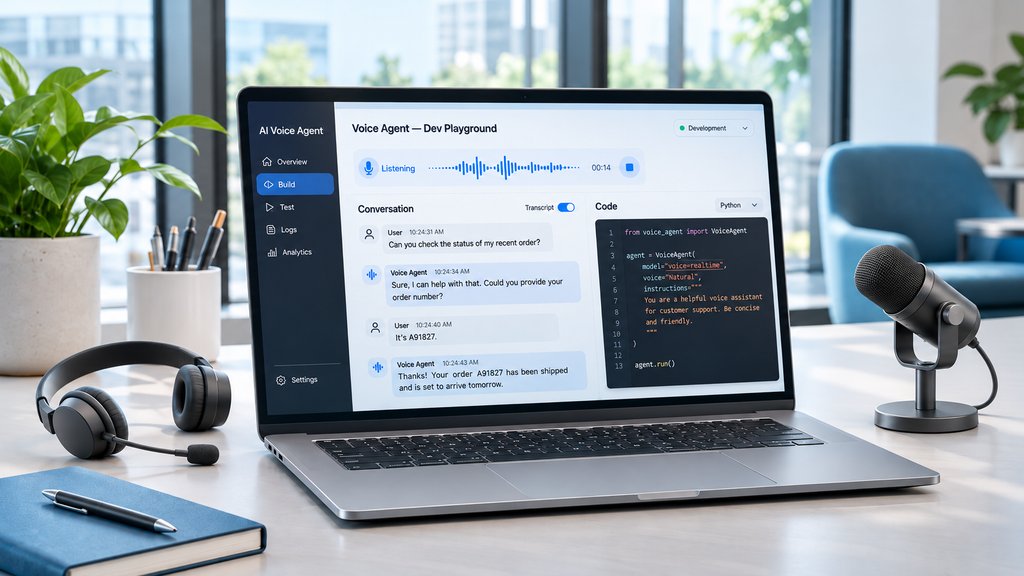
- Retell AI: Best overall for phone-based AI agents
- LiveKit: Best for customizable real-time and multimodal agents
- ElevenLabs: Best for voice-first customer experiences
- Vapi: Best for managed, multi-provider orchestration
- Deepgram: Best for API-first voice development
- Pipecat: Best for open-source voice agent development
Building an AI voice agent involves more than connecting a chatbot to a microphone. Developers must account for speech recognition, response latency, interruptions, integrations, and the infrastructure needed to keep conversations running reliably.
AI voice agent platforms simplify that process by combining conversational AI tools with APIs, telephony services, and deployment capabilities. Some provide managed environments for building customer-facing phone agents, while others offer frameworks that give developers greater control over models and real-time interactions.
I compared six AI voice agent platforms based on their features, pricing, developer tools, and production capabilities. The selections cover everything from managed phone-agent services to open-source frameworks, helping developers identify the right approach for their projects.
Best AI voice agent platforms: Comparison table
AI voice agents combine speech technology with agentic AI capabilities, allowing applications to understand requests and perform tasks through natural conversations.
The table below compares six platforms by overall score, starting price, and development approach.
Platform | Overall score | Starting price | Development approach |
|---|---|---|---|
| Retell AI | 4.4/5 | $0.07–$0.31 per voice-agent minute | Managed phone-agent platform |
| LiveKit | 4.2/5 | Free Build plan; Ship from $50/month | Code-first real-time agent framework |
| ElevenLabs | 4.1/5 | Free plan; Starter at $6/month | Managed conversational agents and voice services |
| Vapi | 4/5 | $0.05/minute hosting, plus provider costs | Managed voice-agent orchestration |
| Deepgram | 4/5 | Voice Agent Standard from $0.075/minute | Conversational voice APIs |
| Pipecat | 3.9/5 | Free framework; Cloud hosting from $0.01/active minute | Open-source conversational agent framework |
Prices reflect published entry points as of November 2026. Some platforms bundle voice processing, while others charge separately for language models, speech recognition, speech generation, hosting, and telephony.
Best AI voice agent platforms for developers
Here is a closer look at the six AI voice agent platforms, including their capabilities, pricing, advantages, limitations, and the development scenarios they support.

Retell AI: Best overall for phone-based AI agents
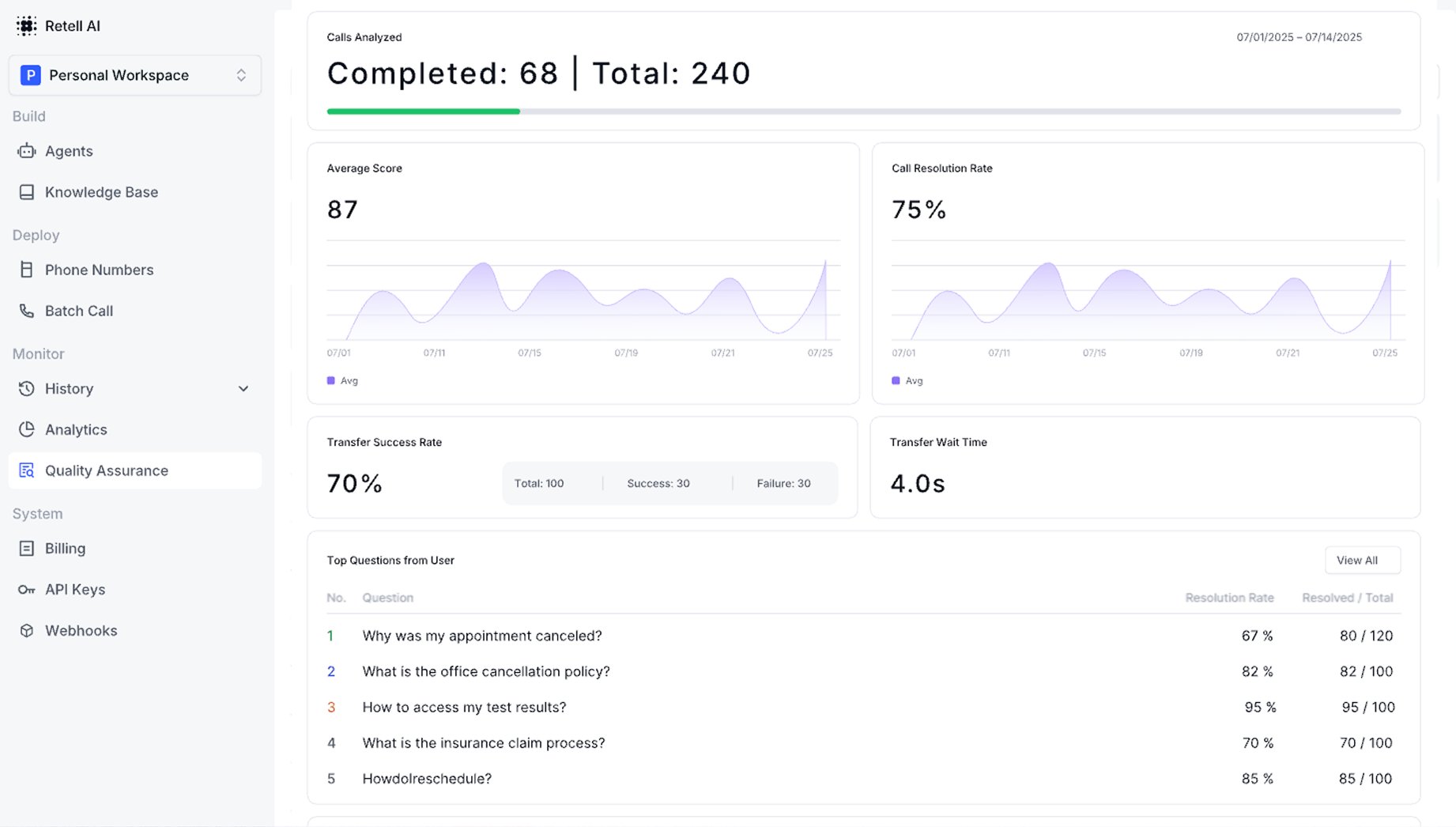
Retell AI is a voice agent platform designed for businesses that want to automate phone conversations without building their own telephony infrastructure. It provides tools for creating inbound and outbound AI agents, configuring conversation flows, and connecting calls to business applications.
With built-in testing, call analytics, and monitoring capabilities, Retell AI is particularly useful for developers building customer support, appointment scheduling, and sales-related voice applications.
Why I chose Retell AI
I chose Retell AI as the best overall platform for phone-based AI agents because it provides a comprehensive set of tools for building, deploying, and managing customer-facing conversations.
Its combination of managed telephony, conversation flows, simulation testing, and call analytics covers several responsibilities that developers would otherwise need to handle through separate services. Retell also received the highest weighted score in my evaluation, supported by its core calling capabilities and operational features.
Retell is particularly well suited to businesses developing AI receptionists, appointment assistants, and customer support agents that need to complete tasks and transfer calls when human assistance is required.
Its managed approach can reduce the infrastructure work involved in getting these applications into production, although teams building video-enabled experiences or requiring deeper control over media processing may prefer a more customizable framework.
Pricing
According to Retell AI's pricing page:
- Pay-as-you-go voice agents: $0.07–$0.31 per minute, depending on the configuration.
- Starting credits: $10 in initial credits.
- Concurrency: 20 concurrent calls included, with additional capacity available.
- Enterprise: Custom pricing and service arrangements.
Total costs vary with language-model selection, voice processing, telephony, and optional services.
Features
- Inbound and outbound calling: Develop agents for customer support, scheduling, and telephone-based interactions.
- Conversation flows: Configure prompts and structured conversational behavior.
- Human transfers: Route calls to human representatives when necessary.
- Simulation testing: Test agent responses before production deployment.
- Call analytics: Examine transcripts, performance information, and diagnostic details.
- APIs and webhooks: Connect agents to external services and business applications.
Pros and cons
Pros | Cons |
|---|---|
| Comprehensive phone-agent capabilities | Less suited to video-first applications |
| Managed telephony and calling operations | Per-minute costs vary by configuration |
| Simulation testing and call analytics | Some enterprise capabilities require custom arrangements |
| Human-transfer and integration features | Less infrastructure control than a self-hosted framework |

LiveKit: Best for customizable real-time and multimodal agents
LiveKit provides real-time communication infrastructure and development tools for building AI agents that interact through voice, video, and other modalities. Its Agents framework allows developers to choose speech and language models, configure conversation behavior, and integrate agents into applications or phone systems.
With flexible deployment options and support for complex real-time interactions, LiveKit is particularly appealing to engineering teams that want greater control over how their AI agents operate.
Why I chose LiveKit
I chose LiveKit for customizable real-time and multimodal agents because its framework gives developers extensive control over how AI applications process media, interact with models, and respond to users.
Its support for Python and Node.js, real-time audio and video, configurable model integrations, and SIP telephony makes it suitable for projects that need more flexibility than a conventional phone-agent platform. LiveKit also received full marks for Core Features in this evaluation.
LiveKit is a strong fit for product teams building multimodal assistants, interactive applications, or custom conversational experiences that extend beyond telephone calls.
The framework allows developers to design application behavior around their requirements, but that flexibility also introduces engineering responsibilities. Teams need to consider how they will integrate components, test performance, manage deployments, and monitor sessions, particularly when deciding between self-managed infrastructure and LiveKit Cloud.
Pricing
LiveKit's pricing page lists:
- Build: Free.
- Ship: Starting at $50/month.
- Scale: Starting at $500/month.
- Enterprise: Custom pricing.
Agent-session usage, inference, telephony, and other services may be subject to separate allowances or additional charges.
Features
- Python and Node.js development: Build agents using familiar programming environments.
- Real-time audio and video: Support interactive voice and multimodal applications.
- Model integrations: Connect supported speech and language model providers.
- Conversation controls: Configure interruption handling, turn detection, and tool execution.
- SIP telephony: Connect telephone services to agent sessions.
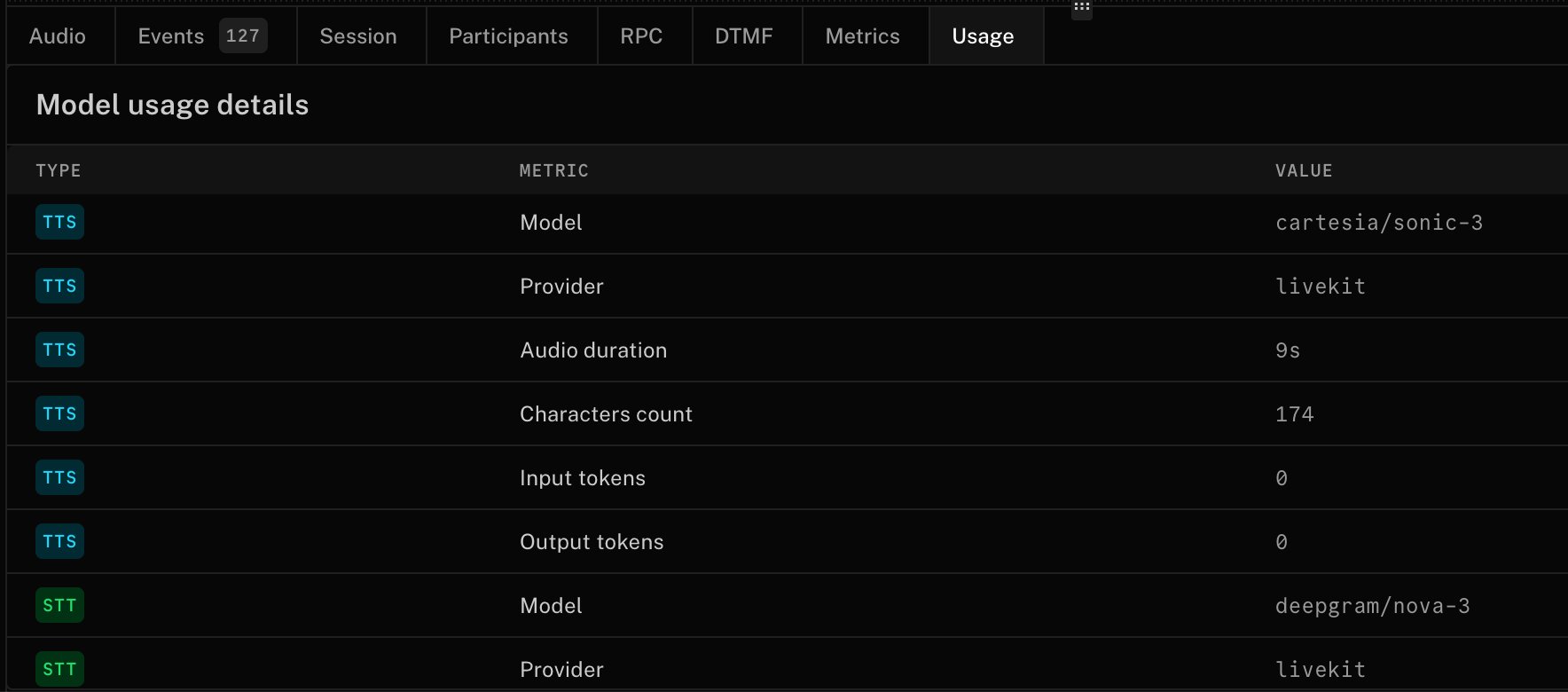
- Deployment and observability: Use supported hosting and monitoring capabilities.
Pros and cons
Pros | Cons |
|---|---|
| Flexible real-time agent architecture | Requires engineering resources for custom implementations |
| Audio, video, and multimodal capabilities | Multiple cost components complicate budgeting |
| Custom model and application integrations | Some observability features depend on LiveKit Cloud |
| Open-source framework and managed hosting options | Framework and Cloud capabilities must be evaluated separately |

ElevenLabs: Best for voice-first customer experiences
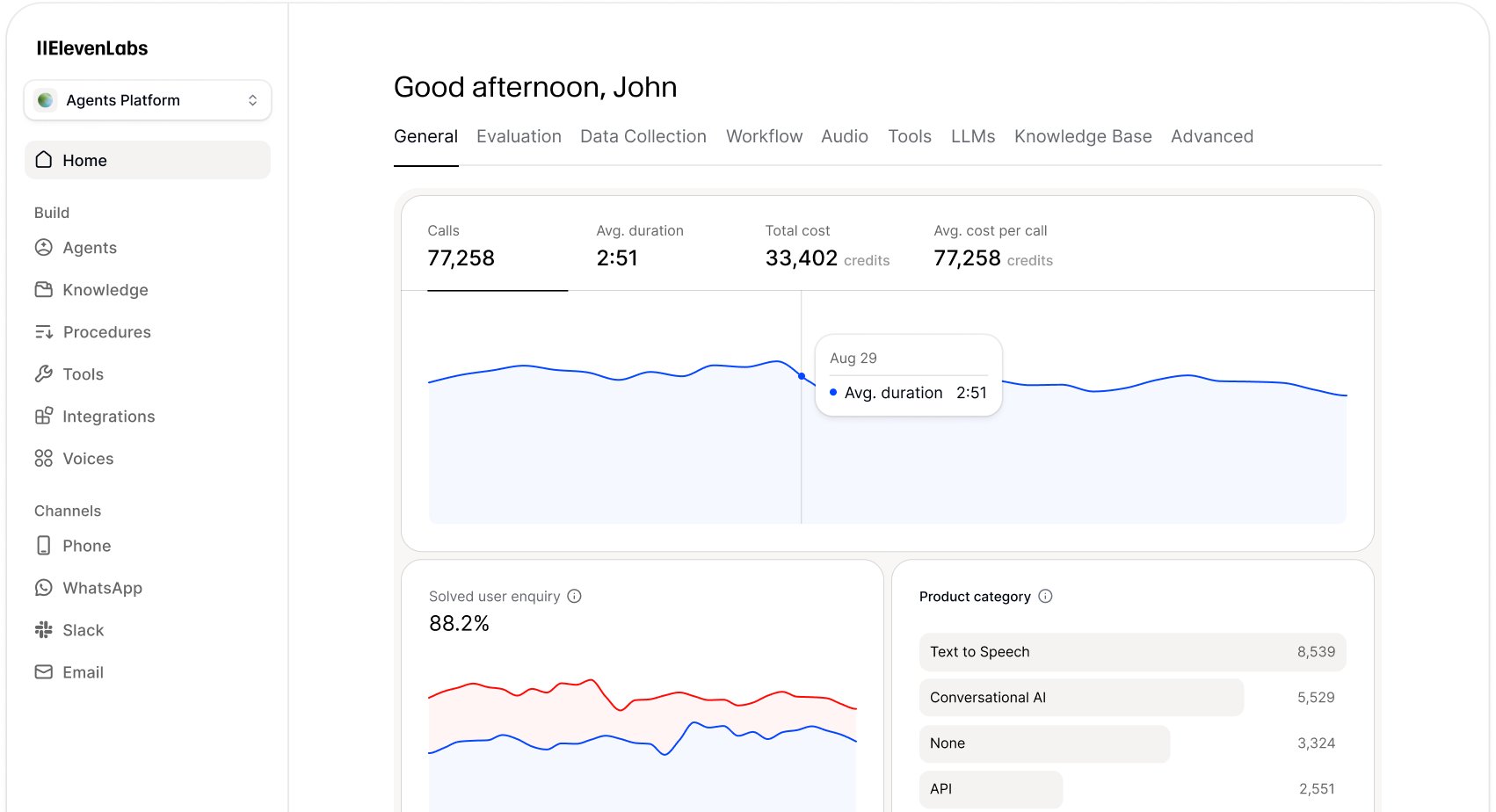
ElevenLabs combines its speech generation technology with conversational AI tools to help developers create voice agents that sound natural and respond in real time.
The platform supports multilingual interactions, external integrations, and customizable agent behavior, making it suitable for customer-facing applications where voice quality is a priority. Its managed environment also allows teams to focus on the conversation experience rather than building and maintaining the underlying speech infrastructure.
Why I chose ElevenLabs
I chose ElevenLabs for voice-first customer experiences because it combines speech generation technology with tools for building and managing conversational agents.
Developers can configure voices, connect knowledge bases, create conversation flows, and test agent behavior within the same product family, making it a practical option for teams that want to develop spoken interactions without independently assembling every component of the audio pipeline.
ElevenLabs is especially appealing for customer support assistants, multilingual information services, and other applications where the quality and presentation of spoken responses are important.
Its voice customization options provide room to tailor an agent to different audiences, although developers should still test pronunciation, interruption handling, recognition accuracy, and conversational consistency using representative users and real-world scenarios.
Pricing
ElevenLabs' pricing page lists:
- Free: $0/month, including 15 call minutes.
- Starter: $6/month, including 75 call minutes.
- Creator: $22/month.
- Pro: $99/month.
- Higher tiers: Scale, Business, and Enterprise options.
Additional usage charges and external service costs may apply depending on the selected configuration.
Features
- Voice customization: Configure voices, languages, and speech characteristics.
- Conversational agents: Build prompt-driven or structured voice interactions.
- Knowledge bases: Connect information sources to agent responses.
- APIs and SDKs: Embed agents in supported applications.
- Telephony connectivity: Integrate supported telephone and SIP services.
- Testing tools: Evaluate agent behavior and conversation outcomes.
Pros and cons
Pros | Cons |
|---|---|
| Broad voice customization options | Additional usage can increase operating costs |
| Managed agent development environment | Some advanced controls are enterprise-oriented |
| Multilingual capabilities | Telephone connectivity may require third-party services |
| Conversation testing and monitoring tools | Less flexibility than a fully custom framework |

Vapi: Best for managed, multi-provider orchestration
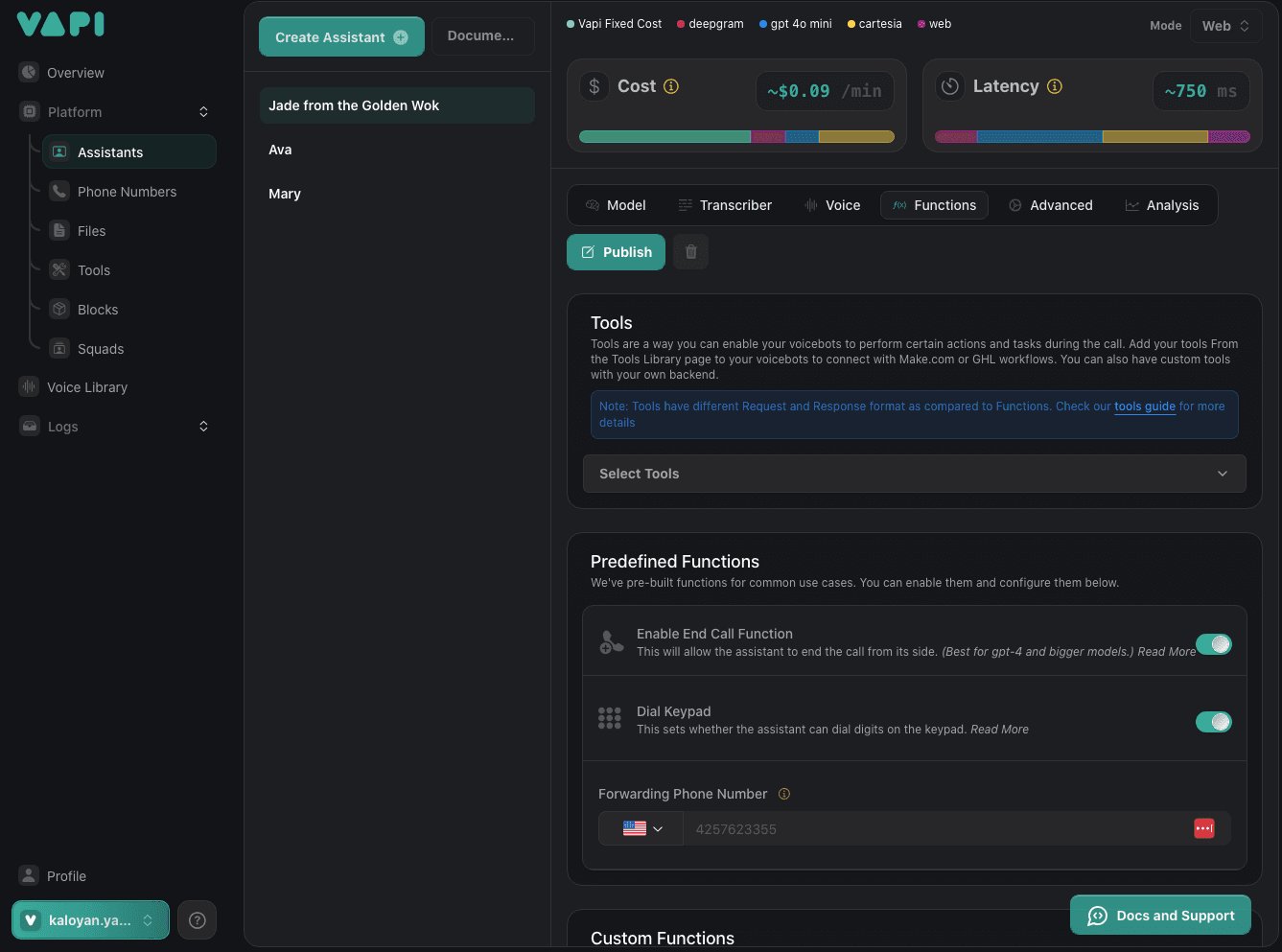
Vapi helps developers build and deploy conversational voice agents by bringing together speech recognition, language models, voice generation, and telephony services. Rather than requiring teams to integrate these components individually, the platform provides a managed environment where they can configure different providers, customize agent behavior, and monitor conversations.
Its flexibility makes it useful for businesses developing phone-based AI applications that need access to multiple models without managing the entire voice infrastructure themselves.
Why I chose Vapi
I chose Vapi for managed, multi-provider orchestration because it lets developers configure different speech recognition, language model, and voice synthesis services within a hosted conversational platform.
Rather than building a separate orchestration layer, teams can use Vapi to coordinate these components while connecting agents to telephone services and external applications. Its broad model integration and calling capabilities helped it earn a full Core Features score in the evaluation.
Vapi is worth considering for organizations that want to experiment with different AI providers while keeping much of the calling infrastructure managed.
This can be useful when developers need to compare model performance, refine conversation behavior, or connect agents to existing business systems. The main considerations are cost and operational visibility, since the advertised hosting rate is only one component of a production conversation, and additional charges may depend on the selected services.
Pricing
Vapi's pricing page lists:
- Voice-agent hosting: $0.05/minute.
- AI model providers: Separate charges may apply.
- Telephony: Additional carrier or infrastructure costs.
- Enterprise: Custom arrangements.
Features
- Multi-provider integrations: Connect supported speech, language, and voice models.
- Agent orchestration: Coordinate conversational processing.
- Inbound and outbound calling: Support telephone-based agents.
- Assistant handoffs: Transfer interactions between agents or destinations.
- Webhooks and tools: Connect external systems.
- Testing and monitoring: Access documented evaluation and diagnostic tools.
/uploa
Pros and cons
Pros | Cons |
|---|---|
| Flexible AI provider selection | Multiple charges complicate cost estimates |
| Managed orchestration | Core infrastructure is proprietary |
| Calling and business integrations | Some advanced capabilities vary by plan |
| Tools for managing agent interactions | Buyers should verify operational limits before deployment |

Deepgram: Best for API-first voice development
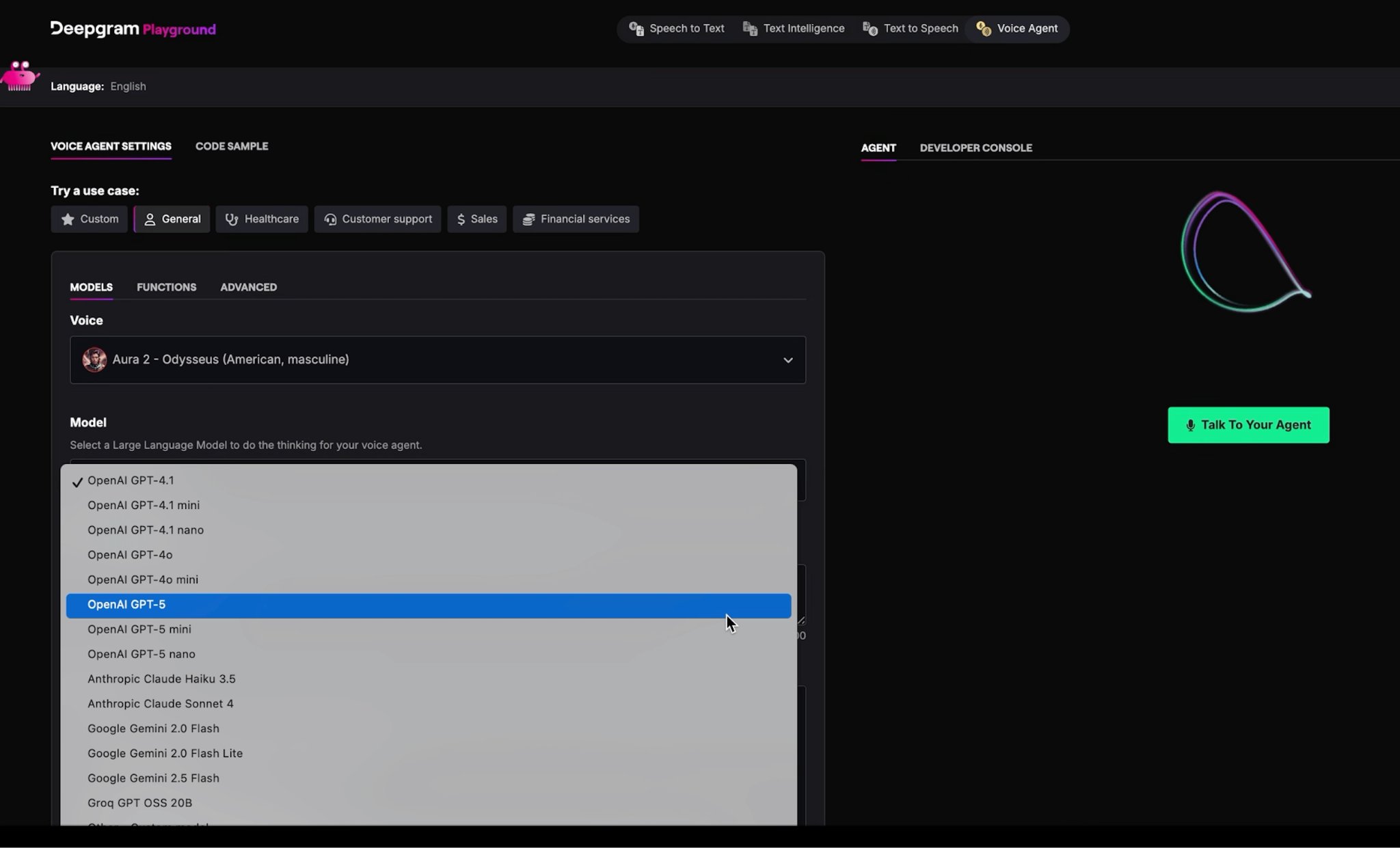
Deepgram offers speech recognition, text-to-speech, and conversational AI capabilities through APIs designed for real-time applications. Its Voice Agent API brings speech processing and language-model interactions together, helping developers build responsive voice experiences without managing every component separately.
This approach makes Deepgram a practical choice for teams that want to integrate voice functionality into existing applications while keeping development and infrastructure requirements manageable.
Why I chose Deepgram
I chose Deepgram for API-first voice development because its Voice Agent API brings speech recognition, language-model processing, and spoken responses together through a consolidated interface.
This approach can help developers add conversational capabilities to existing applications without independently connecting each stage of the voice pipeline. Deepgram also earned the highest Pricing score in my evaluation, supported by its published rates for bundled voice-agent processing.
Deepgram is particularly suited to engineering teams that already manage their own applications and want to integrate voice interactions through APIs.
Developers retain control over the surrounding application, including business integrations and user experiences, while relying on Deepgram for supported voice-processing functions. However, they still need to account for telephony, authentication, monitoring, and other production requirements that may sit outside the Voice Agent API.
Pricing
According to Deepgram's pricing page:
- Voice Agent Standard: Starting at $0.075/minute.
- Bring-your-own TTS configurations: Starting at $0.065/minute for supported configurations.
- Additional options: Custom model and provider arrangements.
- Enterprise: Custom pricing.
Developers should confirm exactly which processing components are included in each rate.
Features
- Voice Agent API: Build real-time conversational applications.
- Speech recognition: Process spoken input through Deepgram's speech services.
- Speech generation: Produce spoken responses using supported configurations.
- Function calling: Connect conversations to application tools.
- Streaming events: Access information about agent activity and processing.
- Telephony integrations: Connect calling infrastructure through supported services.
Pros and cons
Pros | Cons |
|---|---|
| Published bundled API pricing | Complete applications still require integration work |
| Speech services and conversational APIs | Telephony may involve external infrastructure |
| Function calling and streaming controls | Session-level observability requires additional implementation |
| SDKs and development examples | Less control over some pipeline components than a fully open framework |

Pipecat: Best for open-source voice agent development
Pipecat is an open-source framework for developers who want to build conversational AI applications with greater control over their underlying architecture. It supports real-time voice and multimodal interactions while allowing teams to combine different speech models, language models, and communication services within customizable processing pipelines.
Although this approach requires more development and infrastructure management than a fully managed platform, it offers flexibility for applications with specialized technical requirements.
Why I chose Pipecat
I chose Pipecat for open-source voice agent development because it gives engineering teams direct control over the components that make up a conversational application.
Developers can build custom processing pipelines, select different model providers, configure interruption handling, and connect agents to supported communication transports. This flexibility makes Pipecat particularly appealing for teams developing applications that need more specialized behavior than a managed platform typically offers.
Pipecat is also worth evaluating separately from Deepgram, despite their growing relationship. On Oct. 29, 2026, Deepgram announced plans to acquire Daily, the company behind Pipecat, while outlining plans for an independent foundation to keep the framework open source and vendor-neutral.
Unlike Deepgram's managed Voice Agent API, Pipecat allows developers to assemble and customize their own conversational pipelines. That freedom comes with additional responsibilities, including managing integrations, hosting, monitoring, and ongoing maintenance.
Pricing
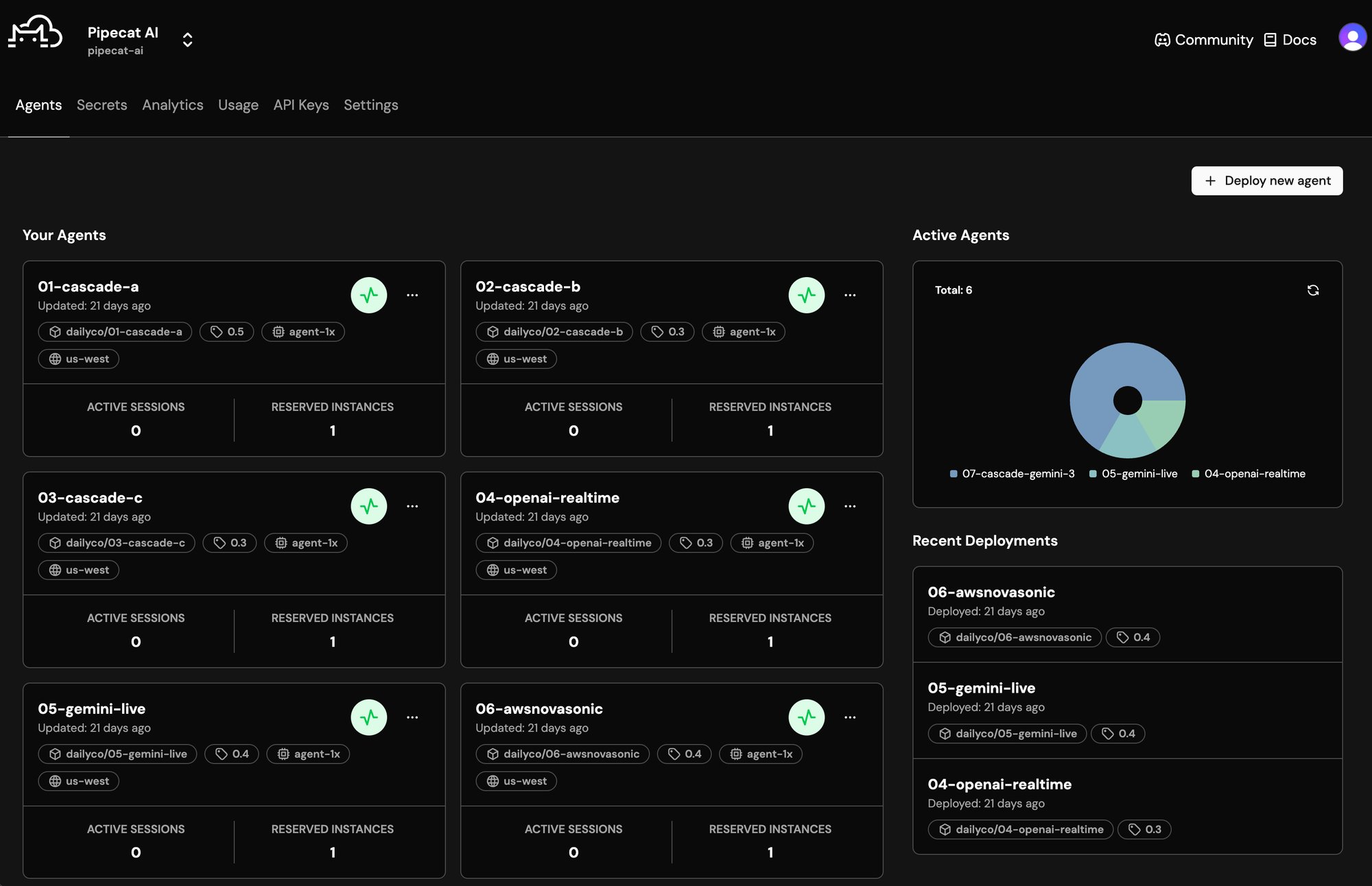
Pipecat Cloud pricing lists:
- Open-source framework: Free.
- Pipecat Cloud agent-1x: $0.01 per active minute.
- Higher-resource hosting: Additional rates.
- Model services and telephony: Billed separately where applicable.
Self-hosted deployments also involve infrastructure and maintenance costs.
Features
- Open-source framework: Inspect and customize the implementation.
- Configurable pipelines: Connect speech, language, and audio processing components.
- Multiple transports: Support compatible real-time communication services.
- Interruption handling: Configure conversational turn management.
- Tool calling: Connect agents to external application functions.
- Flexible deployment: Use self-managed or supported hosted environments.
Pros and cons
Pros | Cons |
|---|---|
| Open-source, code-oriented architecture | Requires additional engineering work |
| Flexible AI model and transport options | Hosting and model costs are separate |
| Customizable real-time conversation pipelines | Telephony depends on integration choices |
| Supports self-managed deployments | Operational maintenance is the team's responsibility |
Key features of AI voice agent platforms
Developers should evaluate voice AI platforms based on the requirements of their intended application rather than a single headline specification.
Real-time conversations and interruption handling
AI voice agents need to recognize speech, respond with minimal delay, and handle interruptions without losing the context of a conversation. When comparing platforms, developers should test how well agents manage pauses, background noise, different accents, and unexpected questions, since these factors directly affect how natural and reliable an interaction feels.
APIs, SDKs, and model integrations
APIs and SDKs allow developers to integrate voice agents into existing applications, connect business systems, and customize how conversations work. Look for well-documented development tools, support for preferred programming languages, and flexibility in choosing speech recognition, text-to-speech, and language models, particularly if your requirements may change over time.
Telephony and human handoff
For phone-based applications, consider whether a platform supports inbound and outbound calling, SIP connectivity, and integration with existing phone systems. Human handoff is equally important, especially in customer service environments where an agent may need to transfer a conversation to an employee while preserving relevant context.
Observability and testing
Conversation logs, transcripts, latency metrics, and testing tools help developers understand how agents perform after deployment. These capabilities make it easier to identify failed interactions, troubleshoot integrations, and assess whether changes to prompts or models improve the customer experience.
Security and deployment
Security features should include appropriate access controls, encryption, and options for managing sensitive information captured during conversations. Teams should also review data retention policies, hosting options, and regional deployment requirements, particularly when building agents for regulated industries or customers in multiple countries.
How to choose the best AI voice agent platform
Choosing the right AI voice agent platform depends on your use case, technical requirements, and available development resources. A managed platform may be more suitable for businesses building AI receptionists or customer support agents, while engineering teams developing customized voice or multimodal applications may prefer the flexibility of a code-oriented framework.
Before making a decision, consider the following:
- Match the platform to your development needs: Determine whether your team needs built-in telephony, ready-to-use agent tools, and managed infrastructure or greater control over models, integrations, and deployment. Consider the engineering resources required to build and maintain the application.
- Calculate the total operating cost: Compare platforms using the same assumptions for monthly conversation volume, average call duration, and peak concurrency. Include any additional charges for hosting, speech recognition, language models, voice generation, telephony, recordings, monitoring, and support, since advertised per-minute rates may not cover everything.
- Test realistic conversations: Evaluate how agents handle interruptions, misunderstood questions, lengthy interactions, failed integrations, and unexpected requests rather than relying solely on controlled demonstrations. Prioritize successful task completion, reliable human handoffs, and consistent response times over natural-sounding voices alone.
- Consider production requirements: Check whether the platform provides the monitoring, security controls, and deployment options your application needs as usage grows. For customer-facing agents, pay particular attention to troubleshooting tools, data handling requirements, and how easily developers can update or maintain the system.
How I evaluated AI voice agent platforms
I evaluated six AI voice agent platforms using nine source-based checks across five weighted categories. I reviewed official product documentation, published pricing, available support resources, and relevant G2 ratings and review counts. Scores were assigned out of five based on documented capabilities, limitations, and editorial assessments rather than hands-on performance testing.
Core features (40 percent): This category measures the essential capabilities developers need to build voice agents, including SDK and model flexibility, real-time conversations, and telephony connectivity.
I reviewed official documentation to assess the availability and scope of these features, including implementation requirements. Criteria winners: LiveKit, Vapi, and Pipecat
Advanced features (20 percent): I evaluated capabilities that support more complex deployments, including scaling options, observability tools, and security and privacy controls. Scores reflected documented functionality and relevant hosting or subscription restrictions rather than independently measured performance. Criteria winner: LiveKit
Pricing (15 percent): I compared published pricing structures, free allowances, usage-based charges, and additional costs for AI models or telephony. Rather than ranking platforms solely by their lowest advertised rates, I considered how clearly and predictably developers could estimate their expenses. Criteria winner: Deepgram
Developer experience (15 percent): I assessed each platform's SDKs, quickstart guides, sample projects, setup requirements, and development resources. I also considered G2 ratings and review counts where relevant, while recognizing that limited or unavailable reviews do not necessarily indicate poor usability.
Final scores incorporated editorial judgment about development requirements and available evidence rather than relying solely on customer ratings or hands-on usability tests. Criteria winner: Retell AI
Customer support and documentation (10 percent): I assessed the availability of technical documentation, tutorials, troubleshooting resources, community channels, and vendor support.
Scores accounted for documented support options and plan restrictions without assuming a particular response time or service quality. Criteria winners: Retell AI, ElevenLabs, LiveKit, Deepgram, Vapi, and Pipecat
Frequently asked questions (FAQs)
What is an AI voice agent platform?
An AI voice agent platform provides tools or infrastructure for developing applications that can understand spoken input, generate responses, and interact with users through voice.
Depending on the product, it may combine speech recognition, language models, speech generation, telephony, agent orchestration, deployment, and monitoring.
What programming languages can developers use to build AI voice agents?
Support varies by platform.
LiveKit provides Python and Node.js development options, while Pipecat is primarily a Python-based framework. Deepgram, Retell AI, Vapi, and ElevenLabs provide APIs and development resources for supported programming environments. Developers should confirm that the relevant SDK includes the specific capabilities their applications need.
Should developers choose a managed platform or an open-source framework?
Managed services can reduce the work required to host agents and integrate common services. Open-source frameworks provide more control over conversational architecture, model providers, and deployment.
The right choice depends on engineering resources, customization requirements, and operational responsibilities.
Can AI voice agents connect to existing business phone systems?
Yes. All six platforms have documented ways to connect voice agents to telephone services, although the implementation differs. Some provide managed calling infrastructure, while others rely on SIP connections, telephony APIs, or third-party providers.
Buyers should verify compatibility with their existing phone systems before selecting a platform.
How much does it cost to build an AI voice agent?
Costs vary according to the architecture, AI models, conversation volume, and supporting services. Budgeting should include speech recognition, language-model processing, speech generation, hosting, telephony, monitoring, and support.
Comparing providers using a representative production configuration gives a more realistic estimate than comparing their lowest advertised prices.
Bottom line: Best AI voice agent platforms for developers
Choosing the best AI voice agent platform requires balancing functionality, customization, cost, and long-term maintenance. While advanced features can make a platform appealing, businesses should focus on whether the technology can reliably handle the conversations and tasks their customers need.
A natural-sounding voice means little if an agent cannot resolve inquiries, complete requests, or transfer callers to a human when necessary.
Before committing to a platform, run a pilot using realistic customer scenarios and measure task completion, response delays, failed interactions, and human handoffs. Developers should also calculate the full operating cost, including AI models, telephony, hosting, and support, rather than relying on advertised starting prices.
Ultimately, the right platform should deliver a dependable customer experience without creating unnecessary costs or maintenance demands as usage grows.
For a closer look at the challenges of deploying conversational agents at scale, read our companion guide, How Enterprises Are Moving Voice AI Agents From Prototype to Production.