







Today we whip out our smartphones and make long-distance calls like it is not even a big deal. We don’t even have to remember phone numbers anymore because our phones remember them for us.
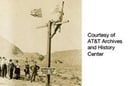
It certainly wasn’t as easy, convenient or inexpensive back on Jan. 25, 1915, when the first transcontinental phone call was made across the United States. With that 100-year anniversary here, it’s time to acknowledge the significance of that first transcontinental call and talk a bit about how much things have changed, progressed and morphed since those early days.
So just how big a deal was this event back in January 1915? It was huge, according to a Jan. 23 post on the AT&T blog, which celebrates that first transcontinental conversation as “the phone call that changed the world forever.” That call connected people thousands of miles apart, showcased a promise of universal communication and spurred a century of innovation shaping the world we live in today, according to the post.
“The call revolutionized communications for years to come,” the post said. “It marked the start of AT&T’s transcontinental telephone system, which at the time consisted of 130,000 telephone poles and 2,500 tons of copper wire stretching nearly 3,400 miles from New York to San Francisco. Today, AT&T provides service for nearly 119 million Americans.”
The call happened on Jan. 25, 1915, leading up to the opening of the Panama Pacific International Exposition and World’s Fair in San Francisco. Making the historic first transcontinental call was inventor Alexander Graham Bell from New York. Also on the call was Theodore Vail, president of the former American Telephone and Telegraph Company (now AT&T), U.S. President Woodrow Wilson from the White House and Bell’s assistant, Thomas Watson, who was in San Francisco, according to the post.
AT&T had stretched telephone lines across the nation in an amazing feat of engineering, and all of the technology that went into the call and the construction of the phone system at the time was state of the art for 1915. It was an incredible time to be alive and to see what telephones would bring to the nation and the world.
Fast forward to today, and it’s not much different. In January 2015, we have smartphones that have amazing computing power for telephone communications, data sharing, data storage, text communications and so much more. A phone call just about anywhere around the world can be made from the small smartphone in your pocket or purse. Alexander Graham Bell would love this, I’d say.
“We have come a long way since the first transcontinental call 100 years ago,” wrote AT&T in its blog post. “Just think how far we will go in the next century!”
As we acknowledge the 100th anniversary of that first cross-country call, that’s an intriguing thing to think about. What will smartphones of the future be like? It will be fascinating to see what’s next.