








- Amtrak’s New Siemens Locomotive With Digital Controls Cruises Rails
- Amtrak’s Sprinter Arrives at Washington’s Union Station
- The LCD View
- Analog Versions of Digital Displays
- You Can’t Miss These Signals
- An Eye Behind
- Looking at Everything
- Making It All Stop
- Not Exactly a Throttle
- In the Power Room
- Yes, This Is a Switching Power Supply
- Everything Is Solid State in This Locomotive
Amtrak’s New Siemens Locomotive With Digital Controls Cruises Rails
by Wayne Rash
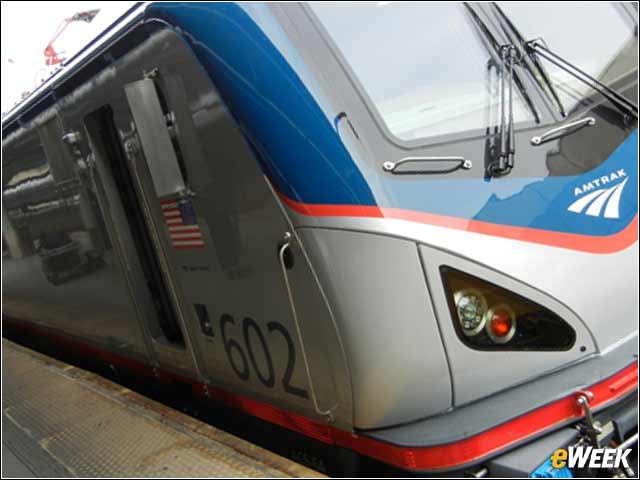
Amtrak’s Sprinter Arrives at Washington’s Union Station
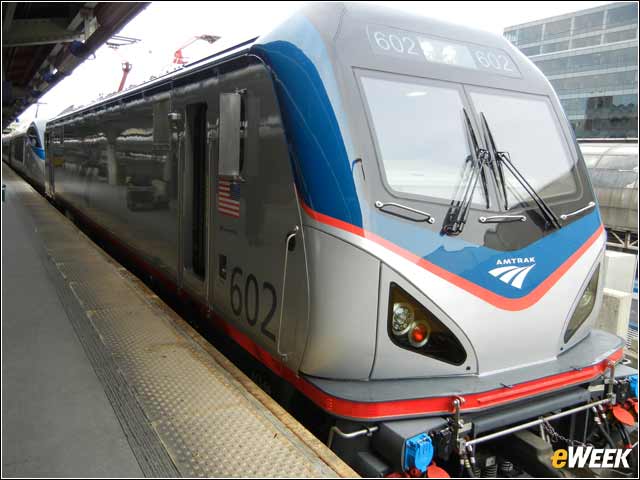
Amtrak and Siemens show off a shiny, new Cities Sprinter locomotive at Washington, D.C.’s Union Station right across the platform from Amtrak’s famed Acela high-speed train. The Sprinter is nearly as fast, cruising the Northeast Corridor at 125 miles per hour with as many as 18 passenger cars behind it.
The LCD View
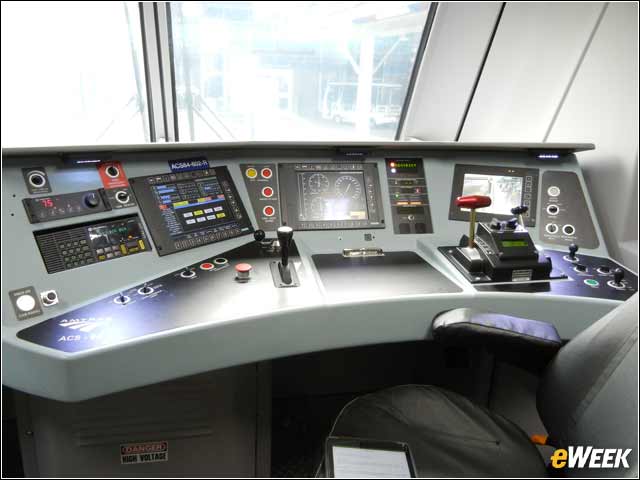
This is the engineer’s control position on the ACS64 locomotive. The array of LCD screens spread out before the engineer allows monitoring of everything from speed to bearing temperatures to wheel spin. All the controls, except one, are digital.
Analog Versions of Digital Displays
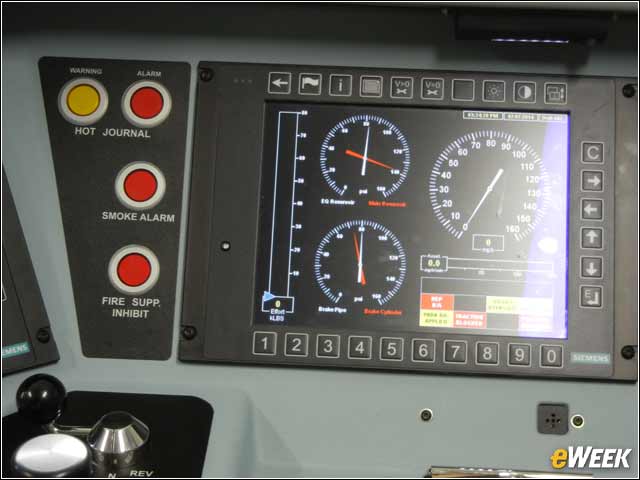
The central computer systems in the ACS64 display the information needed to control the locomotive digitally, but it can also present the display of the information in an analog form, which is easier for the engineers. Here, on the main display screen, information including speed, acceleration and tractive effort are displayed both as digital numbers and analog representations. The locomotive’s speed shows on a speedometer dial, and tractive force displays as a digital amount and as an analog bar graph.
You Can’t Miss These Signals
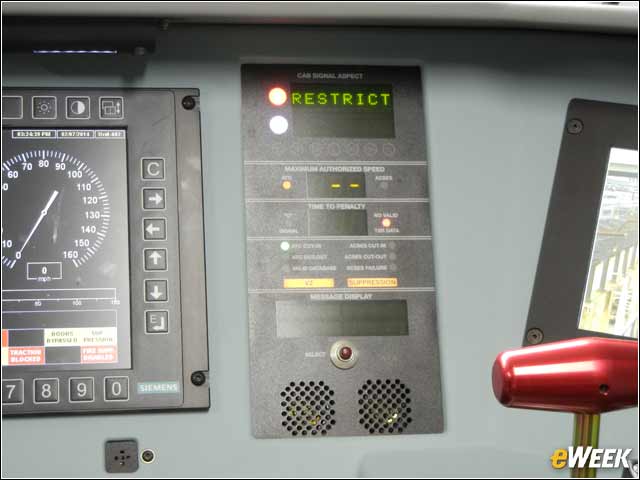
The train control system communicates with a computer in the locomotive to display current messages from the railway’s signaling system, showing the current signal condition, speed restrictions and the current authorized speed at any time. With this in the cab on the control console, the engineer can always see the current signal condition, and be prepared to slow or stop the locomotive in advance.
An Eye Behind
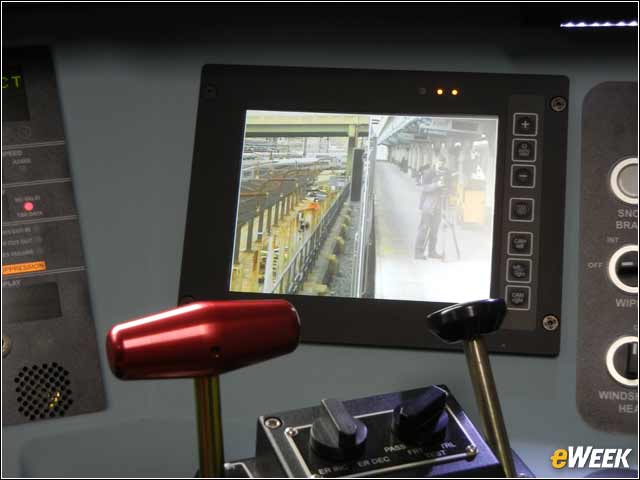
The ACS64 has a pair of rear-view cameras, one on each side of the locomotive, that let the engineer keep an eye on passenger cars behind without having to open a window and look outside.
Looking at Everything
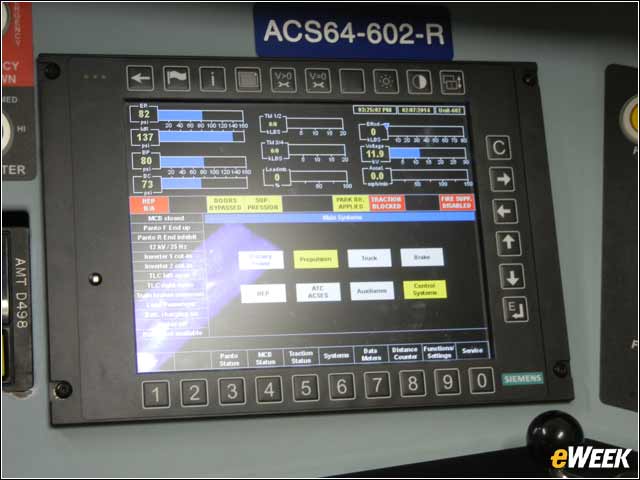
This is the main status display of the ACS64, showing the current readings from the sensors in the locomotive. The engineer can see everything important at a glance. This screen will also display the diagnostic information and recommended actions when the central computer discovers an anomaly, or when the remote monitoring tech support staff wants some action taken. This screen can show detailed views of sensor data, if needed.
Making It All Stop
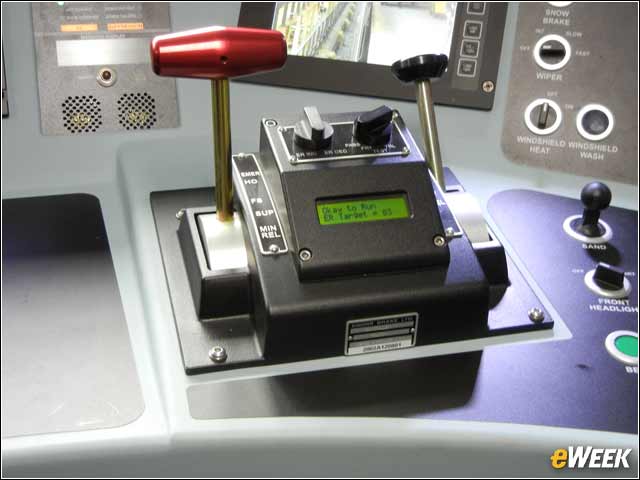
This is the braking console for the ACS64. The big, red lever on the left side of the console is for applying the brakes for the entire train, and it’s not digital. In fact, this is the only analog control in the locomotive, and it’s tied directly to the train’s airbrakes. You can’t risk a blown fuse with the train’s brakes. The black knob to the right of the console is an electronic control for the locomotive itself.
Not Exactly a Throttle
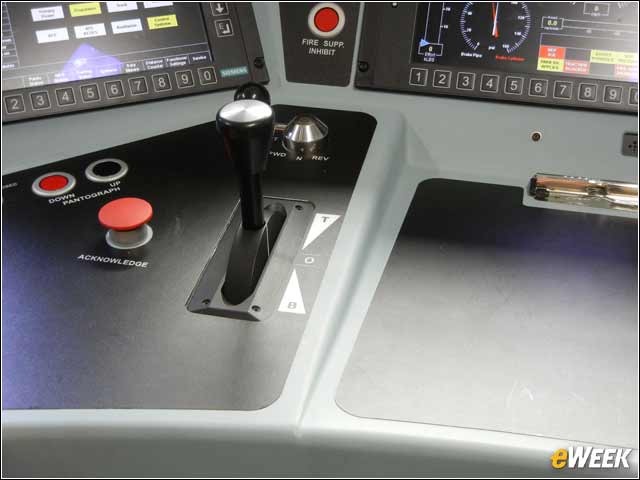
The large lever tells the locomotive’s computer to make the train go faster when it’s pushed forward. When the lever is pulled back, it changes the locomotive’s power system to a dynamic brake, which makes the traction motors become alternators; from there, electrical power is fed into the power cables above the track and, from there, into the power grid. The locomotive can generate up to 5 megawatts of electricity from dynamic braking.
In the Power Room
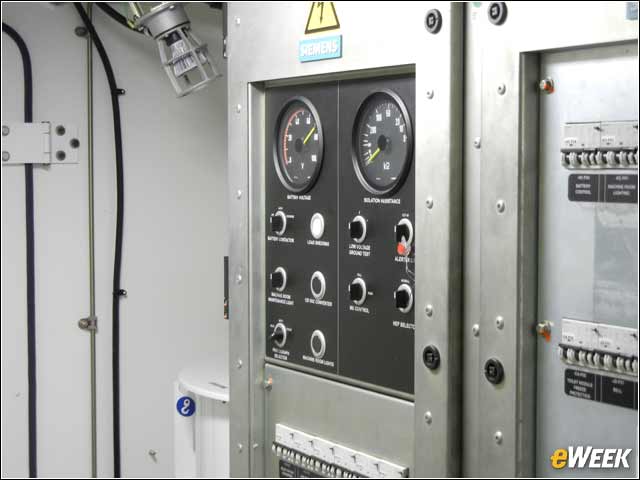
This is part of the power control system for the ACS64 locomotive. Behind this panel are the control electronics for the management system—which, in turn, controls the supply of electricity coming from the electrical power in the overhead wires to the traction motors.
Yes, This Is a Switching Power Supply
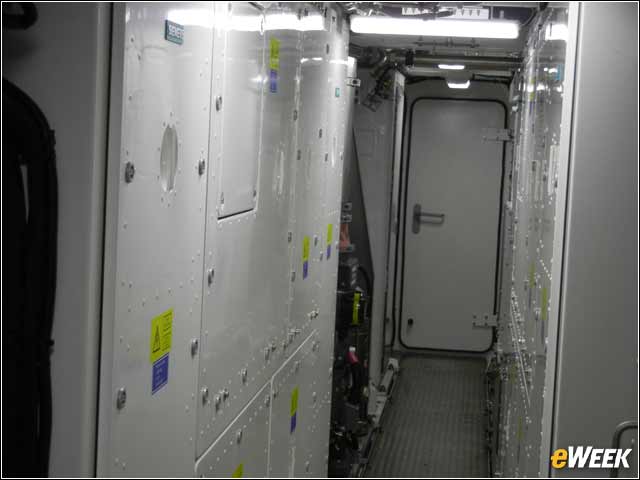
The electrical power for Amtrak’s Northeast Corridor varies from 11,000 volts at 25Hz near Washington to 12,500 volts at 60Hz between New York and Connecticut, to 25,000 volts at 60Hz between Connecticut and Boston. The control systems behind these panels sense the voltage and frequency of the power and automatically configure themselves to handle it properly. During dynamic braking, the control system also matches the phase of the power so that it can be fed back into the grid.
Everything Is Solid State in This Locomotive
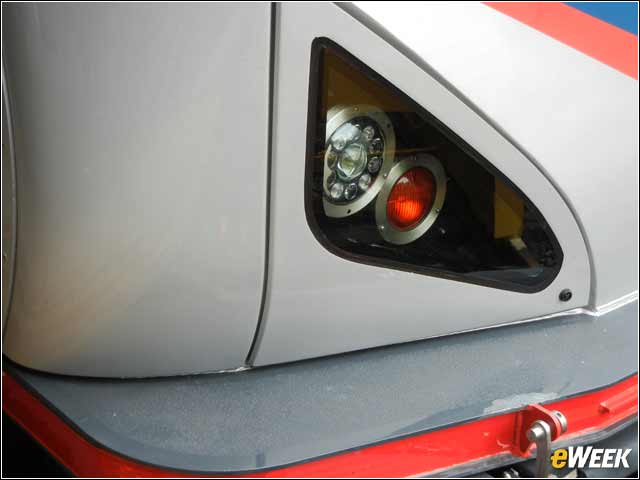
Even the headlights and ditch lights (which light up the area next to the tracks as the train travels along) are LED lights—kind of like the LED lights in a Lexus, except much brighter. Obsolete incandescent bulbs are gone from this locomotive in the name of weight and maintenance. And, yes, they do worry about weight even in a 217,000-pound locomotive.