







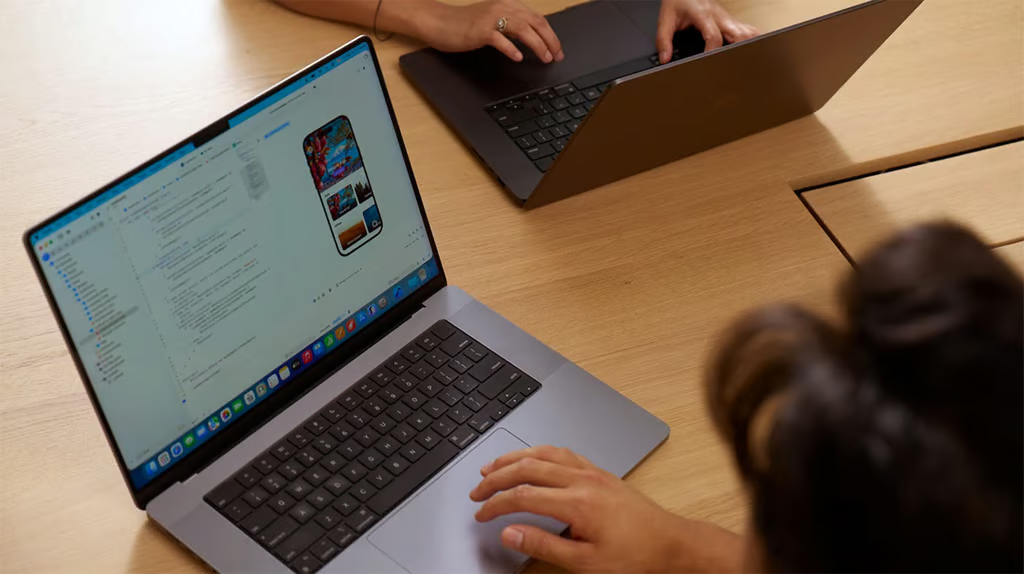
Apple is asking employees to use more artificial intelligence while reducing how much some engineers can spend on it. The restrictions come as companies weigh the cost of AI-assisted development against its productivity benefits.
Apple reportedly lowered daily AI spending limits for some engineers from $300 to $200 in October 2026, according to a November 4 Bloomberg report. Further reductions to $100 are under consideration for certain engineering teams, while some non-engineering employees could eventually face limits as low as $25.
The reported cuts target employee AI usage rather than Apple's overall investment in the technology. Their financial impact remains uncertain because the company has not disclosed actual savings or changes in engineering productivity.
Apple's reported AI spending limits
Bloomberg's investigation into the internal restrictions cited people familiar with the changes. Many groups outside engineering already operate under a $100 daily limit, while employees needing additional access can reportedly seek exemptions from senior executives.
The allowances cover AI tokens, the units of data processed by models including Anthropic's Claude, OpenAI's ChatGPT, and Google's Gemini. Coding and debugging workloads can consume substantial numbers of tokens, particularly when tools repeatedly analyze large codebases. Different billing structures, including those outlined in eWeek's AI pricing cheat sheet, complicate cost comparisons.
Some Apple teams are reportedly being encouraged to use cheaper models or alternatives running directly on devices. Local inference can reduce recurring cloud charges but introduces hardware and maintenance expenses. Microsoft's local coding AI, for example, has no per-call inference fees but recommends more than 120GB of RAM for optimal performance.
Apple's broader research spending continues to rise. Its fiscal 2026 annual report shows R&D expenses increased 32% to $45.8 billion, partly because of infrastructure-related costs, including AI investments, and employee-related expenses. The figure covers all R&D activities, not AI alone.
What eWeek Found: Lower AI caps do not guarantee savings
Apple's reported reduction from $300 to $200 cuts the daily spending ceiling by 33.3%, but actual savings depend on how much employees previously consumed.
If an engineer continued spending $150 daily, the lower ceiling would produce no savings because their usage would already fall below the limit. Someone spending $250 would have $50 in usage above the new ceiling, assuming no exemption or alternative funding. These hypothetical calculations illustrate the policy's potential effects, not Apple's actual spending.
Some employees told Bloomberg that few colleagues approached their original $300 allowance. Without companywide utilization figures, the savings cannot be quantified.
Amazon's updated engineering guidance offers a relevant comparison. It discourages excessive token consumption as a productivity measure and directs managers to evaluate engineering outcomes instead. Apple's reported restrictions focus on spending ceilings, while Amazon's guidance focuses on how usage is assessed.
Enterprises considering similar limits need to measure actual consumption, model costs, exceptions, and completed work. Apple has not disclosed the usage or productivity data needed to determine whether its restrictions reduce costs without disrupting development.
Want to learn more AI tips, tricks, and prompting techniques? Let us teach you How to Talk to AI for free! Try our six-minute course at The Neuron Academy, our practical learning platform designed to help professionals use AI more confidently at work.
Learn a few simple ways to write better prompts and get more useful results from AI, or browse our other AI course for free for seven days. eWeek readers get free 7-day access. Check out all the lessons here →