








UBTech’s first consumer humanoids show that lifelike conversation may reach the home before dependable domestic labor. The next test is whether these models can turn emotional interaction into useful, reliable help.
Shenzhen-based UBTech plans to begin delivering its U1 companion robots to Chinese buyers on September 16 after receiving more than 13,000 orders. The machines can hold AI-powered conversations, display facial expressions, and respond to emotions, but they cannot cook, clean, wash clothes, or provide the dependable physical help many people expect from a home robot.
Their arrival offers an early look at how China’s robotics industry is trying to move humanoids from controlled factory floors into unpredictable living spaces. For now, buyers are paying for emotional interaction, novelty, and early access to technology that is still learning how to be useful at home.
Inside UBTech’s first home humanoids
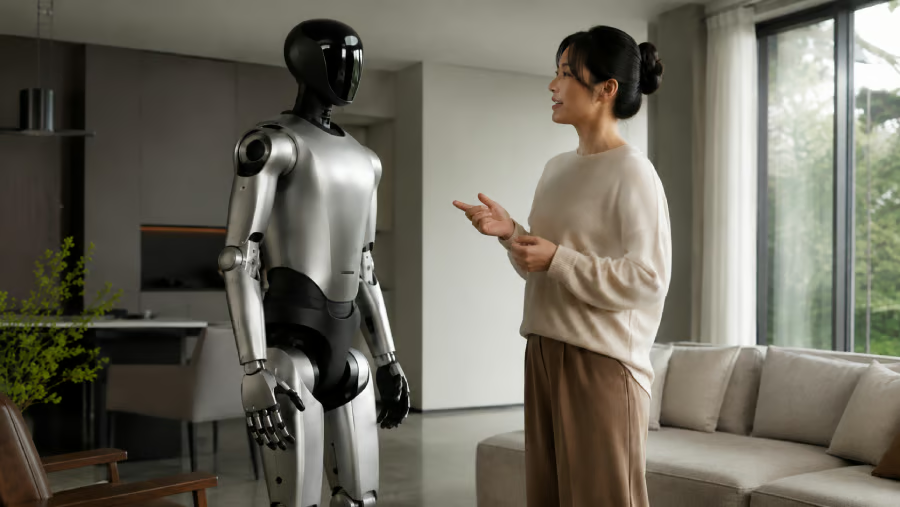
UBTech’s home humanoids can talk, react, and appear lifelike, but they are not yet capable of doing useful household work.
The U1 series includes Lite, Pro, and Ultra models priced from 119,800 yuan to 990,000 yuan. The company had received 13,361 orders by June 30, less than a month after opening pre-sales, the South China Morning Post reported.
The robots use voice interaction, AI-driven conversation, facial expressions, and lifelike digital skin to create a sense of presence. According to Reuters, UBTech said its emotional language model could identify more than 20 human emotions with accuracy exceeding 90%. The claim has not been independently verified.
Robots International noted that the top-end U1 Ultra Female model stands approximately 168 centimeters tall, weighs 35.2 kilograms, and has 88 degrees of freedom. Its silicone skin and articulated spine are intended to make its appearance and movements more humanlike.
Companionship comes before household chores
UBTech is positioning emotional companionship as a realistic starting point while the robots’ physical abilities develop.
“With AI capabilities developing, robots can first achieve companionship through large language models and emotional AI models,” CEO Zhou Jian said, according to SCMP.
“Household tasks such as cleaning, washing clothes and cooking can eventually be integrated with emotional interaction,” Zhou added.
Early buyers appear divided over whether that is enough to justify the price. Some told the South China Morning Post they wanted a front-row seat to emerging technology and had modest expectations. Others requested refunds after demonstrations showed little practical physical capability.
For consumers, the contrast is between an expensive humanoid built around a future vision and cheaper home robots that already solve narrow problems. For instance, companion robots displayed at the Hong Kong Cat Expo could patrol rooms, stream video, dispense treats, and let owners interact remotely with their pets for between HK$749 and HK$1,579.
China tests whether robots belong in the living room
UBTech is betting that China’s aging population, falling birth rate, and growing number of single-person households will create demand for robotic companionship. SCMP noted that TrendForce projected that the companion humanoid market could reach US$1.1 billion by 2030.
For Chinese consumers, the immediate takeaway is that home humanoids are still luxury companion devices rather than practical household assistants. Buyers are paying for early access, novelty, and emotional interaction, not meaningful help with daily chores.
For the wider APAC robotics market, UBTech’s launch may serve as an early test of whether consumers will accept high-priced humanoids before their physical capabilities catch up with their conversational AI.
Broader adoption will depend on more than realistic skin and conversational AI. To move beyond companionship, home humanoids will need to navigate unpredictable spaces safely, handle objects reliably, address privacy concerns, and complete useful tasks without constant supervision.
UBTech’s first consumer models show that lifelike conversation may reach the home before dependable domestic labor. The next major test is not whether a robot can smile back. It is whether it can help with the dishes.
Read next: See how Unitree’s latest AI could make home humanoid robots more practical.