






.jpg?w=1024)


The Asia-Pacific region has become the center of gravity for embodied AI.
China now accounts for the vast majority of global shipments of humanoid robots, South Korea's industrial conglomerates are racing to buy or build their own humanoid platforms, and Japan is putting robots to work in airports and convenience stores rather than in research labs.
The common thread isn't novelty; it's demographics. Japan, South Korea, and China are all aging faster than almost any other major economies on earth, and each is short hundreds of thousands of workers in logistics, construction, eldercare, and retail. Robots are increasingly being described not as a threat to jobs but as a way to keep economies running when there simply aren't enough working-age people to fill open roles.
Research firm Omdia put total global shipments of humanoid robots at roughly 13,000 units in 2025, with Chinese manufacturers accounting for most of that volume.
Morgan Stanley has since doubled its forecast for China's 2026 humanoid sales alone to 28,000 units, and projects the country's annual humanoid market could reach 54 million units by 2050. Whatever the precise number, the direction is clear, and the robots below are where that growth is actually happening.
Here are 12 robots and the companies behind them, shaping that story across the region.
Unitree G1
Hangzhou-based Unitree built its reputation on robot dogs, but its G1 humanoid has become the industry's price-disruption story.
The base G1 starts at about $13,500, weighs around 35 kg, and has 23 degrees of freedom (DOF), while the EDU variant adds up to 43 DOF, an optional three-fingered Dex3-1 dexterous hand, additional waist and wrist joints, and support for higher-compute add-on modules like Nvidia's Orin.
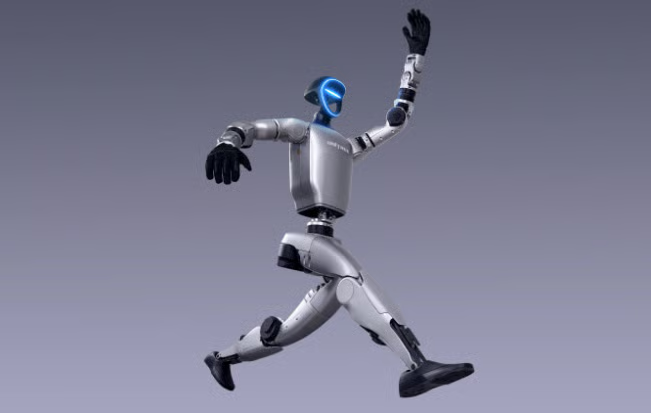
Both versions share a depth camera plus 3D LiDAR sensing array, dual-encoder joints, WiFi 6 and Bluetooth 5.2, a 9,000mAh hot-swappable battery good for about two hours, and continuous OTA software updates, with warranty terms running 8 months on the base unit and 18 months on the EDU model.
Unitree has leaned hard into demonstrating durability rather than just choreography. Early this year, the company put a jacket- and legging-clad G1 through more than 130,000 autonomous steps in temperatures as low as -47.4°C (-53°F) in Xinjiang's Altay region, tracing a Winter Olympics broadcast logo across the snow, a stress test the company says no rival humanoid (most of which top out around -20°C) has matched.
UBTech Walker S2
Walker S2 is built around a deceptively simple problem: keeping a robot productive once the demo lights go off. At 1.76m and 70kg with 52 degrees of freedom (7 per arm, 11 per hand, 2 in the waist, 6 per leg, 2 in the neck), it can carry up to 15kg total payload (7kg in a single hand) and is driven by UBTech's Co-Agent and BrainNet 2.0 AI stack for task planning, perception, and autonomous anomaly handling.
Its signature feature is a dual-battery hot-swap system: the robot can navigate to a charging station, eject its depleted pack, and insert a fresh one in about three minutes without a human ever touching it, enabling near-round-the-clock operation.
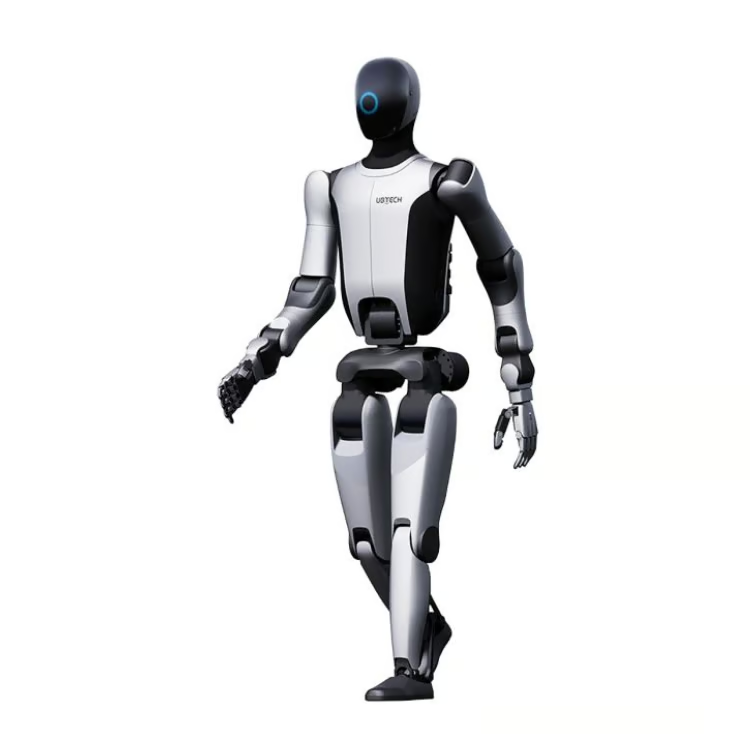
UBTech has already shipped Walker S2 commercially: the company began mass deliveries of its first batch of units in 2026, targeting 500 robots delivered this year on the way to an annual production capacity of 5,000 units by 2026 and 10,000 by 2027.
Orders for the Walker series have topped 800 million yuan (approximately $112 million) since early 2025, including a 159-million-yuan data-collection-center deal in Zigong and a 250-million-yuan order last September, with customers including BYD, Dongfeng Liuzhou Motor, Geely, FAW-Volkswagen Qingdao, Audi FAW, BAIC New Energy, Foxconn, and SF Express. Direct enterprise pricing runs from roughly $145,000 to $180,000.
AgiBot A2 (Zhiyuan Robotics)
Founded by former Huawei engineer Peng Zhihui, AgiBot has declared 2026 the "first year of deployment" for its humanoid line, scaling toward an annual production of 10,000 units as it shifts from technical demos to what it calls mass-market commodity manufacturing.
Its A2 model is pitched specifically at service and reception roles rather than the factory floor: marketing, exhibition-hall guidance, supermarket assistance, and front-desk inquiries.
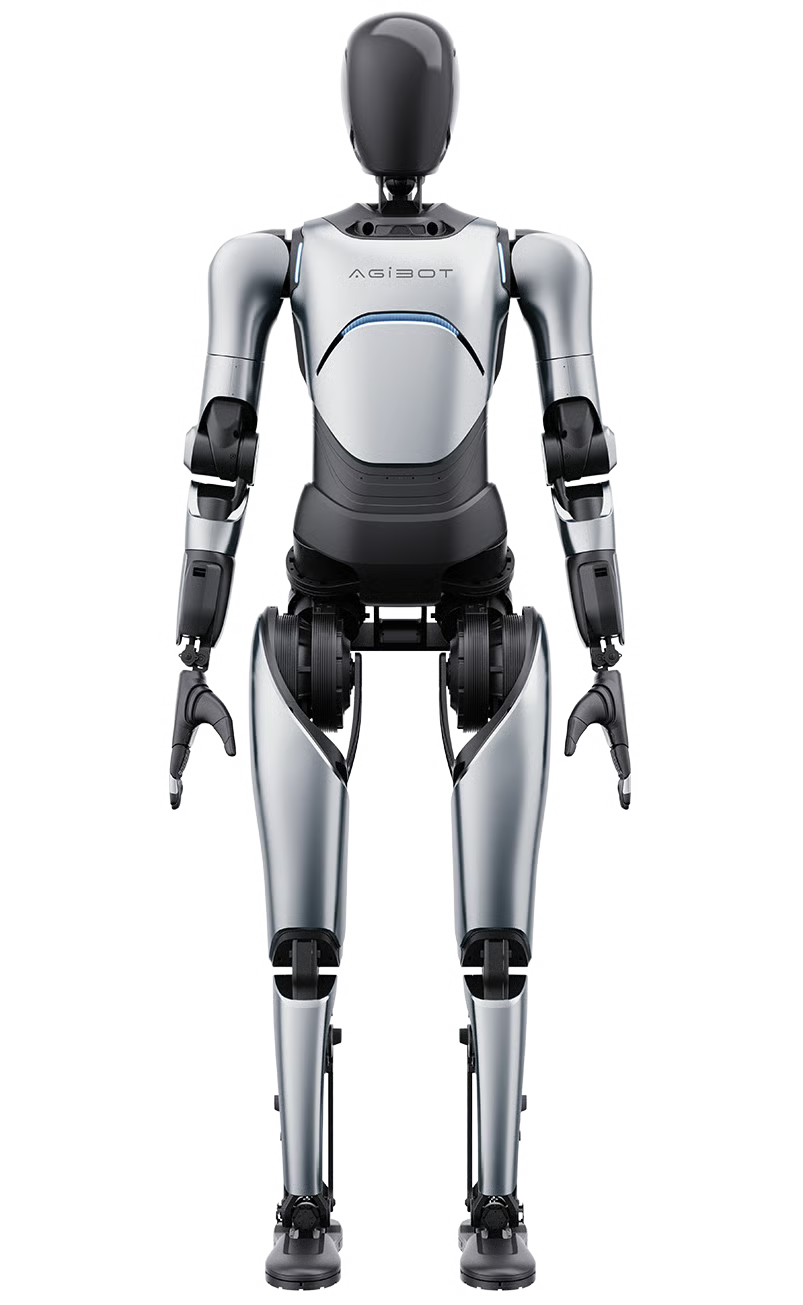
At 169cm and 69kg with a 700Wh swappable battery (about two hours of runtime) and 40-plus active degrees of freedom, A2 pairs an ergonomically human-proportioned body with an LLM and RAG conversational stack that builds custom enterprise knowledge bases, plus an "ActionGPT" system that translates voice commands into natural-looking gestures.
UBTech-style precision in perception backs this up: AgiBot claims 96% voice-recognition accuracy and a 99% face-wake rate even in noisy environments.
AgiBot's broader bet isn't the robot shell; it's the full stack of hardware, developer tools, and motion datasets meant to let robots learn from physical environments rather than rely purely on pre-programmed routines.
Fourier GR-2 and GR-3 ‘care-bot’
Shanghai's Fourier brings a decade of rehabilitation-robotics experience; its exoskeletons and therapy devices are already used in more than 2,000 medical institutions across 40-plus countries. The GR-2 stands 175cm tall and weighs 63kg, with 53 total degrees of freedom, including 12-DOF dexterous hands carrying six array-type tactile sensors apiece.
Its FSA 2.0 actuators deliver more than 380 N·m of peak torque, enough to help lift a patient or move furniture, while a dual-encoder system doubles control accuracy and a swappable battery extends runtime to roughly two hours. GR-2 walks at up to 5 km/h and can be operated via VR remote control, lead-through programming, or direct command, with a software toolkit built around ROS, Nvidia Isaac Lab, and MuJoCo.
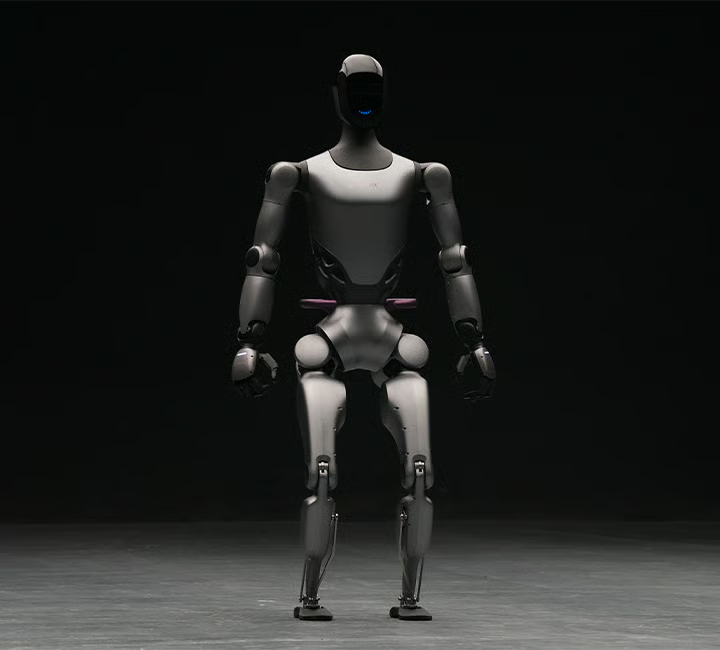
Its 2026 successor, the GR-3 "Care-Bot," trades bare metal for a soft-shell design, automotive-grade upholstery over eco-friendly foam padding, explicitly aimed at making the robot feel less clinical.
GR-3 layers in a dual-path interaction system: quick reflexive responses (turning to face someone who calls its name) handled by rule-based control, and deeper, more contextual responses generated by an LLM for repeated or nuanced conversations.
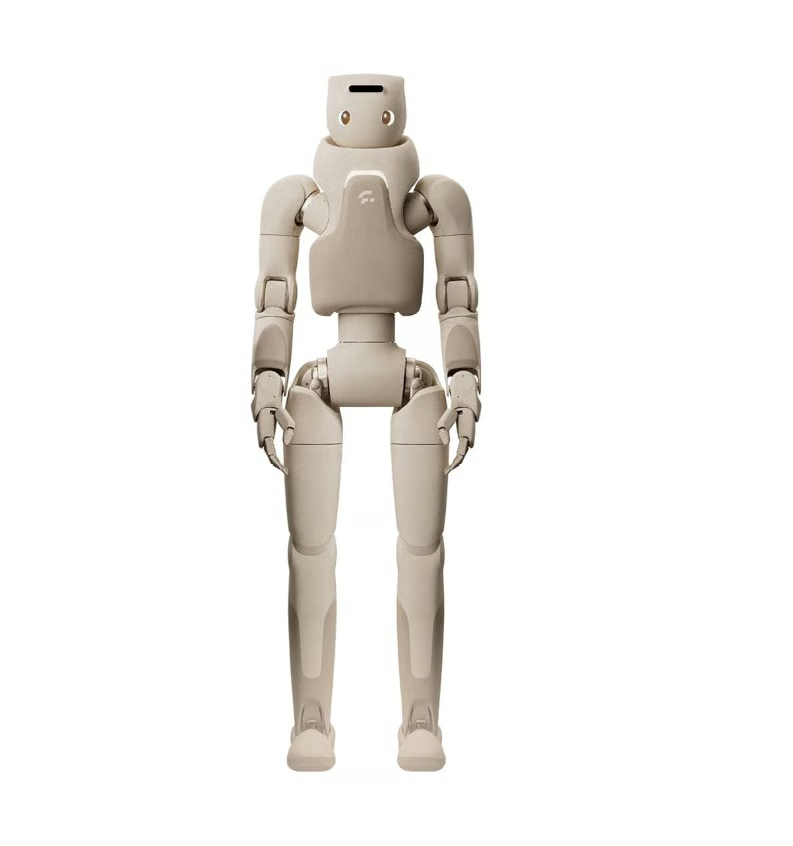
GR-3 is aimed at eldercare, rehabilitation, hospitals, and guided tours, a bet that in rapidly aging societies, humanoids may matter as much for emotional companionship as for raw labor.
Robotera L7
Robotera's L7 is a full-size bipedal humanoid built for work. It’s 1.71m tall and 65kg (without its hand attachment), with 55 total degrees of freedom once its 12-DOF XHAND1 dexterous hand is included. Its knee joints deliver 400 N·m of peak torque at speeds up to 25 rad/s, its dual arms can jointly carry a 20kg payload across a 2.1-meter arm span, and it can run at up to 4 m/s, quick enough for warehouse-pace work.
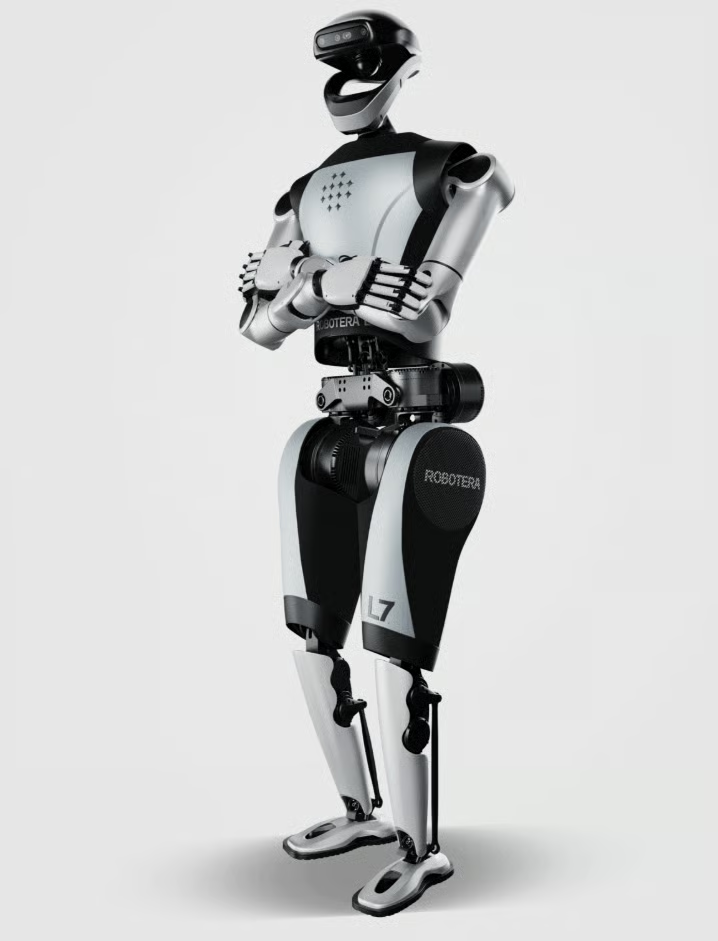
Beijing-based Robotera has moved past the pilot stage that still defines most humanoid programs: its robots are already working inside more than ten logistics centers run by China Post and SF Holding, sorting and moving packages as part of a national push to convert demonstration projects into commercial deployments.
EngineAI PM01
At 138cm and roughly 40kg with 24 degrees of freedom, the PM01 is deliberately smaller and cheaper than most of its full-size rivals. EngineAI markets it as a "fully open" general-purpose platform for research, education, and early commercial development, with a launch price around 88,000 yuan (roughly $12,000–$13,700 in initial coverage, though global enterprise listings run closer to $26,000).
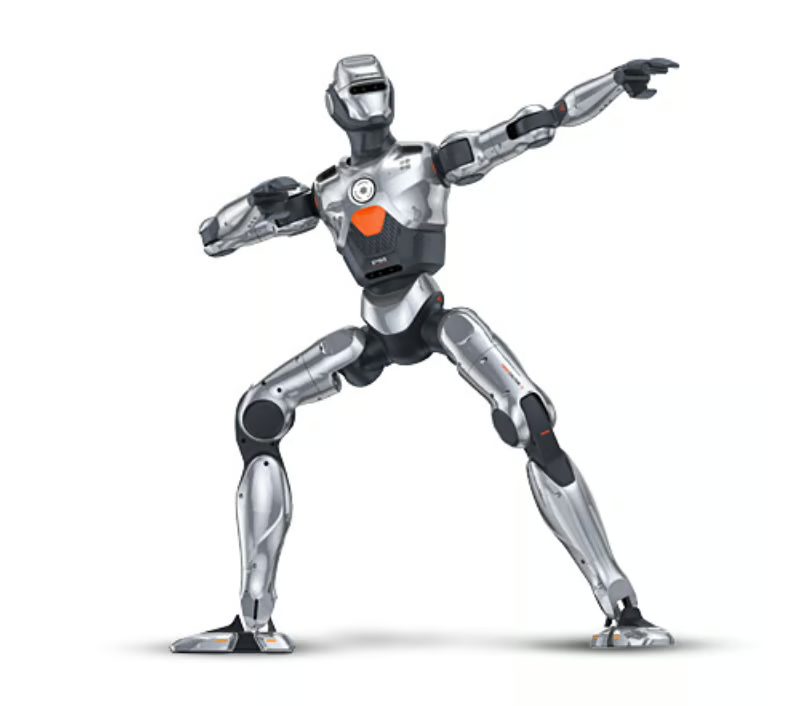
A dual-processor setup pairing an Intel N97 with an Nvidia Jetson Orin handles AI inference and motion control, a swappable battery (reportedly around 10,000mAh) provides roughly two hours of runtime, and the robot can move at up to 2 m/s with a notably wide range of waist rotation.
PM01's open-source positioning has made it popular with university labs and embodied-AI researchers looking for an accessible platform to build on rather than a closed showcase robot.
LimX Dynamics — Oli and Luna
LimX Dynamics has split its humanoid ambitions across two distinct products. Oli is the company's commercial, general-purpose play: a base model retailing for 158,000 yuan (about $22,660) with a developer-focused version costing nearly twice that for custom integrations.
LimX launched COSA, a proprietary AI operating system designed to let robots make autonomous decisions, picking up objects or navigating a cluttered room in real time, rather than relying on the teleoperation that still underpins most humanoid demos.
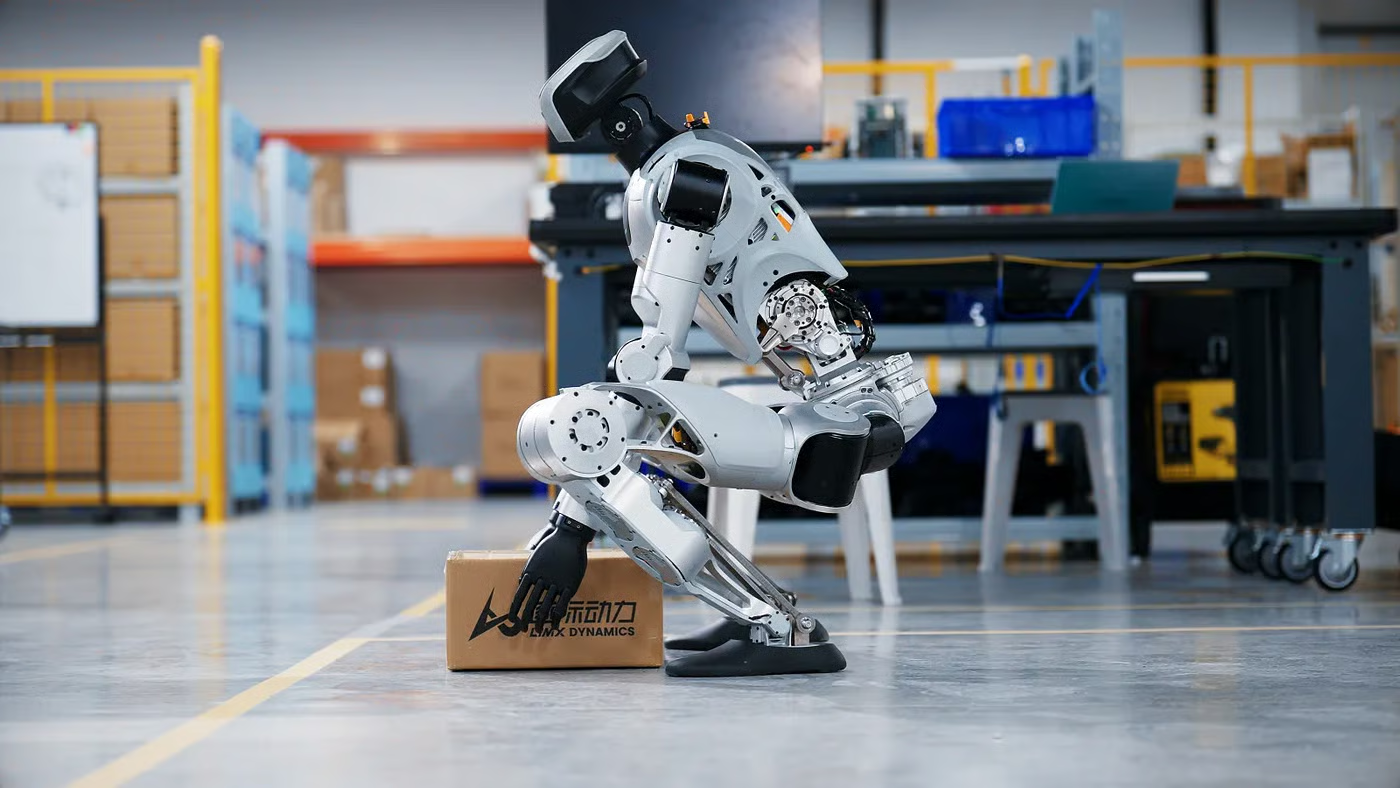
Luna, by contrast, is built for spectacle. The 160cm, 27-DOF humanoid is designed around dance, gymnastics, and catwalk-style performance, powered by a second-generation "Sys 0" motion engine and capable of synchronized swarm control across more than 200 units with millisecond precision.
A video-to-motion feature lets Luna learn choreography directly from footage, while a natural-language "AI task editor" lets a human simply describe a scene and have the robot compose matching dance, voice, and visual cues.
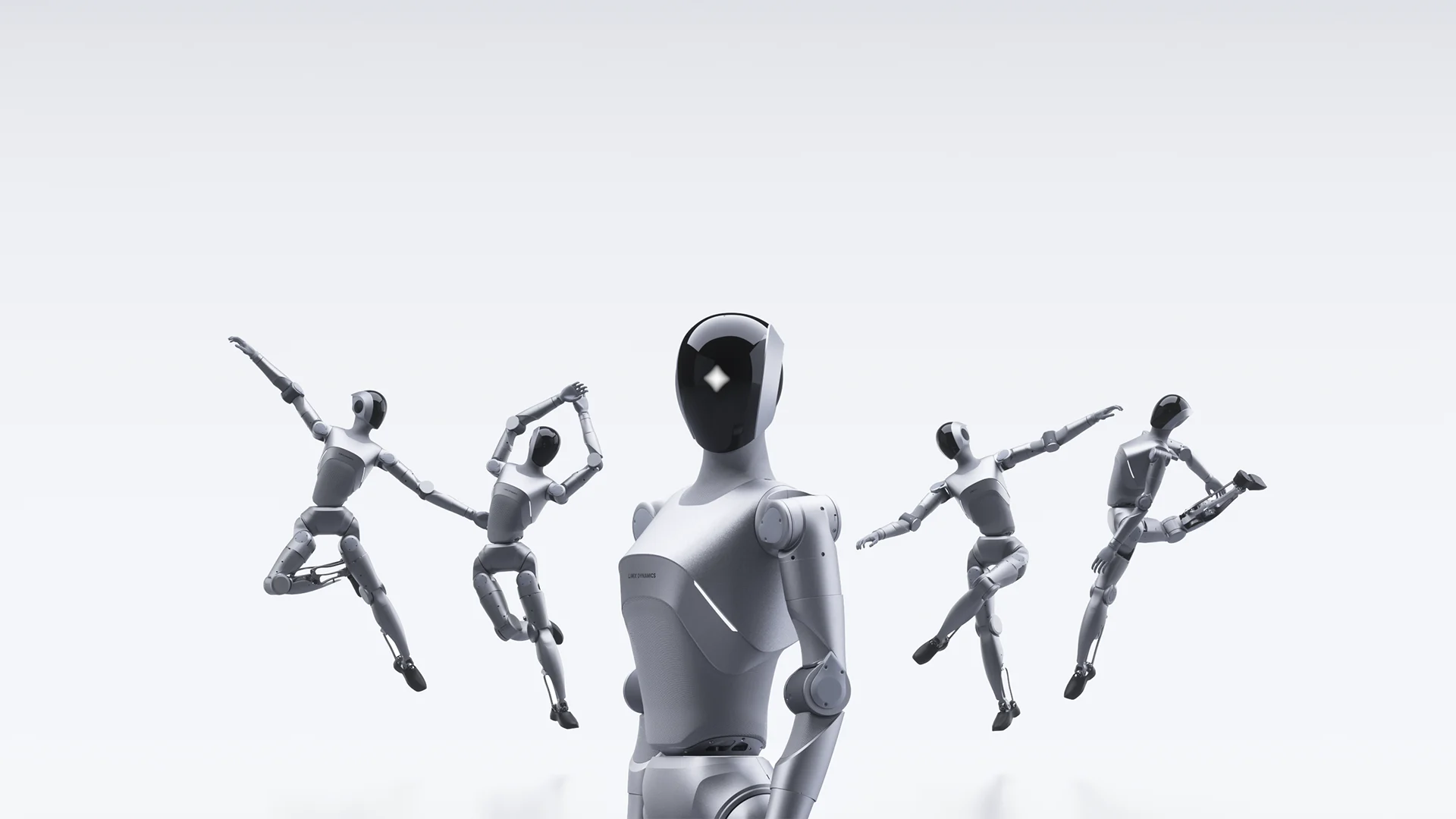
Upgraded thermal management cuts joint-surface temperatures by about 30% and extends battery life by roughly 150% versus the prior generation, and a layered safety system — active fall mitigation, external-force sensing, a hardware e-stop — keeps performance from turning into liabilities. Between Oli's affordability push and Luna's choreography stack, LimX is betting on both ends of the market at once: cheap general-purpose labor and big, synchronized public spectacle.
Unitree Go2 and B2
While Unitree's humanoids grab headlines, its quadrupeds remain the backbone of the business; the company controls roughly 60–70% of the global robot-dog market.
The consumer-focused Go2 carries Unitree's self-developed 4D LiDAR L1 for 360°×90° omnidirectional sensing, joints rated to 45 N·m of peak torque with heat-pipe-assisted cooling to prevent overheating, and a GPT-series large language model for natural-feeling conversational interaction, letting owners fetch a ball, set patrol routes for home security, or mount their own AI models via an open interface.
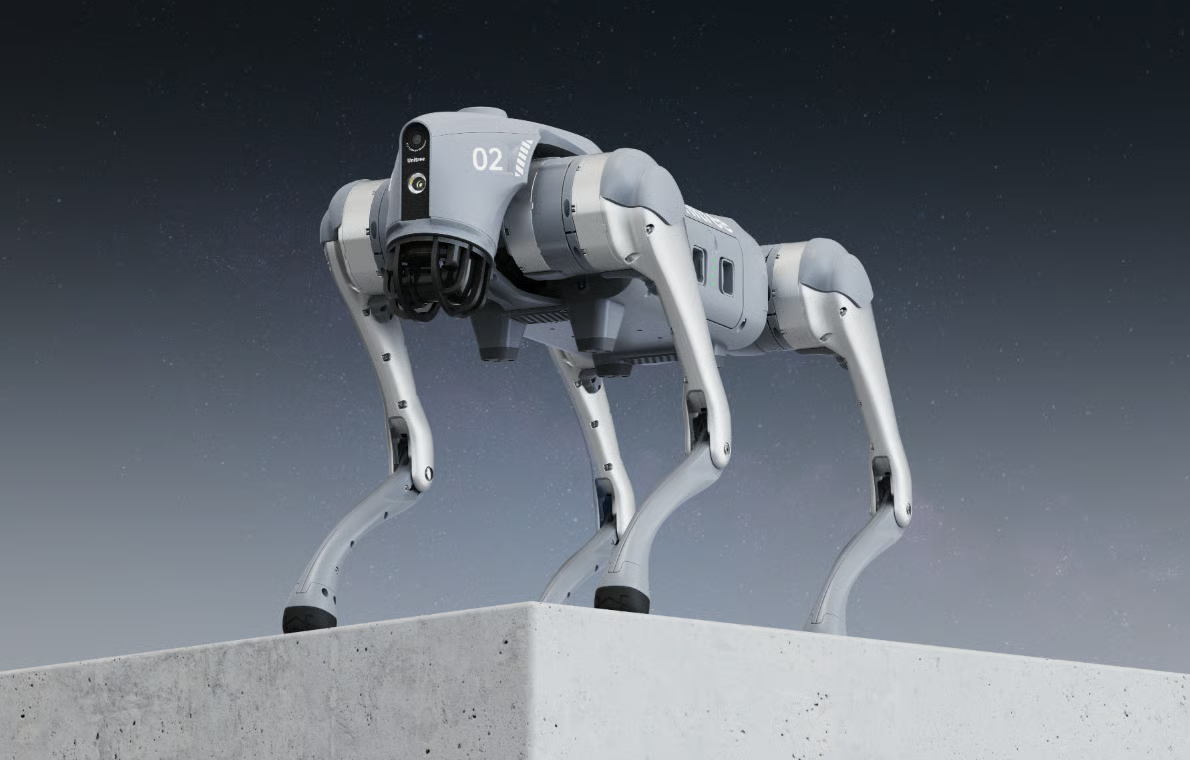
The industrial-grade B2 is a different animal entirely: it tops out at 6 m/s (among the fastest production quadrupeds available), clears 1.6-meter obstacles, and delivers 360 N·m of peak torque, a 170% jump over the prior generation, letting it climb 40cm steps.
A 45,000mAh, 2,250Wh battery gives it more than five hours of unloaded runtime and stable operation even under sustained 20kg loads, while IP67 sealing lets it work through high heat, humidity, cold, and toxic-gas exposure, exactly the conditions found in power-line inspection, firefighting, and disaster-response work.
Deep Robotics X30
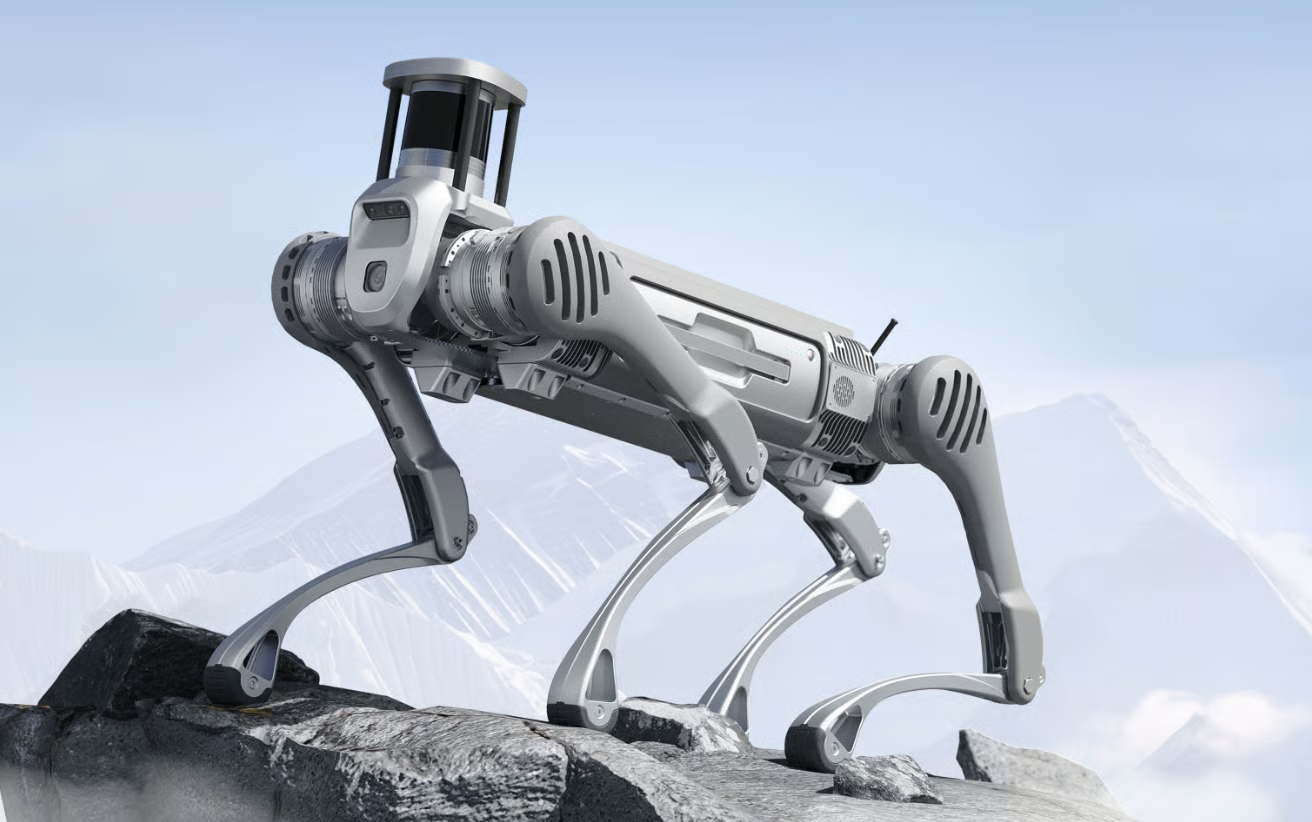
Hangzhou's Deep Robotics builds its X-series quadrupeds specifically for environments where wheeled and tracked robots struggle with: power substations, construction sites, and mining operations.
The X30 measures roughly 1,000×695×470mm and weighs 56kg with its battery installed, reaches speeds of 4 m/s or more, and can climb 45-degree stairs and slopes while clearing obstacles at least 20cm tall. A fused multi-sensor perception system lets it navigate and operate autonomously even in total darkness, blinding glare, or flickering light, useful for windowless substations and night patrols alike.
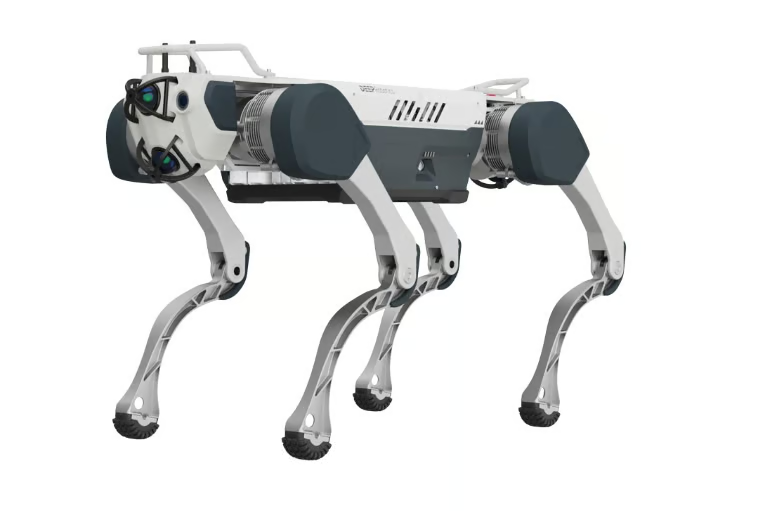
It's rated IP67 and built to run from -20°C to 55°C, with 2.5 to 4 hours of endurance per charge (extended via quick battery swaps) and a range of at least 10km. At an estimated $40,000–$65,000, the X30 remains well under Boston Dynamics' Spot while offering APAC utilities and industrial operators a heavy-payload inspection platform built for exactly their climate extremes.
The big picture: Orchestration, not isolation
The robots above are being built and deployed for a very specific reason: APAC's most advanced economies are running out of workers before they run out of jobs. Japan's working-age population has been shrinking for over a decade, with roughly 30% of its population now over 65; South Korea and China face comparable trajectories.
Framed against that backdrop, much of the case for humanoids and robot dogs in the region is less "robots versus jobs" and more "robots versus no one applying for the job at all."
World Bank research on East Asia and the Pacific found that between 2018 and 2022, robot adoption helped create an estimated 2 million jobs for skilled workers across five ASEAN countries while displacing roughly 1.4 million lower-skilled positions, gains and losses that didn't land on the same people.
China's own government has acknowledged the tension directly: a 2026 industrial policy push explicitly designed to move humanoids from demonstrations into "real-world tasks" coincides with a shrinking working-age population, which the government counts as one of the country's biggest long-term economic risks.
What's distinct about the APAC robot race isn't just the pace of deployment; it's that governments, not only companies, are treating embodied AI as industrial policy. South Korea's K-Humanoid Robot Alliance and China's national rollout targets are explicit bets that whoever masters humanoid manufacturing and the AI models behind it will own a multi-trillion-dollar industry, not just solve a local staffing problem.
Also read: Codey is moving toward public spaces as Mind Children tests autonomy, conversation, and companion features in a three-foot AI robot.