








Disney’s latest AI push is moving into the design pipeline behind its theme parks, attractions, and franchises.
The Walt Disney Co. and Adobe have announced a partnership to bring Adobe Firefly Foundry into Walt Disney Imagineering R&D for design and pre-production visualization across Disney Parks and Experiences. The deal shows how generative AI is entering brand-sensitive creative workflows, while Disney’s separate ride-safety patent activity points to AI-assisted operations behind the scenes.
Adobe said on June 16 that Adobe Firefly Foundry will help Imagineering teams work with custom AI models trained around Disney’s creative needs. The announced workflows include concept art, visualization, and 3D prototyping, giving designers a faster way to explore ideas before they become physical attractions or experiences.
Disney’s park scale explains why these workflows matter beyond concept art. In May 2025, then-CEO Bob Iger said Disney had hosted more than 4 billion guests across six theme park destinations and announced plans for a seventh destination in Abu Dhabi, with Miral developing and operating the resort under license. Faster design iteration, clearer visualization, and better operational planning can add up across a global parks business.
How Firefly fits into Imagineering
Firefly Foundry is not a public consumer tool being dropped into Disney’s parks. Adobe describes it as a custom AI model program that can be trained around a company’s brand, intellectual property, and creative workflows. For Disney, that means another pre-production layer for visualizing attractions, environments, and franchise-based experiences.
For enterprise teams, the control layer is the bigger issue. Adobe’s broader AI push has centered on creator trust and control, a priority for companies using generative tools in design environments where intellectual property, brand consistency, and production approvals matter.
Where Disney’s AI work moves into operations
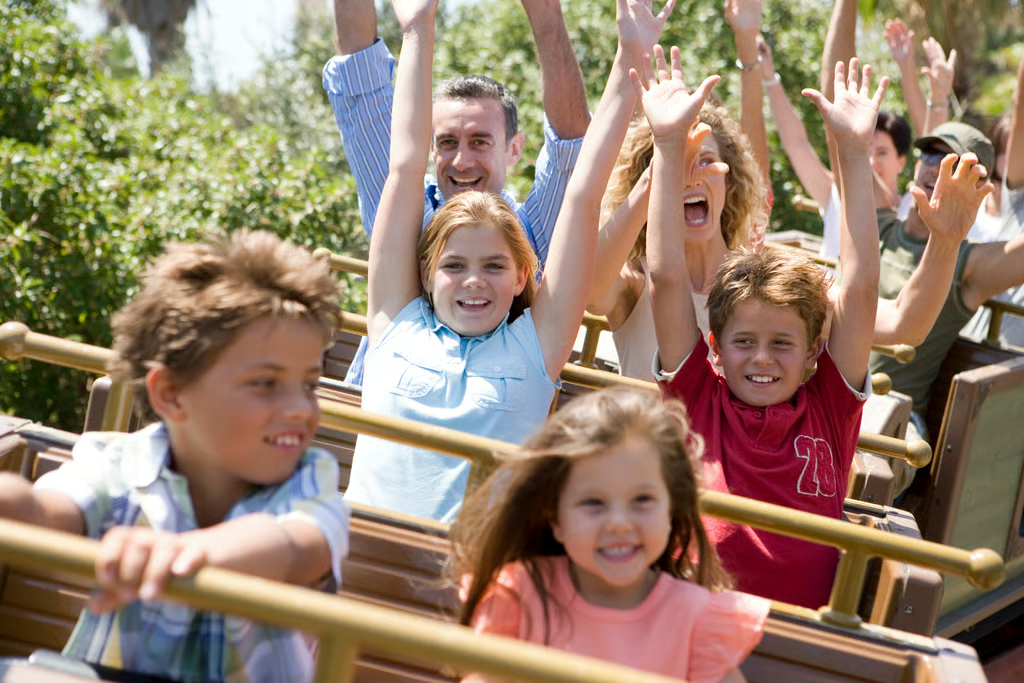
Disney’s AI activity is not limited to creative design. A Disney-assigned restraint-verification filing describes cameras and machine-learning models that analyze video of a passenger seat to detect the rider, identify the restraint, and determine whether it is properly securing them. The system can also compare video with seat, clasping, distance, or proximity sensor data.
The filing also describes notifying an operator if a passenger is no longer secured after receiving instructions to use the restraint. Disney has not announced deployment plans for the system, and the patent does not explain how human override authority would work in practice.
The restraint filing identifies a practical safety problem: visual checks can be slow, and operators may miss improper restraint use, such as a passenger sitting on a buckled seat belt or extending the belt too far. Similar automation questions are surfacing in other public venues, where autonomous systems are being tested for patrols, inspections, and risk detection in crowded environments.
As AI models move deeper into robotics and physical systems, companies must determine how much authority those systems should have. A tool that provides recommendations raises different oversight, accountability, and liability questions than one that can halt operations automatically.
For Disney, AI’s near-term role extends beyond what guests see: helping teams design experiences, manage brand rules, and support safety-critical decisions before a ride leaves the station.
Also read: A humanoid robot is moving into a 24-hour retail role in Hong Kong, another test of how embodied AI performs outside controlled demos.