








A new Gemini model is reportedly just days away from its debut.
Google is expected to announce a new Gemini model at its annual I/O conference on Tuesday, according to multiple reports. The release is said to land roughly in the class of OpenAI’s recent GPT-5.5, rather than pushing into the frontier occupied by the most advanced systems in the market.
According to Sources’ Alex Heath, the model will be a more incremental upgrade than a breakthrough moment, especially when compared with competing systems like Anthropic’s newest frontier models, which have reportedly reshaped expectations around what “leading” AI looks like.
The timing aligns with growing anticipation around Google’s AI strategy heading into I/O 2026, where the company is expected to showcase both model upgrades and agent-driven features.
A competitive gap in frontier AI
Google’s previous major milestone, Gemini 3, launched in November. and briefly put DeepMind ahead on benchmarks, highlighting the strength of its research and TPU infrastructure.
But that lead has reportedly eroded in the months since. Competitors, including OpenAI and Anthropic, have released newer systems, with Anthropic’s most advanced models now widely seen as setting a higher bar in capability, particularly in reasoning and coding.
Heath’s characterization in his reporting suggests the upcoming Gemini release will include improvements, but “no one I’ve talked to expects it to be a real step change,” especially in coding performance.
Coding has become a key battleground, with Anthropic’s Claude system described as the default choice for many developers, while OpenAI’s coding tools are also gaining wider adoption.
Internal pressure to catch up in coding
Inside Google, there is reported urgency to improve coding capabilities, as competitors have pulled ahead in developer-facing tools. DeepMind teams are said to be working to close the gap with Anthropic in particular, especially as coding assistants like Claude Code and OpenAI’s Codex gain traction outside traditional engineering circles.
Google’s own internal coding platform, Antigravity, is reportedly used heavily within the company but has not yet achieved the same external breakout impact as rival tools. While the upcoming Gemini release is expected to include coding improvements, it is not described as a dramatic leap forward.
Google’s push into AI agents and integration
Beyond the model itself, Google has been steadily embedding Gemini deeper into its ecosystem.
Recent months have seen a wave of integrations, including on-device Gemini features highlighted at Android-focused events. At I/O, Google is also expected to lean heavily into AI agent concepts and demonstrations, including use cases in upcoming AI glasses presentations.
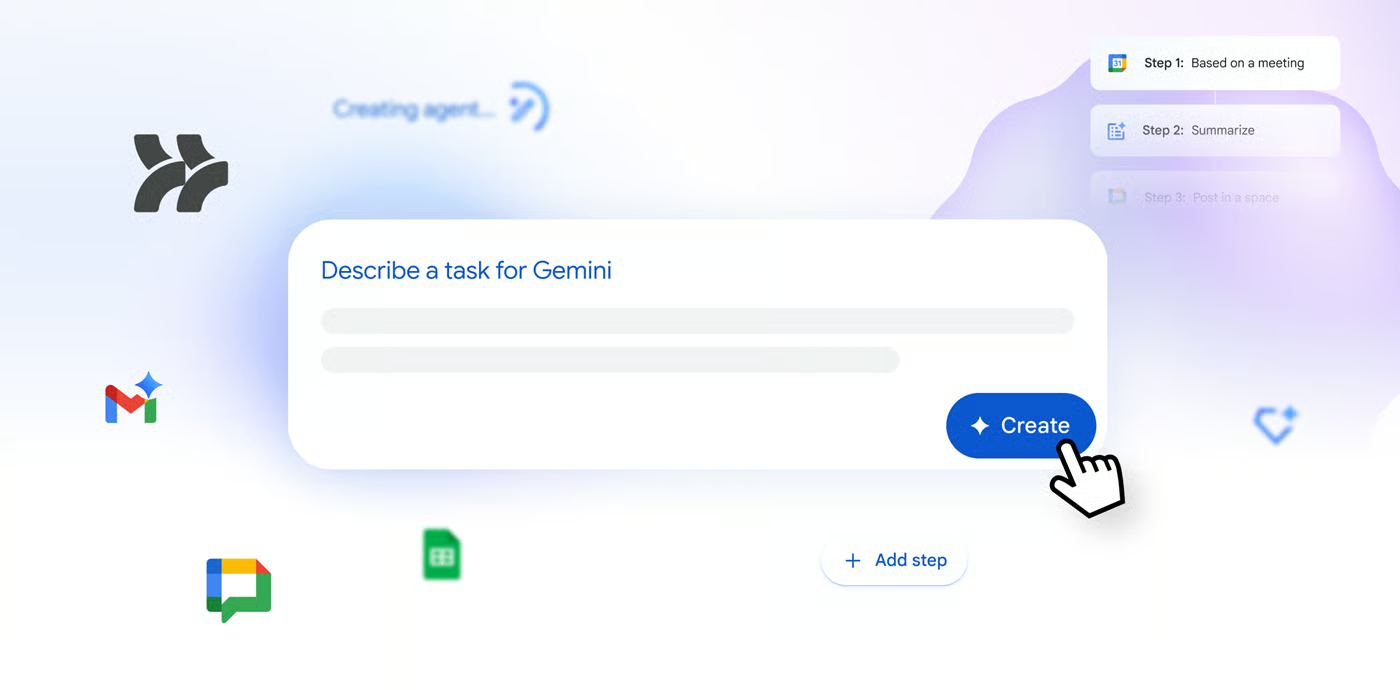
One emerging effort is a rumored agent system called “Gemini Spark,” which could be previewed at I/O. According to a report, it is designed to operate proactively, handling tasks across connected apps and services rather than waiting for user prompts.
The system is described as being able to access data across apps, browsing sessions, and user activity, raising both automation potential and clear privacy questions. It is also expected to include controls for managing or deleting stored activity data.
For more on how Google is expanding Gemini beyond flagship models and deeper into everyday devices, check out our coverage of the company’s latest Gemini Intelligence Android update.