






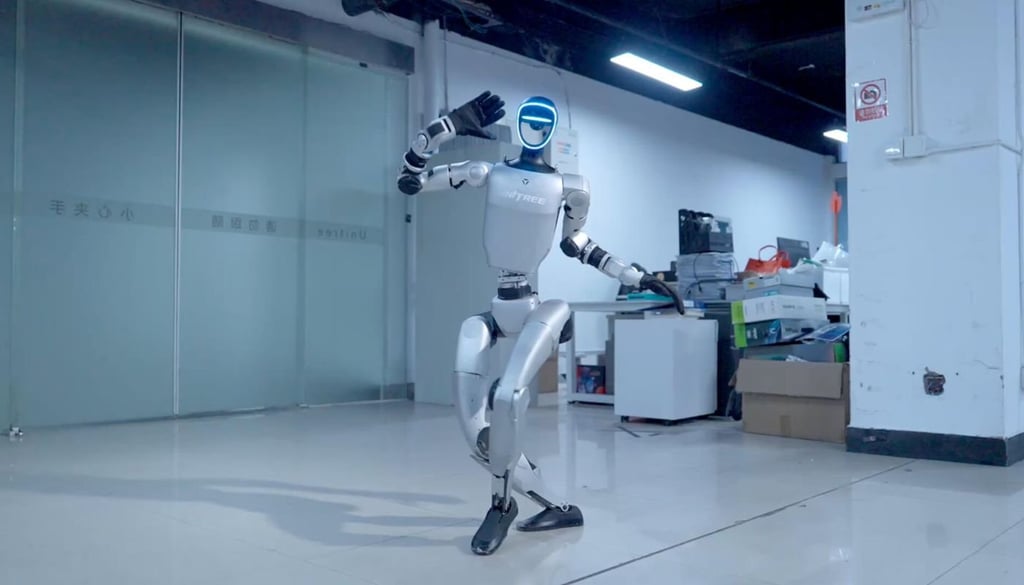


More than 2,000 humanoid robots are heading to Beijing to sprint, lift weights, play table tennis, and tackle jobs that look increasingly like real work.
The second World Humanoid Robot Games will run Aug. 22-26 at Beijing’s National Speed Skating Oval, with organizers listing 2,056 robots from 666 teams across 16 countries. That is more than four times the robot field at the inaugural 2025 event.
Despite participation from 16 countries, the field remains overwhelmingly Chinese. Organizers list 641 Chinese teams and 1,975 domestic robots, representing 157 companies and 200 research institutions and universities.
Entries from the United States, Germany, Japan, Brazil, and other countries make the competition international in scope, but the numbers also underline the scale of China’s domestic push into humanoid robotics.
Stricter rules and real-world arenas
Organizers have tightened autonomy rules to force real technical maturation. Remote control is barred from most track and competitive events, and 100-meter dash time limits dropped from three minutes to one.
According to CGTN, the games feature 51 events and 1,301 matches spanning five days, up from 26 events last year. New athletic competitions include table tennis, weightlifting, long jump, and tug-of-war.
Beyond athletics, scenario-based events increased from six to 21, challenging robots across nine simulated environments including hotels, factories, libraries, and retail centers. Specialized contests test fine motor skills like cable routing and tool assembly.
"Once robots master these 'last-meter' skills, they can turn medals into orders and move directly from the competition arena to real-world workplaces," said Jiang Guangzhi, director of the Beijing Municipal Bureau of Economy and Information Technology, according to the Global Times.
From track records to factory floors
The games arrive on the heels of major physical breakthroughs in the sector. During the Beijing Half Marathon in April, an autonomous bipedal machine named "Lightning" ran the distance in 50 minutes and 26 seconds, beating human world records.
However, moving from open tracks to messy real-world workspaces presents distinct trade-offs. While public events draw scrutiny over municipal budgets, robotics executives argue the trials accelerate progress.
Shao Yuanxin, founder of Rob-Stride Dynamics, said "these events could help the industry collect high-level data, showcase their capabilities, train more talented personnel and create job opportunities for China," China Daily reported.
The industrialization bridge
The steep increase in autonomy thresholds and scenario-based tasks marks an important turning point for commercial robotics. For enterprise buyers, high-profile competitions serve less as entertainment and more as stress tests for hardware durability, power efficiency, and spatial reasoning under unpredictable conditions.
The core challenge for robotics manufacturers is no longer merely balance or raw locomotion, but whether general-purpose machines can reliably handle high-dexterity labor at an economical cost. By tying scoring models to autonomy and practical execution, these games offer a public benchmark that will help enterprises separate viable commercial automation platforms from promotional prototypes.
Other Robotics News: The R-Dog robot dog is being tested for delivery and advertising work, highlighting how quadruped robots are moving beyond demonstrations into commercial services.