







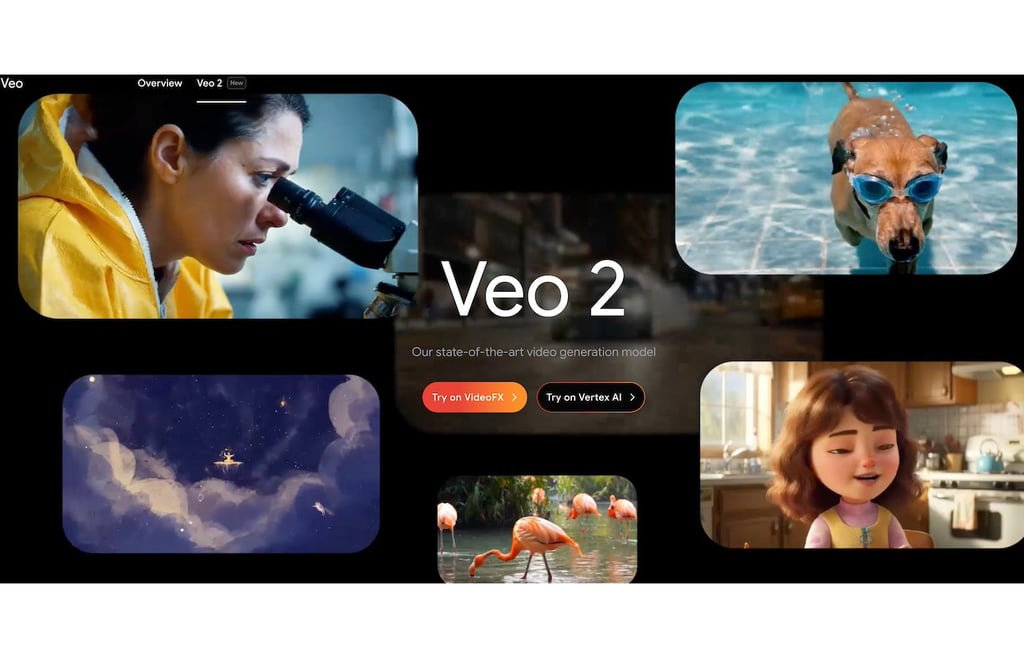
Google’s upcoming AI video, Veo 2, will charge users 50 cents per second of footage it generates. The cost positions AI-generated video as a premium service, raising questions about its accessibility for businesses, content creators, and filmmakers.
First launched in December 2024, Veo was initially available only to enterprise customers before expanding through a waitlist. The model produces short video clips in response to text or image prompts, making it a potential tool for marketing, social media content, and even short films.
Now, Google Cloud’s vertex AI pricing page has been updated to reflect the cost-per-second model for Veo 2. At 50 cents per second, generating one minute of footage will cost $30, while a full-length 90-minute movie would amount to $2,700.
How Veo’s pricing compares to OpenAI’s Sora
Veo’s main competitor, OpenAI’s Sora, also carries a high price and remains available only to ChatGPT Plus and Pro subscribers. ChatGPT Plus subscribers who pay $20 per month get 1,000 credits to generate videos of up to 720p resolution and five seconds in length, working out at a cost of 24 cents per second via OpenAI’s billing system.
ChatGPT Pro subscribers that pay $200 dollars a month get 10,000 credits for videos of up to 1080p and 20 seconds in duration, so are essentially paying $2 per second for the higher quality clips. These subscriptions also offer other features as part of the cost, like access to OpenAI’s smartest models.
Film industry remains divided over AI-generated content
The rising costs of AI-generated video come amid ongoing debates in the film industry over AI’s role in production. “Avengers: Endgame,” one of the most expensive movies ever produced, cost over $36,000 per second to produce. “The Brutalist” and “Emilia Pérez,” two Oscar-nominated films this year, have been embroiled in controversy because of their use of AI to alter actors’ voices.
Last year, OpenAI came under fire from artists who were recruited to test an early version of Sora. They claimed the company did not allow their feedback to be released without prior approval so they could control the PR narrative, as well as that they were not being fairly compensated.
While some artists acknowledge AI’s potential for the creative industry, they felt they were “being lured into ‘art washing’ to tell the world that Sora is a useful tool for artists” by the tech giant.