







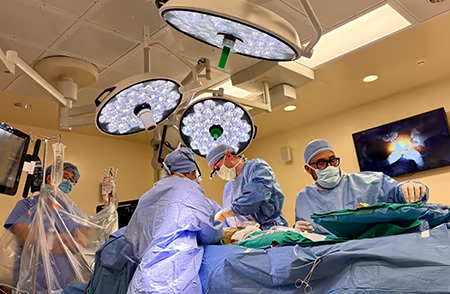
Advanced heart surgery can mean days in the hospital and weeks of recovery. El Camino Health is testing whether robotics can shorten that path.
El Camino Health in Silicon Valley begins performing robotic-assisted coronary artery bypass grafting (CABG), an approach the hospital says can reduce recovery time, pain, and hospital stays for eligible patients.
At the center of this surgical approach is the da Vinci 5 robotic surgical system by Intuitive Surgical Operations, Inc. This robotic toolset enables experienced surgeons to use a “minimally invasive procedure” as compared to the traditional breastbone-splitting approach.
"Cardiac surgery continues to evolve, and we are able to accomplish many of the same goals without such big incisions," said Dr. Nels Carroll, who performed this landmark surgery.
The procedure shows how surgical robots are moving beyond precision tools and into operations once associated with much larger incisions — though not every heart patient will be a candidate.
How robotic CABG could change recovery
El Camino Health says the robotic approach can shorten recovery and reduce postoperative pain for some patients.
Raul Martin, a patient who recently underwent the CABG surgery at the hospital, said, “I’ve never felt better after surgery than after this surgery. I’d walk for an hour around the floor, and it was kind of funny because nobody could believe it.”
The improvements due to robotic-assisted surgery aren’t just for patients. The system can also give surgeons greater precision and dexterity while reducing some of the physical strain associated with traditional operating positions.
The system may also offer ergonomic benefits for surgeons. In a video shared by Intuitive, one physician said the adjustable console could make surgery more comfortable and help reduce physical strain over a long career.
It’s not a replacement
Robotic-assisted CABG is not suitable for every patient and does not eliminate the need for traditional heart surgery.
El Camino Health says the choice depends on factors including the patient’s condition, overall health, and the complexity of the operation. Patients are also informed of the risks and benefits before deciding on an approach.
Furthermore, it’s important to note that the robot does not operate independently. The surgeon remains in the operating room and controls the system throughout the procedure.
Although this approach offers a faster recovery path for some patients, it doesn't eliminate the need for follow-up appointments. Patients are still required to go for cardiac rehabilitation, which includes activities like lifestyle education and mental health counseling.
Intuitive also says that the simulation and training it provides to surgeons to use the da Vinci system is not a replacement for standard medical training.
Robotic systems such as da Vinci 5 may expand the number of heart procedures that can be performed through smaller incisions. Still, they do not replace surgical expertise or traditional cardiac care. The bigger question is how widely hospitals can adopt these systems — and which patients will benefit most from them.
More News: China’s surgical robot exports surged 3.3-fold year over year in the first half of 2026, reaching about $70 million as the country expands its footprint in advanced medical technology.