






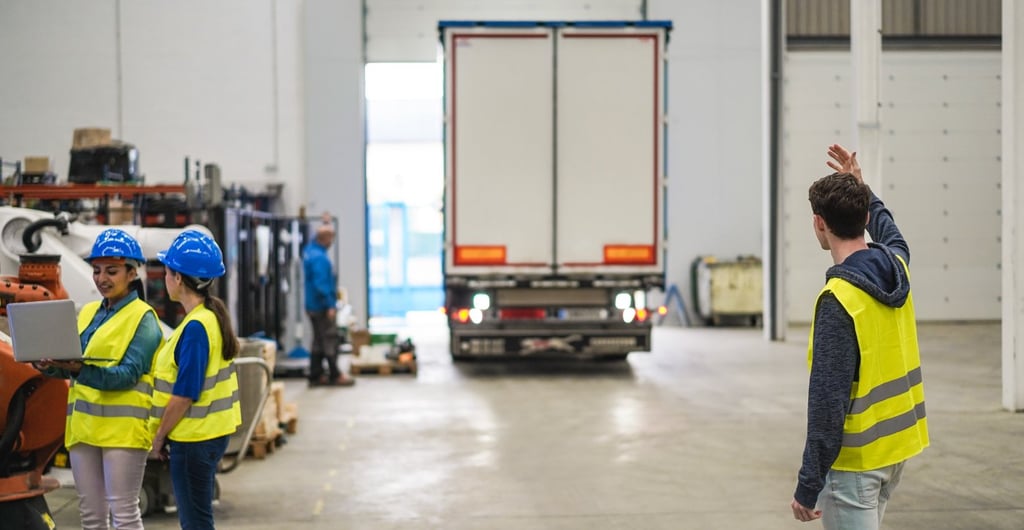


Multiple companies have sold robots for one of the most difficult warehouse jobs to automate: loading and unloading trucks.
According to the Wall Street Journal, loading and unloading is the “Holy Grail of warehouse logistics.” These breakthroughs became feasible only after the development of newer vision sensors, smarter AI algorithms, and lightning-fast image-processing capabilities.
Which companies are involved?
The Journal profiled several companies:
- Ambi Robotics: Creator of the AmbiStack robotic stacking system, designed to assess weight, fragility, and center of gravity for optimal palletization.
- Boston Dynamics: Developer of Stretch, a large robotic arm equipped with a vacuum-grip suction hand for handling packages.
- Dexterity: Supplies truck-loading robots to FedEx, contributing automation to the courier giant’s logistics operations.
- Fox Robotics: Manufacturer of autonomous forklifts that handle both loading and unloading tasks with minimal human input.
- DHL: Already using seven Stretch robots in its warehouses and has signed a contract for 1,000 more, highlighting a strong commitment to automation.
Why is loading and unloading trucks difficult for robots?
While these companies are making strides, the task remains one of the toughest to automate in warehouse logistics. Automating the loading and unloading of trucks remains a challenge because it requires a broad range of motion and necessitates decision-making regarding package placements.
The worker, or robot, must navigate into the deepest corners of a trailer. Loading packages also involves stacking the heaviest boxes at the bottom to prevent damage, while also considering how to leverage all available space.
For example, the AmbiStack system analyzes an item’s weight, fragility, and center of gravity to determine optimal placement on a pallet. It also aims to pack the highest possible number of boxes per pallet.
Even the most advanced of the robots still face limitations. The Stretch model cannot pick up soft-sided bags and struggles with thin or irregularly shaped packages.
As in other fields, warehouse workers have expressed concern about potential job displacement. However, proponents of automation argue that loading and unloading trucks is physically demanding work, especially in extreme weather conditions, such as winter or summer.
While challenges remain, the growing involvement of robotics in truck loading signals a turning point in how humans and machines share the warehouse floor.
Read about Foxconn’s efforts to use humanoid robots to assemble advanced AI chips in US factories.