Brace for bot overload, Tech Insiders.
AI is spewing junk videos, infiltrating group chats, interviewing for its own babysitter, and even getting itself acquired for billions. Humanity's still here, but it's definitely outnumbered. Buckle up while we sift the signal from the sludge. |
|
|
Here's what you need to know today: |
|
|
YouTube Faces Flood of AI Slop Content |
The algorithm's new diet? Pure, processed prompt product.
A Kapwing study found that when researchers opened a fresh YouTube account, 21% of the first 500 Shorts were fully AI-generated, while 33% qualified as "brainrot" content. That amounts to one-third of a new user's feed being synthetic sludge.
Across 15,000 top channels, 278 publish only AI-slop videos, racking up 63 billion views and an estimated $117 million in annual revenue. |
GIF via Bandar Apna Dost/YouTube |
Spain leads with 20 million combined subscribers to slop channels, while South Korea tops view counts at 8.45 billion, anchored by the "Three Minutes Wisdom" channel, where cute pets "defeat" photorealistic beasts. India's "Bandar Apna Dost" alone nets over 2 billion views, potentially earning more than $4 million annually.
The deluge is so pervasive on and off YouTube that Merriam-Webster and Australia's Macquarie Dictionary crowned "slop" their Word of the Year.
YouTube is scrambling, demonetizing repetitive content, requiring limited disclosures, and quietly banning spammy AI-movie-trailer channels for misleading metadata.
Critics warn that endless synthetic snippets reinforce false beliefs via the illusory-truth effect, while cheaper production enables ideological manipulation at scale. Meanwhile, brands worry about ads appearing beside monkey-soap-opera deepfakes.
YouTube CEO Neal Mohan says what matters is human originality, but the platform hasn't set a hard line on how much AI is too much.
Why it matters: Your recommended feed might be one-third junk, and the target audience is often toddlers. While advertisers and policymakers worry about deepfakes, parents face a messier reality—60% of US parents say their under-2s watch YouTube, often served "educational" slop that warps their developing brains. Until filtering improves, assume the next hypnotic cat-drama was pumped out in pennies to grab eyeballs, not enlighten.
|
|
|
Do you want a button that lets you hide AI-generated YouTube videos? |
|
|
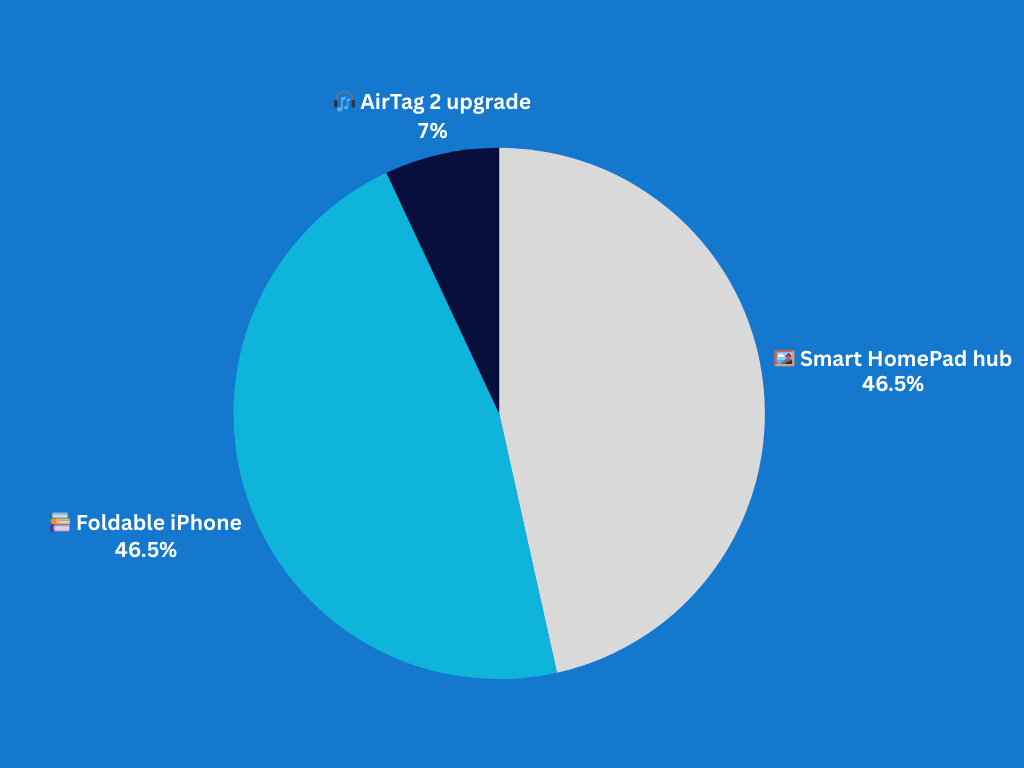
Results from Yesterday's Pulse Check |
Which rumored Apple 2026 device excites you most? |
|
|
OpenAI Hunts a Head of Preparedness |
Bring your résumé... and your blood-pressure meds.
OpenAI has posted a "Head of Preparedness" role with a $555,000 salary (plus equity) to own end-to-end threat modeling for cybersecurity, biosecurity, and self-improving AI. CEO Sam Altman warned on X: "This will be a stressful job and you'll jump into the deep end pretty much immediately."
The new lead will build capability evaluations, define risk thresholds, and decide when to delay releases. |
Image created with ChatGPT |
But the chair is hot: The role has seen a revolving door of leaders since Aleksander Madry shifted to a research role in July 2024, with successors Lilian Weng departing in November 2024 and Joaquin Quiñonero Candela switching to recruiting this past spring.
Altman admits models now find zero-days "almost three times better" than three months ago and are facing lawsuits for fueling delusions and mental-health crises.
Observers call it a nearly impossible balance—champion safety while a fast-shipping CEO pushes product rollouts like Sora 2 and Instant Checkout. Critics warn the hire could be forced to shout "slow down" to the exec who signs the paychecks.
OpenAI swag probably includes noise-canceling headphones for all the alarms. |
|
|
Aflac Breach Exposes 22 Million People's Data |
Aflac confirmed hackers accessed names, addresses, Social Security numbers, driver's licenses and state IDs, and medical-insurance details for 22.65 million customers, employees, and affiliates. |
Image created with ChatGPT |
The June 12 intrusion was "contained" within hours, yet Aflac just admitted the massive scale of the theft following a forensic review.
Victims get 24 months of CyEx Medical Shield, a fraud and ID-monitoring service, but you must enroll by calling 1-855-361-0305 by April 18, 2026.
Lawsuits are rolling in, and researchers suspect Scattered Spider, the group that has bullied insurers all year, is to blame. Too bad Aflac doesn't sell supplemental insurance for when it loses your identity. |
GhostPairing Lets Hackers Hijack WhatsApp Accounts |
Researchers at Gen Digital spotted a campaign that sends "Hey, I just found your photo!" links with fake Facebook previews from trusted contacts.
Click the spoofed Facebook page, enter a phone number, and you're handed an eight-digit device pairing code to type into WhatsApp. That code doesn't "verify" you; it links the attacker's browser as a "trusted device," giving them full chat history and real-time access—without stealing your password. Once in, crooks scrape data, message friends, and snowball the scheme.
Defense? Open Settings → Linked Devices in WhatsApp and boot strangers; enable two-step verification; never enter a code just to view a website; treat surprise pairing codes like radioactive waste.
Think of it as adding a ghost roommate to every group chat, rent-free. |
Meta Snaps Up Manus in $2 Billion AI Deal |
Meta is acquiring Singapore-based Manus (founded in China) for more than $2 billion, according to The Wall Street Journal.
Manus' autonomous agent hit $100 million in annual recurring revenue just eight months post-launch, processing 147 trillion tokens and spinning up 80 million virtual computers for tasks like market research and coding.
The deal gives Meta a proven moneymaker to fold into Meta AI across Facebook, Instagram, and WhatsApp.
Manus will keep its subscription service and 100-person Singapore HQ, while terminating all operations and equity ties in China to satisfy Washington. |
Image created with Nano Banana Pro |
Venture capital firm Benchmark, whose Series B valued Manus at around $500 million just months ago, is exiting alongside Tencent; Manus CEO Xiao Hong joins as a VP reporting to Meta COO Javier Oliván.
Analysts see Meta buying time; it gets a proven agent and sidesteps criticism that its $600 billion infrastructure pledge lacks immediate monetization. Legislators will still probe the startup's Chinese roots, but Zuckerberg now owns an AI that actually pays rent.
So yes, Meta's latest "friend request" cost double what it paid for Instagram—no pokes required. |
|
|
|
Writer at TechnologyAdvice |
Justin Meyers is an investigative writer and editor who draws on over a decade of meticulous hands-on research to deliver the full, trustworthy story behind consumer and enterprise tech, including cybersecurity. |
|
|
Curious about where AI is really headed? |
The Neuron cuts through the noise to bring you smart, hype-free takes on the latest AI trends, tools, and breakthroughs. Join 500,000+ professionals from top companies like Microsoft, Apple, Salesforce and more.
|
|
|
Advertise in Daily Tech Insider! Daily Tech Insider is a TechnologyAdvice business
© 2025 TechnologyAdvice, LLC. All rights reserved. TechnologyAdvice, 3343 Perimeter Hill Dr., Suite 215, Nashville, TN 37211, USA. |
|
|
|