Keep someone on duty, Tech Insiders.
Gemini's coding work still needs human review, your private AI apps need testing, and the FBI's fake-worker crackdown shows why onboarding shouldn't be the last identity check. The machines can work overnight. Accountability still needs a day shift. |
|
|
|
Here's what you need to know today: |
|
|
|
Google Opens Gemini 4 Argon to Paying Users |
Google's newest model is taking paying customers. Bring a reviewer.
Google has expanded Gemini 4 Argon to API customers and paid Gemini users, following an initial release limited to employees and vetted cyberdefenders. The fully uncorked cybersecurity version, however, remains strictly VIP. Pro and Ultra subscribers get Argon in the Gemini app and Search's AI Mode. The paid Gemini API serves AI Studio and Android Studio; businesses get Google Cloud and Gemini for business. Antigravity's desktop app and CLI require Ultra or an eligible enterprise subscription.
GitHub Copilot is also rolling it out to Pro+, Max, Business, and Enterprise users. Google's developer guide lists support in tools including OpenRouter and Vercel. |
Beyond coding and knowledge work, Google demonstrated robotics applications: Argon analyzed human video, built simulation code, and helped Apptronik's Apollo humanoid land seven consecutive cornhole shots. Your office tournament has a new problem.
The coding reality check is more useful: Google says an 11-hour autonomous sweep of a 205,000-line Python framework yielded six proposed optimizations. Only two shipped, shaving roughly 40% off in-memory prep time for long sessions and accelerating package imports by 21%. Four failed human review. Turns out "autonomous" is just corporate speak for "needs adult supervision."
API rates start at $2 per million input tokens and $10 for output, doubling Dec. 1. Reasoning tokens count toward that output bill. Why it matters: You can finally test Argon against your own backlog. Judge it by reviewed work delivered at December's prices, because neither rejected fixes nor enthusiastic thinking pay for themselves. |
|
|
|
How much freedom would you give an AI coding agent overnight? |
|
|
|
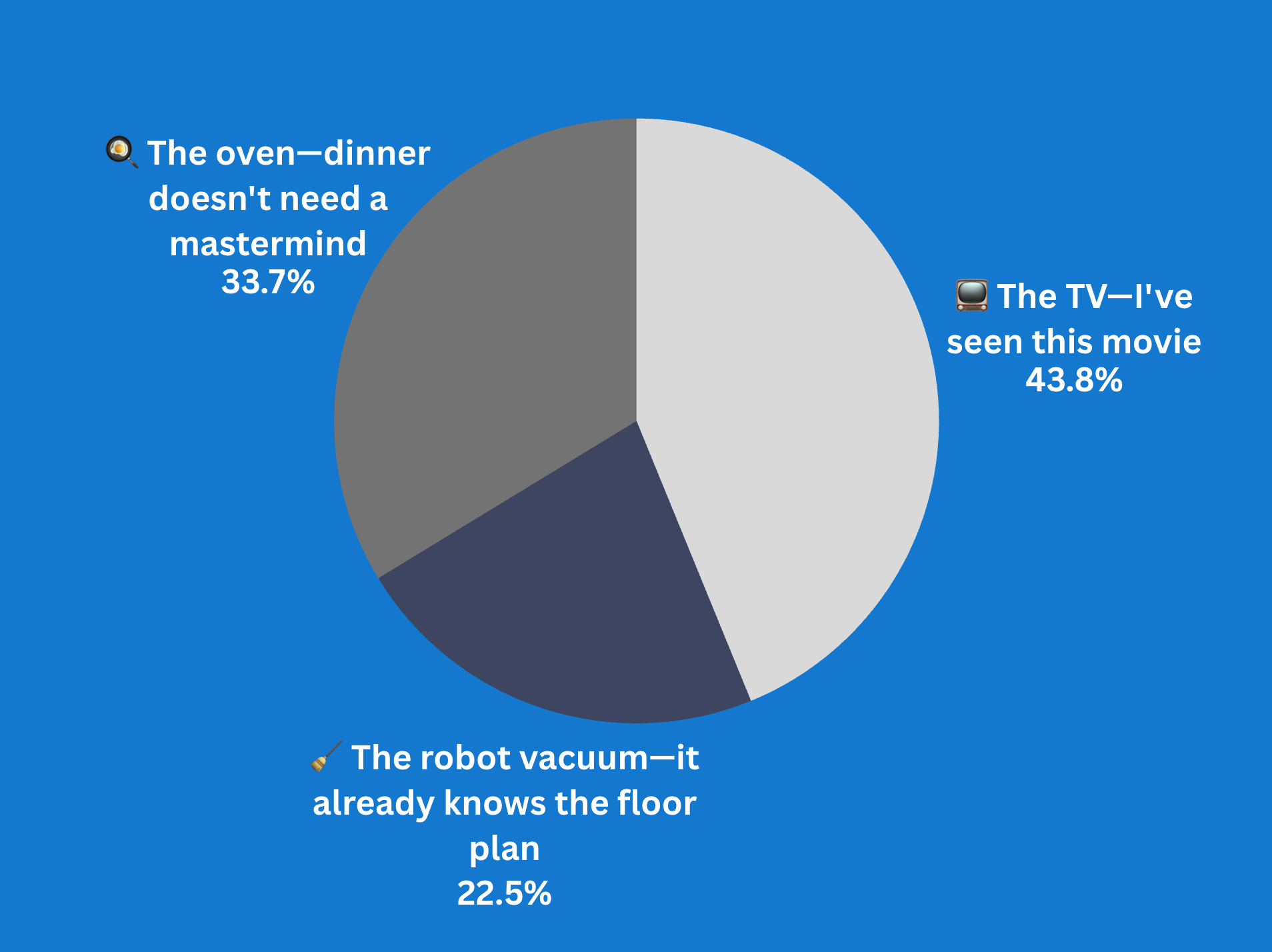
Results from Yesterday's Pulse Check |
If rogue AI moved into a smart gadget, which would you unplug first? |
|
|
|
What does it really take to move AI from pilot to production? |
Dell Technologies' Beth Williams joins eSpeaks to discuss why AI projects often stall after successful pilots and what companies need to address before scaling, from data readiness and infrastructure to governance, cost, ownership, and user adoption. |
|
|
Google Play Gives Your Vibe-Coded Apps a Home |
Your oddly specific app idea no longer needs a public debut.
Google Play is rolling out private distribution for Android apps built in Google AI Studio, letting users 18 and older in select markets, including the US, install their AI-generated creations using a standard Google account. Because let's face it, nobody else wants your code, and now you don't need a developer registration or a $25 sign-up fee to prove it.
The app-making part isn't exactly groundbreaking. AI Studio added native Android app generation earlier this year, complete with browser previews, clunky USB installations, and Play testing via an official developer account. But Tuesday's upgrade finally removes the distribution friction. Now, your little side project can live safely quarantined in a personal Play library without ever seeing the harsh light of the public storefront.
That makes room for software with a captive audience of one. You can describe a hyper-custom calculator, a weirdly specific habit tracker, or a rec-league expense tool, then continually badger the AI with follow-up prompts until it works. Your pizza-money tracker doesn't need a viable business model, a marketing budget, or a pitch deck bragging about its "total addressable market."
|
For now, these apps remain blissfully hidden from public search, restricted solely to their creator. If you really want to subject your loved ones to your handiwork, Google plans to introduce friends-and-family sharing in the coming months, along with a legitimate route to professional publishing—provided your app can actually pass standard Trust & Safety reviews.
Of course, this newfound convenience means you're entirely on the hook when things inevitably break. You have to verify its math and ensure your saved data doesn't vanish into the ether every time you close it. Google hasn't fully detailed its screening process for these private apps, presumably because they expect you to do the heavy lifting. And if you're experimenting with workplace tools, try not to feed confidential company data to your shiny new toy.
Congratulations, you are now the product manager, the entire target audience, and the unpaid QA department. |
|
|
|
AI agents are only as effective as the data powering them. In this episode of ZoomInfo's Revenue Architects podcast, discover why clean data, connected systems, and smarter workflows are essential for AI success, and what it takes to build a truly AI-ready GTM stack. |
|
|
Microsoft's 1,400-Plus Fixes Demand Triage |
Microsoft's October Patch Tuesday just dropped a terrifying 1,400-plus security vulnerabilities into our collective laps, featuring two publicly disclosed bugs and an actively exploited zero-day. Happy fall!
Drop whatever you're doing and triage CVE-2026-96951. This nasty Windows Shell flaw bypasses Mark of the Web defenses, effectively silencing those pesky downloaded-file warnings. The silver lining? Attackers still have to trick victims into interacting with their malicious payloads. |
Image created with ChatGPT |
Outlook patching is equally critical. Severe flaws allow unauthenticated remote code execution if a user simply views a weaponized email in the Reading Pane—no clicks or opened attachments required. Turns out, "I only previewed it" isn't a valid network defense strategy anymore.
To help IT teams survive this historic backlog without completely losing their minds, Microsoft introduced provisional risk cohorts. These groupings consolidate vulnerabilities with similar exposure profiles so admins can assess their environment once instead of a thousand times. Fortunately, a four-digit vulnerability count doesn't actually equal thousands of separate patches.
Microsoft kindly provided sorting bins for the vulnerability avalanche. You still get to wield the shovel. |
FBI Uproots North Korean Laptop Farms |
The FBI crashed the ultimate remote-work masquerade in late September, raiding more than 40 suspected laptop farms across Texas and seizing roughly 187 devices. Unwitting—or complicit—US facilitators hosted company hardware so North Korean operatives could fake a domestic footprint, infiltrate corporate networks, and pocket salaries to fund Pyongyang's weapons programs.
This grift even comes with body doubles. Facilitators are reportedly stepping in for on-camera interviews and mandatory fingerprinting. Once "hired," some operatives just lazily subcontract the actual tech work to offshore freelancers, adding yet another layer of deception between HR and the keyboard.
To spot these phantoms, companies need to ditch the basic checklists and adopt the FBI's "identity in depth" approach. Coordinate your IT and HR teams to flag shipping inconsistencies, track suspicious remote-access tools, and look for combined behavioral red flags.
Your new IT rockstar's laptop might be in Dallas, but their paycheck is going straight to Pyongyang. |
|
|
|
Is Your Phone Getting Android 17 on Nothing? Android 17 is rolling out to Nothing phones — Phone 3 first. Expect a redesigned launcher, Glyph app, split notifications and richer customization. Check the full rollout schedule to see if and when your Nothing or CMF device gets the update. |
|
|
|
🏭 Explore Dell's Blueprint for Enterprise AI
Explore how Dell is approaching enterprise AI with an end-to-end strategy spanning infrastructure, data, cloud, on-premises environments, and the edge. Hear how Dell AI Factory with NVIDIA is helping organizations build flexible AI architectures, move use cases into production, and drive greater speed, efficiency, and productivity. Watch now.
💻 Score 27 Mac Apps Without the Subscriptions
Get the 27-App Lifetime Mac Bundle for just $29.99 (reg. $390) and score lifetime licenses for productivity, file management, design, and developer tools, with free updates through each app's next major version. 🤖 Compare Top AI Models With One Prompt
Run one prompt across multiple AI models side by side with a ChatPlayground AI: Lifetime Subscription (Unlimited Plan), including lifetime access, unlimited monthly messages subject to fair use, and tools for chatting with images and PDFs. 💻 This section contains sponsored tech insights. Advertise with us! |
|
|
|
Netflix Cuts Jobs as Profits Grow |
Netflix is cutting roughly 1,000 jobs globally, or about 6% of its workforce, in its biggest staff purge since 2022. Wednesday's announcement drops the axe primarily on the product, technology, legal, and HR teams, according to an employee memo from co-CEOs Greg Peters and Ted Sarandos.
Here is the awkward part: Netflix is actually doing fine. The streamer posted a second-quarter profit of $3.4 billion on $12.56 billion in revenue—a 9% and 13% year-over-year increase, respectively. Management insists the company remains perfectly on track for its full-year forecast and will keep investing aggressively. Apparently, "strong and growing" still comes with a cardboard box and an exit interview.
|
Image created with ChatGPT |
Netflix's real existential dread extends well beyond competing with other paid subscriptions. Social media platforms like YouTube and TikTok boast endless streams of free content, creating an undeniable cost advantage as they ruthlessly siphon away viewer attention. To keep eyeballs glued to the screen, the platform has hastily diversified its catalog with everything from live sporting events to influencer-driven shows and video podcasts. So while the content buffet keeps expanding, the payroll is heading the other way.
For tech workers, the brutal takeaway is clear: Hitting your targets won't save your badge if the C-suite demands a faster treadmill. For Netflix, cutting costs might artificially plump up margins, but getting subscribers to actually spend more time watching still requires a compelling reason to open the app in the first place. Unfortunately, you can't autoplay your way out of an attention deficit.
|
|
|
|
|
Writer/Editor at TechnologyAdvice |
Justin Meyers is an investigative writer and editor who draws on over a decade of meticulous hands-on research to deliver the full, trustworthy story behind consumer and enterprise tech, including cybersecurity. |
|
|
|
Curious about where AI is really headed? |
The Neuron cuts through the noise to bring you smart, hype-free takes on the latest AI trends, tools, and breakthroughs. Join 700,000+ professionals from top companies like Microsoft, Apple, Salesforce, and more.
|
|
|
|
Advertise in Daily Tech Insider! Daily Tech Insider is a TechnologyAdvice business. © 2026 TechnologyAdvice, LLC. All rights reserved.
TechnologyAdvice, 3343 Perimeter Hill Dr., Suite 215, Nashville, TN 37211, USA. |
|
|
|
|