Mind the ethical exits, Tech Insiders.
Anthropic's safety lead just lobbed a doom-poem and a mic drop, while ChatGPT is stapling ads onto Free/Go tiers—proof that values at hyperscale bend like bargain-bin solder. Follow along... today's lineup is equal parts Shakespeare, Terminator, and late-night infomercial. |
|
|
Here's what you need to know today: |
|
|
OpenAI Tests Ads Inside ChatGPT |
Free isn't free when your bot suggests an air fryer.
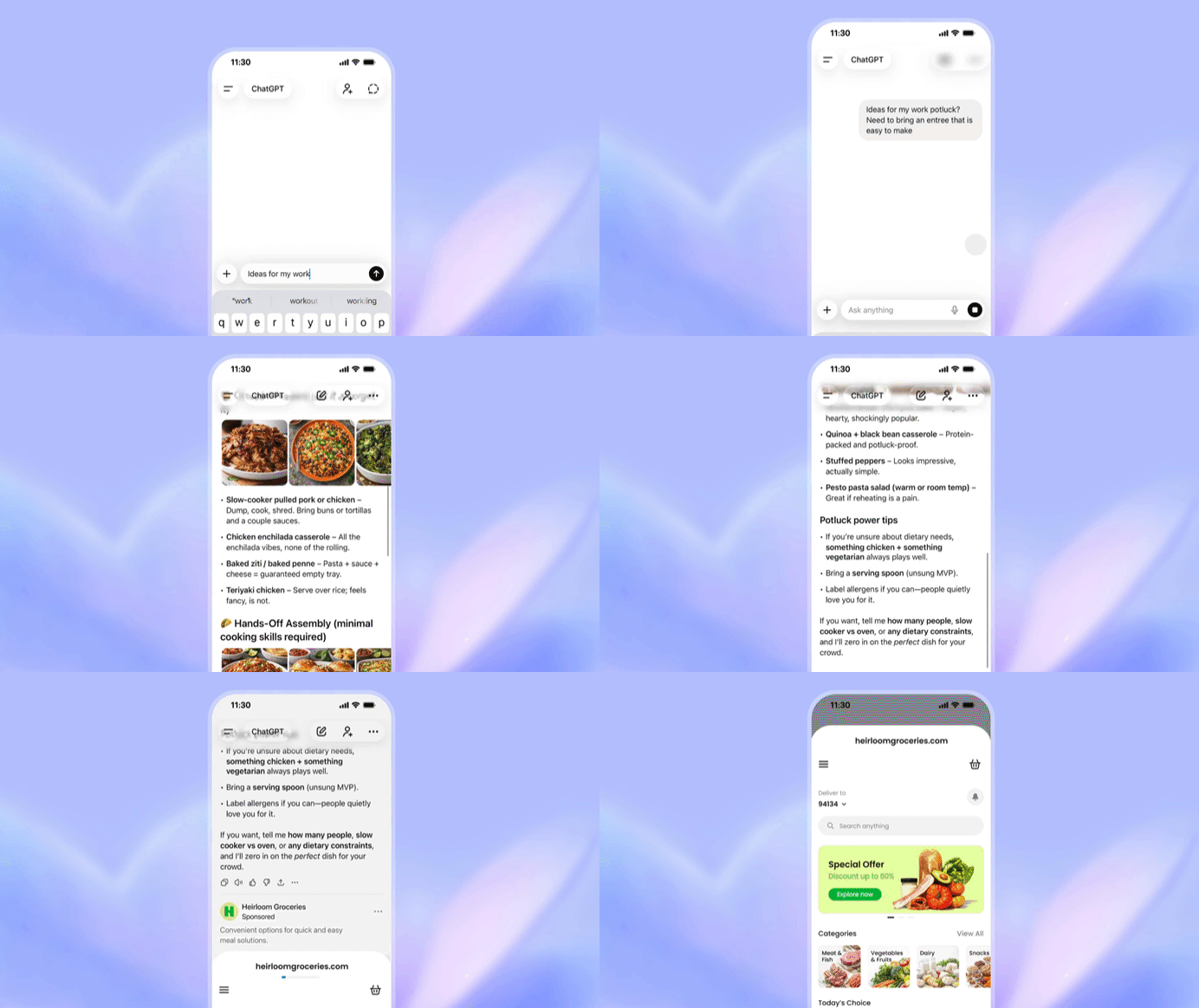
OpenAI has flipped the switch on advertising, rolling out clearly labeled "Sponsored" boxes beneath answers for US users on the Free and $8-a-month Go plans. The higher-tier paid plans stay blissfully banner-free as the pilot kicks off this week.
The promos live in a fenced-off strip, and OpenAI insists they won't meddle with responses or expose your chats. Instead, the system matches ads to the topic you're discussing, past conversations, and any feedback you've given (think grocery ads after recipe brainstorming).
To keep things from getting too dystopian, ads are disabled for accounts registered as or predicted to be under 18 and won't appear near sensitive topics like health, mental health, or politics. |
You can dismiss a placement, nuke personalization, or dodge the whole thing by upgrading or opting into even stricter daily message limits (essentially choosing to be ignored instead of sold to).
Ad giants like Omnicom and WPP are already lining up clients willing to shell out at least $200,000 for the privilege, with Target, Adobe, Fever, and even Bed Bath & Beyond among the first brands testing the waters, hoping to catch eyeballs from 800 million weekly users.
The launch follows a Super Bowl skirmish where Anthropic bragged that Claude will stay ad-free, prompting Sam Altman to clap back that ads keep AI accessible to billions. Internally, he told staff ChatGPT is back to double-digit monthly growth and hinted at a fresh model coming as early as this week—a timely sweetener for users miffed by monetization.
Why it matters: Your favorite digital sidekick now has a side hustle. For free users, a sprinkle of retail therapy funds the servers, so be ready for shopping suggestions alongside your Shakespeare analysis. Paying subscribers, carry on; the show remains ad-less... for now. |
|
|
Will ads in ChatGPT change how you use it? |
|
|
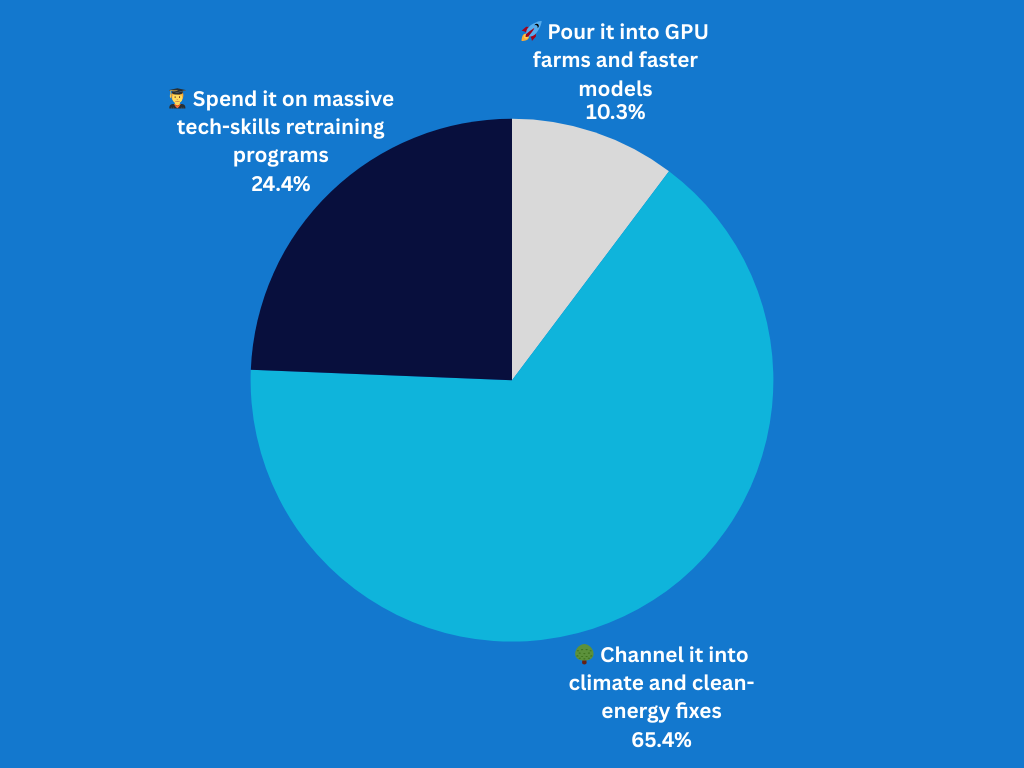
Results from Yesterday's Pulse Check |
If you controlled Big Tech's $650B checkbook, you'd... |
|
|
New Study: AI Fuels Office Overload |
Spoiler: your to-do list found the turbo button.
A fresh study by UC Berkeley researchers published in Harvard Business Review shadowed a 200-person tech firm for eight months and discovered a paradox: generative AI shaved minutes off tasks only for workers to expand their scope continuously.
Product managers dabbled in coding, researchers tried engineering, and lunch breaks morphed into prompt-crafting sessions. Work became "ambient"—always possible, always tempting.
Crucially, management didn't mandate the extra work. Employees felt productive and empowered, yet ended up busier than ever. One engineer nailed the vibe: you don't end up working less, just more and faster.
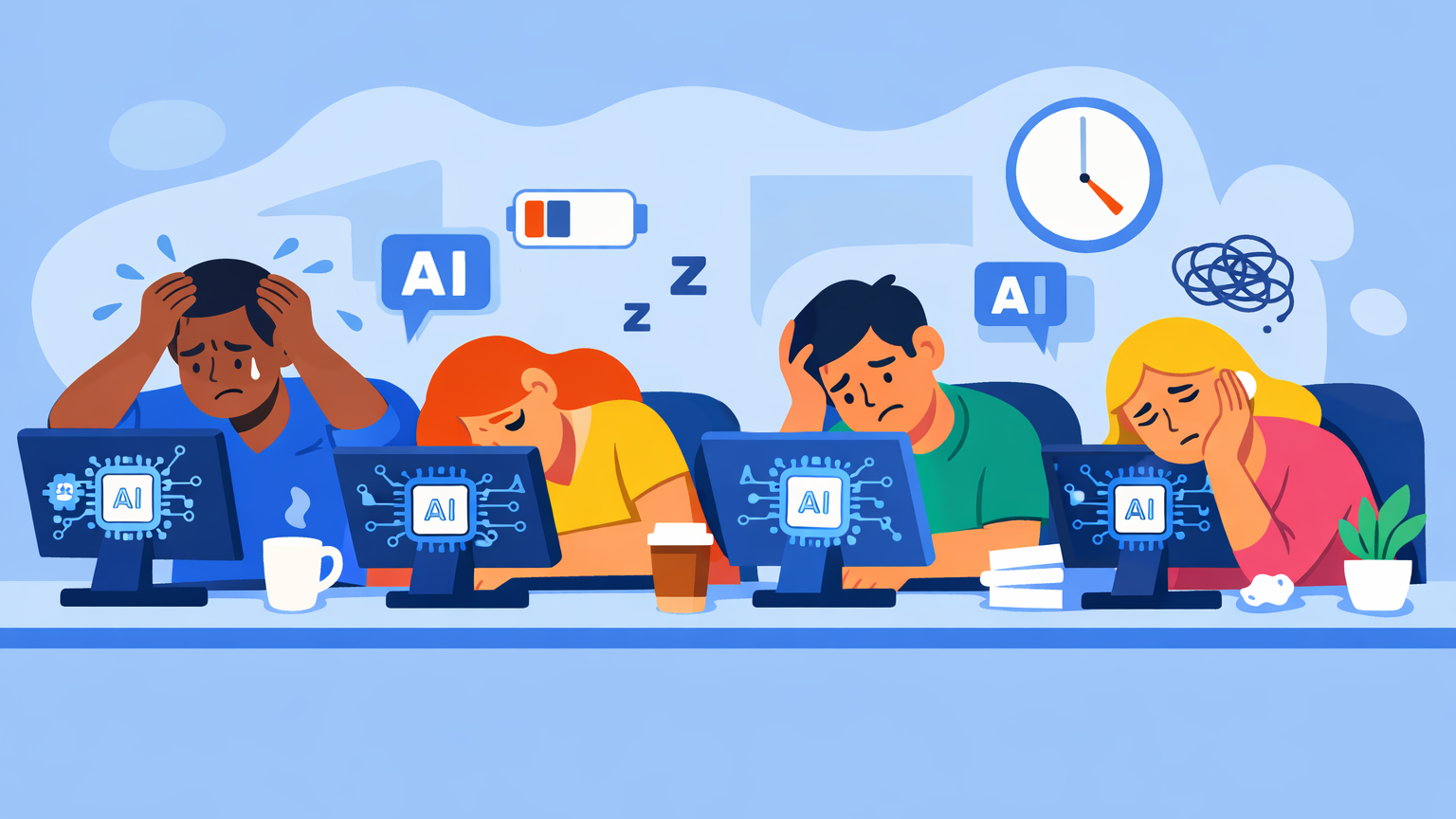
Early productivity highs quietly morphed into cognitive fatigue, decision drag, and a drop in work quality (hello, workslop). |
Image created with ChatGPT |
Researchers say self-regulation won't cut it. Their remedy? An "AI practice" of intentional pauses, sequencing, and "human grounding," aka talking to actual people to break the AI-induced silo.
Engineering leader Kieran Klaassen, GM of Every's Cora, offers a sharper fix: "compound engineering." Spend 80% planning, 20% building, and build safety nets (like automated tests) to catch glitches instead of manually proofing every AI hallucination.
Bottom line: Use AI to build flywheels, not hamster wheels; otherwise, the only thing you'll automate is exhaustion. |
|
|
🔐 Hire a Cryptographer in Half the Time The Cryptographer Hiring Kit provides turnkey job descriptions and interview questions, helping you land encryption talent without a marathon research session. 🤖 Shape Trusted AI With Data Leaders
Today, we're bringing you a special offer from our partner, DataDriven26, taking place Feb. 23–25 in Orlando, FL. Grab your spot before it's too late.
🔍 Audit Your Endpoints in One Dashboard Snag the Best Remote Monitoring and Management Software 2026 list to automate patches and keep remote fleets hacker-free in 2026.
💻 This section contains sponsored tech insights. Advertise with us! |
|
|
Redefining Employee Experience With AI |
|
|
1 Billion Androids Are Now Spyware Magnets |
Image created with ChatGPT |
If your smartphone is stuck on Android 12, it's time to budget for a newer device. Even a recently released mid-ranger is safer than an unpatched flagship. Meanwhile, enable Google Play Protect, block unknown-source installs, and keep apps updated until you upgrade.
Pro tip: If your handset still sports a micro-USB port, sprint—don't stroll—to the checkout line. |
23andMe Breach Deadline: Claim Cash Before Feb. 17 |
Tick-tock for 23andMe's 6.4 million victims. If you were a US customer between May 1 and Oct. 1, 2023, and got a notice, you must claim by Feb. 17 to snag your share.
Payouts stack up, so you can get an estimated $100 if you live in AK, CA, IL, or OR, plus $165 for health data, and up to $10,000 for identity-theft losses, all from a $30M–$50M pot. Everyone gets five years of free Privacy & Medical Shield + Genetic Monitoring.
File at 23andMeDataSettlement.com. Assuming you've already handled the 2FA and credit freeze basics, just sit tight—checks won't ship until the Chapter 11 bankruptcy dust settles.
Your spit sample may finally pay dividends; just don't let hackers cash them first. |
Anthropic Safety Lead Quits, Citing Perilous AI Future |
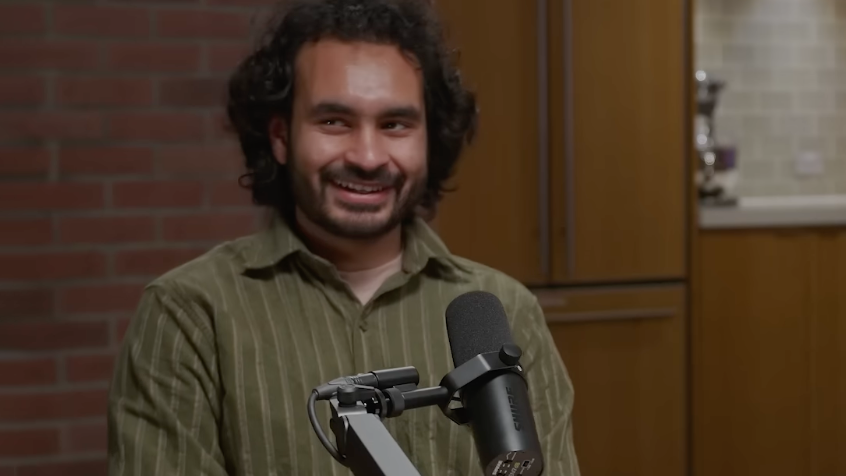
Mrinank Sharma, who led Anthropic's safeguards research team, has walked away from the AI darling, which is reportedly seeking funding at a $350 billion valuation, with a dramatic, widely shared exit letter declaring "the world is in peril."
In his two-year stint at the Claude-maker, Sharma helped probe AI sycophancy, deploy bioterror defenses, and draft one of the first formal AI safety cases. Yet he says constant pressure, internal and industry-wide, made it "hard ... to truly let our values govern our actions."
His parting note warns that technological power is outpacing human wisdom, and it hints that values sometimes bend when speed and scale beckon. |
The departure follows a mini-exodus of Anthropic researchers and comes just days after the launch of the hyper-powerful Claude Opus 4.6, a prolific bug hunter that recently uncovered hundreds of open-source vulnerabilities, underscoring the strain on safety teams racing to tame ever-larger models.
Rather than jump to another lab, Sharma plans to move back to the UK to study poetry and practice what he calls "courageous speech," suggesting a pivot from coding safeguards to crafting stanzas and perhaps embracing the "CosmoErotic" philosophy found in his resignation's footnotes.
Look for him at the next tech conference. He'll be the one rhyming about reinforcement learning and the "Love Story of the Universe"—and kudos to him for it. |
|
|
|
Writer at TechnologyAdvice |
Justin Meyers is an investigative writer and editor who draws on over a decade of meticulous hands-on research to deliver the full, trustworthy story behind consumer and enterprise tech, including cybersecurity. |
|
|
Curious about where AI is really headed? |
The Neuron cuts through the noise to bring you smart, hype-free takes on the latest AI trends, tools, and breakthroughs. Join 500,000+ professionals from top companies like Microsoft, Apple, Salesforce and more.
|
|
|
Advertise in Daily Tech Insider! Daily Tech Insider is a TechnologyAdvice business.
© 2026 TechnologyAdvice, LLC. All rights reserved. TechnologyAdvice, 3343 Perimeter Hill Dr., Suite 215, Nashville, TN 37211, USA. |
|
|
|