Circuit breakers ready, Tech Insiders.
Nvidia's humanoid robots get wired into fresh safety switches, Getty reroutes its circuits for AI, and hackers overload the lines to your backups. Time to see which breakers trip first. |
|
|
|
Here's what you need to know today: |
|
|
|
Nvidia Halos Aims to Make Humanoids Work-Safe |
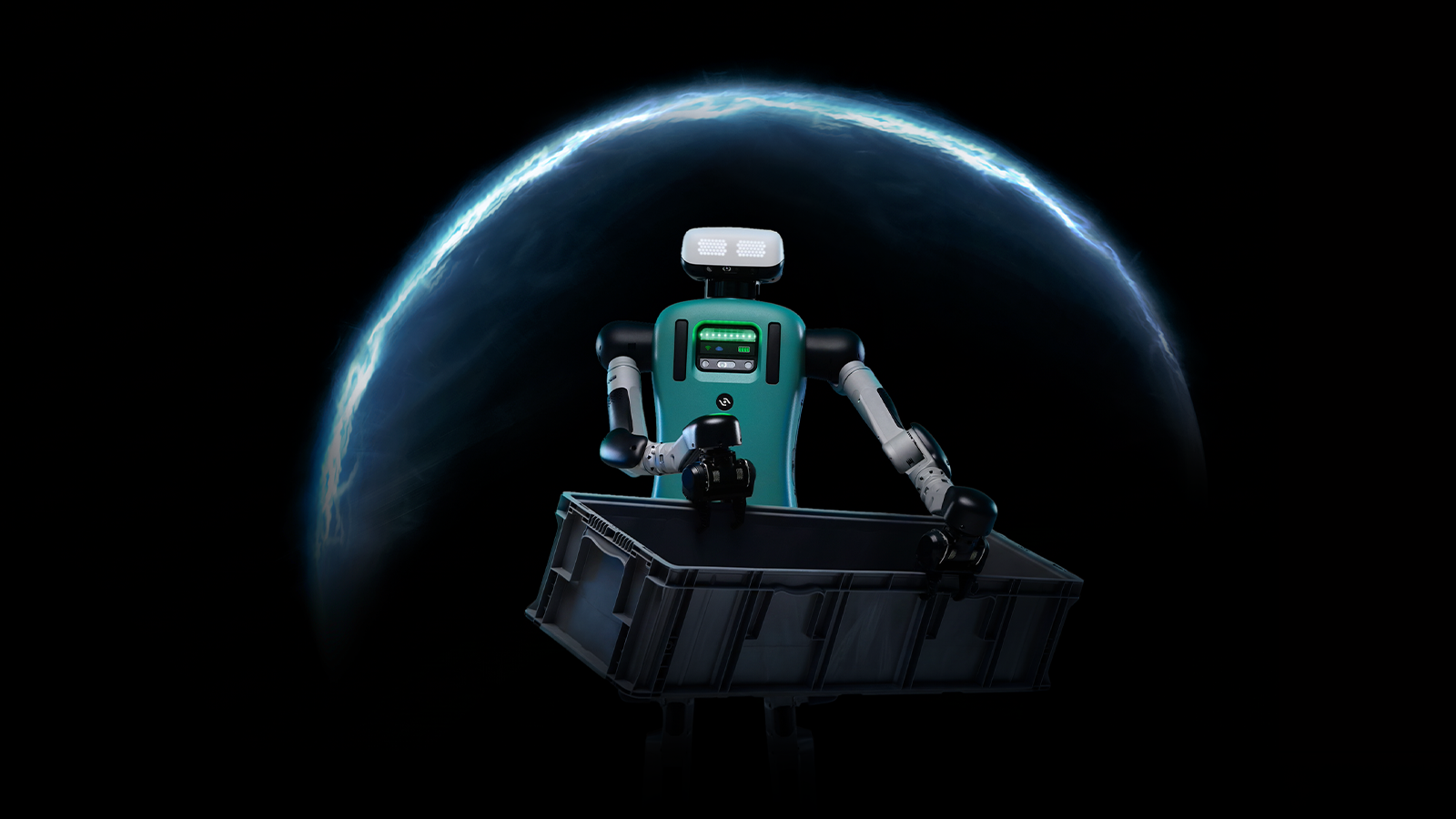
Nvidia just pulled the wraps off Halos for Robotics, a full-stack safety architecture that pairs its IGX Thor hardware and Holoscan Sensor Bridge with a Halos OS software layer to teach humanoid and industrial robots how not to clobber their fleshy coworkers.
Unveiled yesterday, Halos adapts the more than 18,600 engineering years of autonomous-car safety Nvidia has banked and repackages it for factory floors, warehouses, and logistics hubs.
The system lets robots tap external cameras and real-time AI to make split-second decisions and keep moving instead of freezing helplessly behind a virtual cage. |
Early adopter Agility Robotics will bake Halos into its Digit humanoid. Meanwhile, partners like FORT Robotics and dozens of certification bodies are already inside Nvidia's new Halos AI Systems Inspection Lab—the world's first ANAB-accredited inspection program for physical AI.
This "outside-in" safety aims to solve the productivity hit current stop-and-slow safeguards create, easing the path to a market Barclays pegs at $200 billion by 2035. The stakes are bigger than warehouse throughput. Without a common safety architecture, policymakers could slam the brakes on humanoid deployments.
Nvidia is pitching Halos as the "Intel Inside" sticker for physical AI, betting that a shared standard will let robot makers scale before 2027's EU Machinery Regulation kicks in.
Why it matters: If Halos works, your next colleague might be a robot that can hand you a crate without crunching your toes. And your company could deploy it sooner because Nvidia already did half the safety paperwork. |
|
|
|
Would you feel comfortable sharing workspace with a Halos-powered humanoid? |
|
|
|
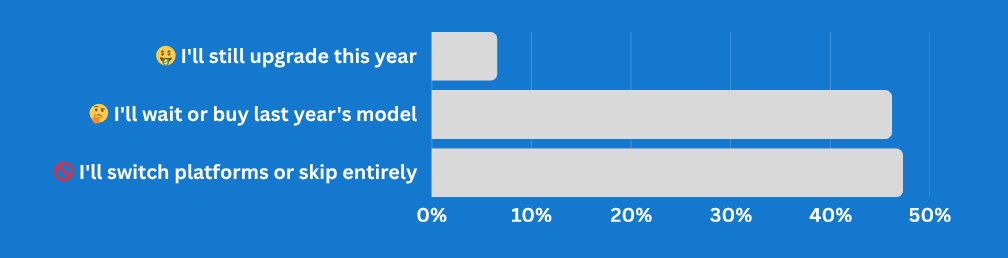
Results from Yesterday's Pulse Check |
How would a $200 jump on the next iPhone affect your upgrade plans? |
|
|
|
Prime Day Faces Inflation, Frauds, Frugal Shoppers |
Amazon's four-day Prime Day blitz starts today, a month early, as inflation hovering at 4.2% and pricey gas push shoppers toward essentials over impulse splurges. Bank of America pencils in $21.6 billion in total sales, while Adobe sees spending topping last year's holiday mega-weekend.
Groceries, paper goods, and summer basics headlined the sale. With Prime membership essentially maxed out at 200 million US subscribers, Amazon is using these frequent-purchase items to squeeze more orders out of its existing base. Also, Alexa's new shopping assistant will nudge Prime members with price-tracking alerts.
eMarketer still expects Amazon to capture 60% of US online sales even as Walmart and Target shadow the event.
Security researchers say the sale also lures crooks: Check Point counted 6,843 Amazon-themed domains registered since December, tagging nearly 10% as malicious, while TechRadar warns 1 in 13 new June domains is sketchy. Fake storefronts and phishing texts are already circulating.
For investors, the timing shift means any spending pop lands in Amazon's second-quarter results, offering a faster pulse on consumer stamina than usual. Strong grocery carts might cheer Wall Street, but razor-thin margins could mute the party.
Before checking out, protect your wallet by plugging URLs into CamelCamelCamel to spot fake deals where sellers jacked up prices right before the sale. |
|
|
|
Predictions 2026: Artificial Intelligence |
AI investments are facing greater financial scrutiny, with organizations under pressure to prove measurable business value.
Download Predictions 2026: Artificial Intelligence to explore key trends shaping the year ahead, including AI investment priorities, agentic automation, and the governance, skills, and interoperability strategies that will influence competitive advantage. |
|
|
|
Unpatchable SecureROM Exploit Hits Millions of A12/A13 Apple Devices |
Researchers disclosed an unpatchable SecureROM exploit, usbliter8, that lets anyone with a low-cost Raspberry Pi and DFU mode hijack A12 and A13 Apple devices before iOS loads.
The flaw lives in the USB controller; combined with Apple's boot config, it enables code execution on iPhone XS/XR and the entire iPhone 11 line, several iPads, Apple Watch Series 4/5, HomePod mini, and more.
Attackers need physical access, but in a throwback to Checkm8, jailbreakers and forensics shops now have a permanent door Apple can't patch. Crucially, thieves can't snatch your personal data because Apple's Secure Enclave remains isolated and uncompromised.
Still, keep devices out of DFU mode on untrusted connections, and budget to refresh to A14-class hardware. |
Prinz Eugen Ransomware Targets Today's Work Files |
A new Go-based ransomware strain dubbed Prinz Eugen encrypts the freshest files on a system—documents, databases, synced drives—then vanishes without leaving a ransom note, denying incident responders the usual smoking-gun trigger and moving extortion entirely out of band.
ThreatDown and others report attackers slipping in via stolen Remote Desktop Protocol (RDP) credentials, dropping a "servertool.exe" payload through legitimate IT management software like RemotePC, and deleting originals only after confirming the encrypted copy can be unlocked.
Shrink your backup gap: Back up active work more than once a day, monitor for sudden .prinzeugen extensions or mass file rewrites, enforce MFA on all RDP access, and alert on surprise admin accounts (like their favored "germania" backdoor) or remote-management sessions outside change windows. |
|
|
|
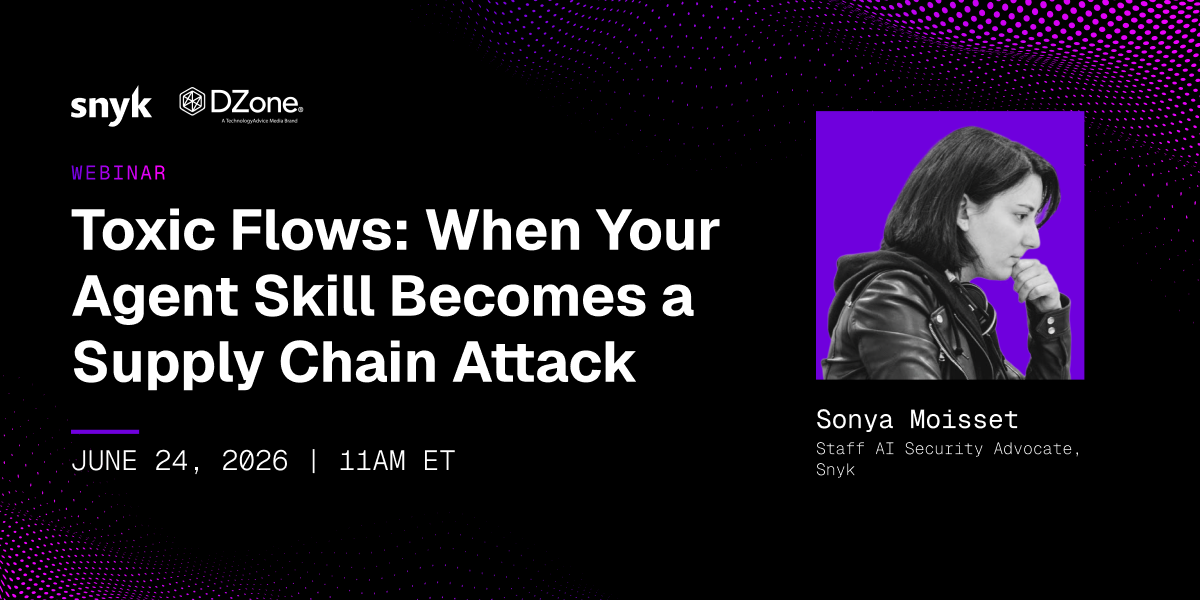
AI agent skills are becoming part of everyday developer workflows, but many of them contain hidden security risks that teams never evaluate. Join DZone and Snyk on June 24, 2026, at 11:00 a.m. ET for Toxic Flows: When Your Agent Skill Becomes a Supply Chain Attack, and learn how malicious skills exploit prompt injection, credential access, and supply chain trust assumptions.
See how real attacks operated and what developers can do now to reduce exposure. |
|
|
|
Getty Images Flips Script With OpenAI Licensing Deal |
Getty Images inked a multiyear display partnership with OpenAI that will surface its licensed photo libraries inside ChatGPT's search and discovery answers.
The move flips Getty's years-long posture from suing AI firms to supplying them, though a spokesperson confirmed OpenAI's rights are strictly limited to on-screen display, not model training.
After banning AI-generated art in 2022 and taking Stability AI to court (a landmark copyright battle it largely lost last November), Getty launched its own indemnified generator in 2023 and licensed images to Perplexity last October.
Financial details remain sealed, but investors cheered anyway. Shares skyrocketed intraday before settling up almost 85%, erasing this year's losses even as regulators vet Getty's pending $3.7 billion buy of Shutterstock.
For OpenAI, the deal adds brand-safe visuals to bolster ChatGPT's search answers and budding self-serve ads business; for Getty, it turns a perceived existential threat into a distribution channel and precedent for other AI platforms hungry for licensed media. |
|
|
|
|
Writer/Editor at TechnologyAdvice |
Justin Meyers is an investigative writer and editor who draws on over a decade of meticulous hands-on research to deliver the full, trustworthy story behind consumer and enterprise tech, including cybersecurity. |
|
|
|
Curious about where AI is really headed? |
The Neuron cuts through the noise to bring you smart, hype-free takes on the latest AI trends, tools, and breakthroughs. Join 700,000+ professionals from top companies like Microsoft, Apple, Salesforce, and more.
|
|
|
|
Advertise in Daily Tech Insider! Daily Tech Insider is a TechnologyAdvice business. © 2026 TechnologyAdvice, LLC. All rights reserved.
TechnologyAdvice, 3343 Perimeter Hill Dr., Suite 215, Nashville, TN 37211, USA. |
|
|
|
|