Place your bets, Tech Insiders. Meta is testing a prediction markets app, Nvidia is moving AI agents into life science, and Berkshire is putting $10 billion behind Google's AI moat. Time to track the market's next big wagers. |
|
|
|
Here's what you need to know today: |
|
|
|
Meta Eyes Prediction Markets With Experimental App |
Facebook's next feed may come with odds.
Leaked documents reveal Meta is quietly building an AI-powered prediction markets app called Arena, as Mark Zuckerberg hunts for engagement outside of his core networks.
Arena would be a standalone smartphone app where users wager on future events using a daily allowance of virtual "play money." While it's points-based for now, Meta hasn't ruled out cash betting later. Crucially, the software relies on Meta's Llama AI to scrape trending topics for user questions and settle the outcomes automatically.
Meta tried this before, launching (and shuttering) a similar app called Forecast between 2020 and 2022. This time, however, the market is much hotter and much more controversial, with regulators already suing platforms and arresting tech and military insiders for illicit trading.
|
Image created with ChatGPT |
Meta has scale to throw at the experiment, boasting more than 3.56 billion daily users across its apps. But Arena is part of a broader push into separate apps as main platform growth inevitably saturates.
The move follows a massive surge in trading activity led by Polymarket and Kalshi, which cleared a collective $50 billion last year and have already blown past $130 billion over the current cycle. Zuckerberg appears to see that momentum as both a product signal and a business opportunity.
Why it matters: Meta is once again chasing emergent online behavior before someone else owns it outright. If Arena launches, it could turn prediction markets from a niche internet obsession into a mass social product, bringing more engagement and, inevitably, a massive regulatory headache right along with it. |
|
|
|
Would you use a Meta prediction market app? |
|
|
|
Results from Yesterday's Pulse Check |
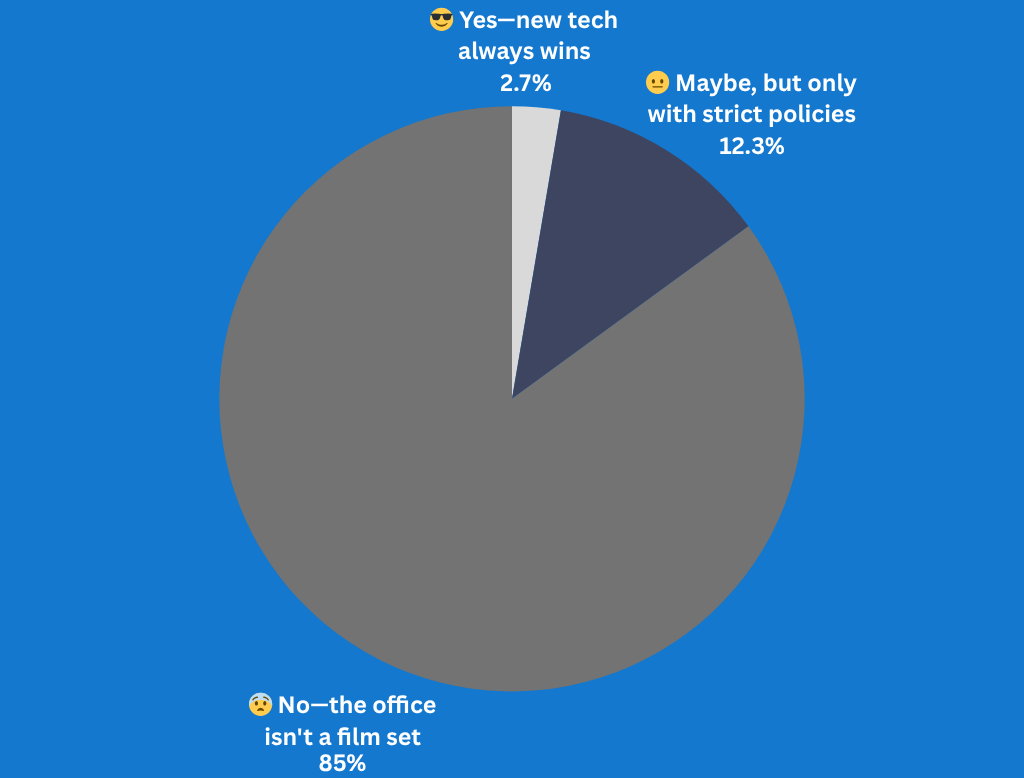
Would you feel comfortable working beside coworkers wearing $299 camera glasses? |
|
|
|
Nvidia Gives AI Agents a Scientific Toolbox |
Because "read every paper, run every model, and find a drug" is not exactly a one-click workflow.
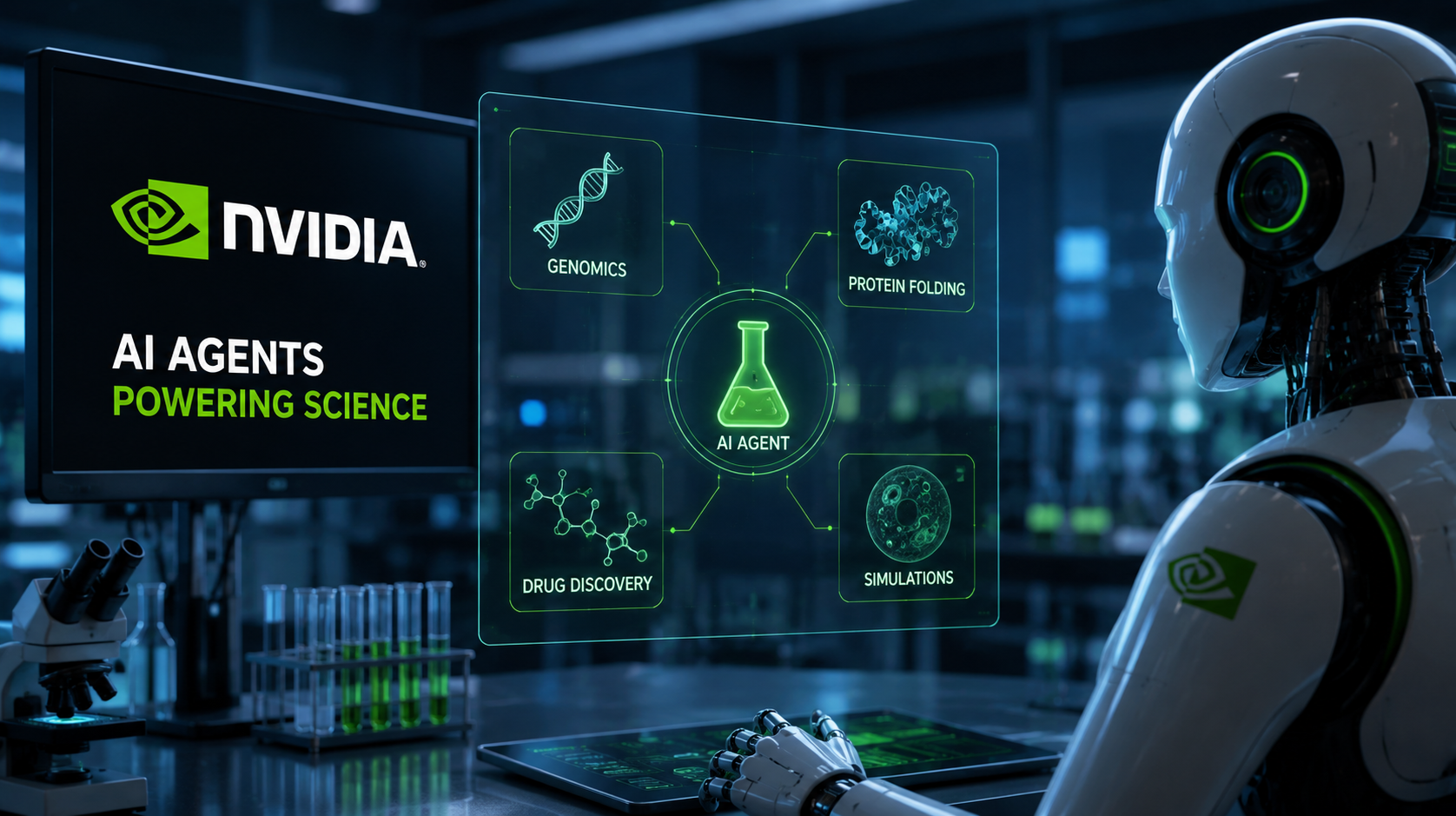
Nvidia is rolling out the BioNeMo Agent Toolkit, a suite of resources built to upgrade basic AI into specialized research assistants capable of tackling genomics, chemistry, and drug development.
The pitch is less chatbot, more research operator. The company is stitching together the full stack: Nemotron provides reasoning models, NIM handles model calls, Parabricks accelerates genomics, NemoClaw ensures secure behavior, and OpenShell gives agents a controlled environment to run tasks.
Over 50 groups are already adopting it, including Lilly, Schrödinger, Databricks, Snowflake, and UW's Institute for Protein Design. Anthropic and OpenAI are integrating the toolkit into their ecosystems, handing Nvidia a valuable role as the scientific plumbing beneath competing frontier models. |
Image created with ChatGPT |
Nvidia says agents could narrow small-molecule candidate lists in minutes rather than days. Its work with UW helped RosettaFold3 run twice as fast. Better yet? Adding these skills doubled token efficiency and spiked task completion rates from a shaky 57% to 100%.
The larger prize is enormous. Worldwide research and development spending sits at a staggering $3.8 trillion, with pharma companies deploying nearly $300 billion of that annually. Nvidia wants its new tech to help labs drastically shorten the runway between forming a hypothesis and executing the right experiment.
Nvidia isn't just selling GPUs to life sciences anymore. It's trying to become the operating layer for AI-powered science, one protein and experiment at a time. |
|
|
|
🔄 Build Apps That Bounce Back Fast |
📊 Supercharge AWS Log Analytics |
Spin up Splunk Enterprise on an AWS AMI for a 60-day free trial—collect, index, and visualize machine data instantly to spot issues before they snowball. |
📊 Dive Into Data for 87% Less |
Grab The Advanced Data Science Bundle—eight expert courses (Power BI, TensorFlow, PySpark, and more) with 50.5 hours of lifetime training—for just $29.99 (87% off). |
|
|
|
AI Is Making Credential Sprawl Worse and Most Security Teams Can't See It |
Passwords, API keys, service accounts, and AI agents are creating a growing web of unmanaged credentials that traditional IAM, SSO, and PAM tools weren't designed to govern. Download this guide from 1Password to learn how AI is accelerating credential sprawl, where hidden risks emerge, and what security leaders can do to regain visibility and control. |
|
|
|
Anthropic's Mythos Finds Flaws in Classified Systems |
Anthropic's restricted Mythos model spotted security gaps in sensitive federal networks in a matter of hours during a controlled, offline testing exercise, according to a US official.
The test ran through Project Glasswing, Anthropic's initiative to use advanced AI for defensive cybersecurity. While the AI didn't actually "break into" live systems—despite what panicked senators might claim—the speed still raises the stakes. |
Image created with ChatGPT
|
The report lands amid a messy policy fight. The Trump administration recently required Anthropic to restrict foreign access to Fable 5 and Mythos 5. In a beautiful stroke of irony, Anthropic responded by disabling the models for everyone, meaning the NSA just lost access to its shiny new cybertoy. Meanwhile, over 100 cyber executives cautioned that hamstringing defensive AI capabilities might inadvertently benefit foreign rivals.
The takeaway for your own network? Vulnerability discovery is moving at warp speed on both sides of the firewall. The Five Eyes intelligence alliance is now pushing companies to rapidly integrate AI protections, warning that the timeline for advanced AI cyberthreats is "not years, it is months." |
ClawHub Plugins Pose as Official Tools |
Researchers at Manifold Security found 23 code-executing plugins using official-looking @openclaw and @clawhub names on ClawHub, despite being published by unrelated accounts.
The underlying weakness is good old-fashioned scope squatting. A publisher adopts a trusted-looking namespace, making users more likely to blindly install software without checking who owns it. Of ClawHub's 1,508 plugins, 557 use an @owner/ prefix, but the platform forgot that you actually have to enforce ownership checks.
Experts found no malicious code in the squatter versions they reviewed, but the risk lies in their access. These tools possess extensive capabilities, such as processing autonomous payments, executing host-level Git commands, and connecting to external APIs. Consequently, a rogue update from an unverified publisher could silently deploy malicious payloads.
Fortunately, ClawHub unlisted the offending plugins on June 19 and slapped together a namespace dispute process. Still, approach AI plugins with the same caution as any software supply-chain dependency. Always verify the publisher, prioritize vetted registries, and quarantine AI agents in isolated environments with strictly limited network access.
An official-looking name is not proof that a plugin is safe—it just means someone knows how to type an "@" symbol. |
Designed for employees and IT management at scale, the Logitech Zone Series of headsets delivers certified audio, adaptive noise cancellation, and pro-grade mic performance. Enter for a chance to win a Zone Vibe Wireless, Zone Wireless 2 ES, or Zone Wired 2. 100 winners selected. No purchase necessary. Entries close July 19. |
Berkshire Bets $10B on Google's AI Moat, Then Immediately Loses Money |
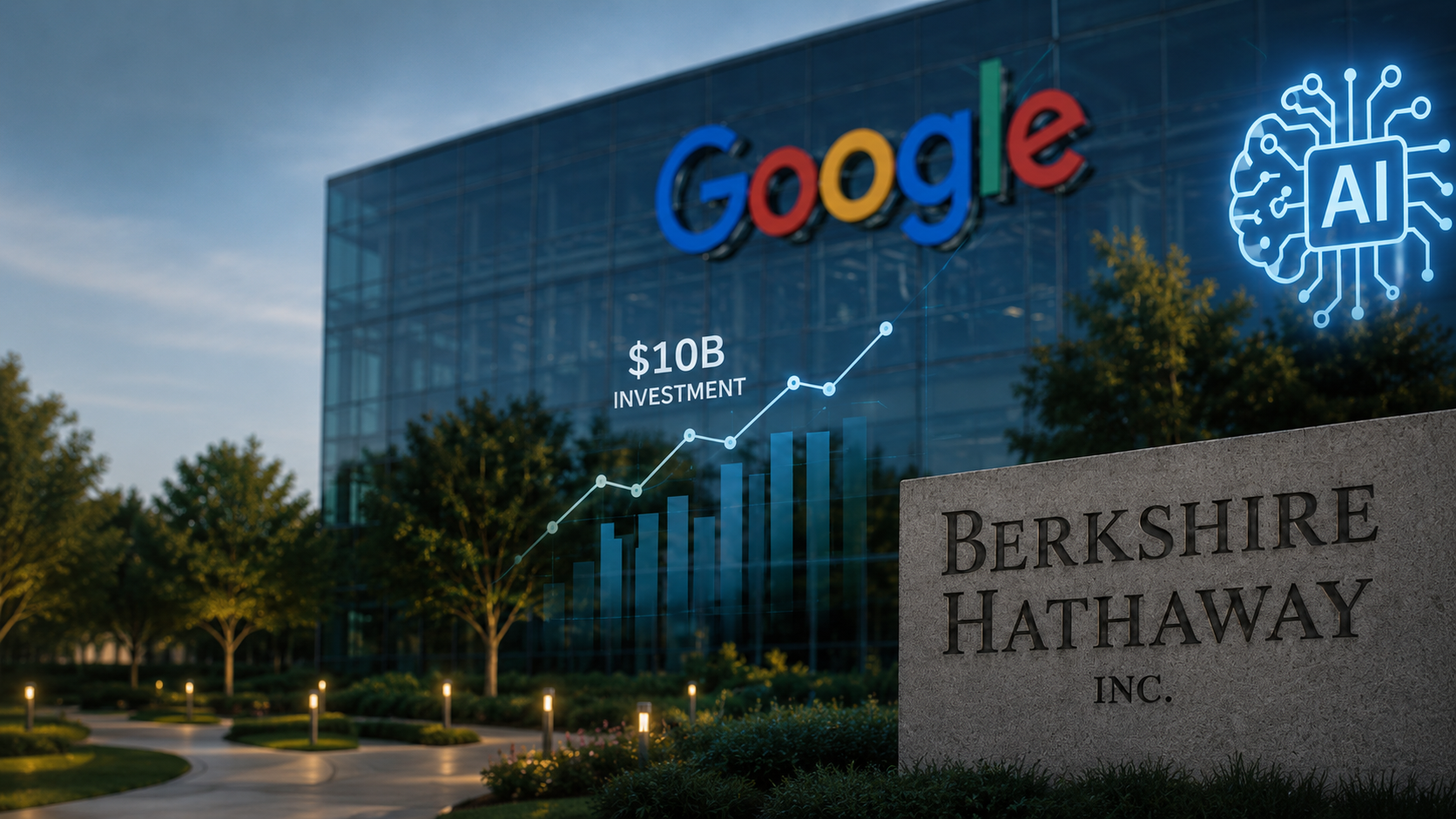
Berkshire Hathaway officially dropped $10 billion on Alphabet earlier this month, splitting the purchase evenly between Google's Class A and Class C shares. The move helps fund Alphabet's mammoth AI infrastructure raise, which could require roughly $80 billion to $85 billion.
This is less a bet on Gemini than on Google's full machine. Alphabet controls Search, YouTube, Cloud, and Android, handing it an established reach that newer competitors lack.
The deal also signals a changing of the guard. While Buffett is still the legendary figurehead, new CEO Greg Abel is actively steering the conglomerate's capital into modern tech territory (alongside a recent $6.8B Taylor Morrison buyout). The logic still feels Buffett-esque: buy a durable business with a deep moat. |
Image created with ChatGPT |
But that moat might be leaking. Alphabet must defend Search against AI answer engines (its own AI Mode yields a 93% zero-click rate) and retain top talent, which it is spectacularly failing to do. Just last week, Gemini co-lead Noam Shazeer bolted for OpenAI, and Nobel laureate John Jumper defected to Anthropic. Thanks to the mass exodus, Alphabet's stock just tanked below the roughly $350 per share that Berkshire paid.
Still, Berkshire's investment suggests AI market enthusiasm is shifting beyond chips and prototypes. Future heavyweights will likely be the ones converting raw processing power into sticky, revenue-generating ecosystems. In the AI gold rush, Berkshire appears to be backing the company that already owns the railroad—even if the conductors keep jumping off the train. |
|
|
|
| Greg Parker is a cybersecurity and emerging tech writer who explores the intersection of digital risk, human behavior, and innovation across sensing and security technologies. |
|
|
|
Curious about where AI is really headed? |
The Neuron cuts through the noise to bring you smart, hype-free takes on the latest AI trends, tools, and breakthroughs. Join 700,000+ professionals from top companies like Microsoft, Apple, Salesforce, and more.
|
|
|
|
Advertise in Daily Tech Insider! Daily Tech Insider is a TechnologyAdvice business. © 2026 TechnologyAdvice, LLC. All rights reserved.
TechnologyAdvice, 3343 Perimeter Hill Dr., Suite 215, Nashville, TN 37211, USA. |
|
|
|
|