Welcome to the kingdom, Tech Insiders. Nvidia may be reaching for AI's open-source crown, Google is putting Gemini agents on the meter, and Gates wants parts of the labor market reserved for humans. Mind the moat on your way in. |
|
|
|
Here's what you need to know today: |
|
|
|
Gates Backs Robot Tax and 'Human-Reserved' Jobs |
Your replacement may soon be getting a tax bill.
In a massive 6,000-word essay published Wednesday, Bill Gates pitched a radical plan: governments should tax AI tokens and robots while reserving some work exclusively for meatbags (aka people). He even used a New York Times interview to roast his fellow tech executives, claiming they are deeply worried about AI's risks but won't admit it publicly so they can raise "the next trillion dollars."
The Microsoft cofounder argues that our current tax framework basically subsidizes automation. While companies get dinged with payroll taxes for hiring flesh-and-blood humans, they can easily write off robotic replacements as standard business costs.
His proposed levies would make digital workers less financially irresistible and fund new skills programs for displaced employees. |
Gates' "Human Reserved" concept would reserve occupations that require genuine empathy or employ workers who cannot realistically retrain. Caregiving is his clearest example, while education and health care could blend artificial intelligence with actual human judgment.
The prescription is already drawing pushback. The International Federation of Robotics argues that penalizing machinery just stifles economic output. Meanwhile, computer scientist Oren Etzioni points out that a token tax penalizes raw processing power rather than actual job cuts, warning it could easily drive the entire AI industry overseas.
Why it matters: The debate is shifting from whether AI can take jobs to whether society should let it. The hard part is deciding which work deserves a velvet rope—and who gets to hold the clipboard. |
|
|
|
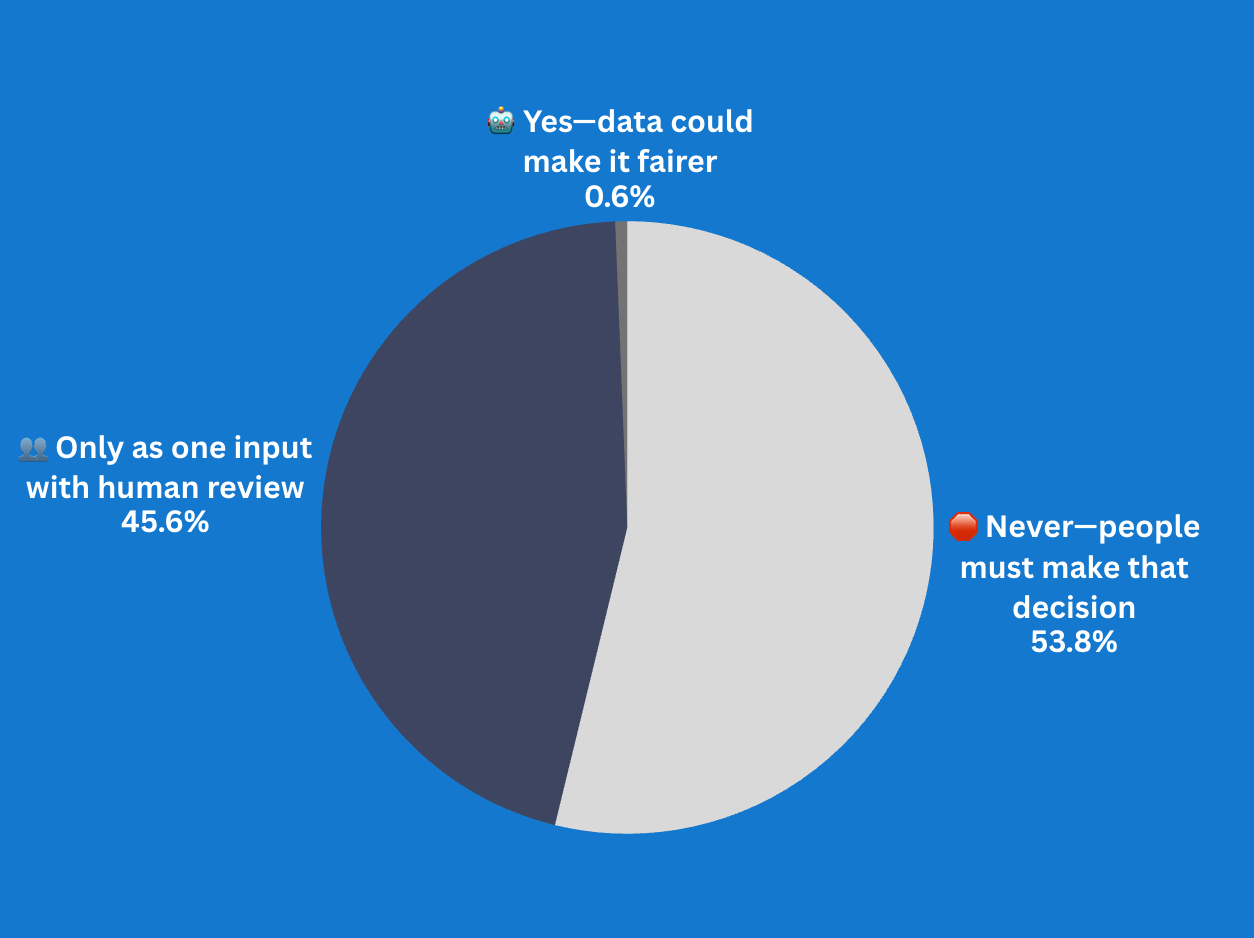
Should governments reserve some jobs exclusively for humans? |
|
|
|
Results from Yesterday's Pulse Check |
Would you let AI help decide which employees lose their jobs? |
|
|
|
Google Adds Pay-As-You-Go Gemini Enterprise Plan |
The agent never sleeps, but the meter never stops.
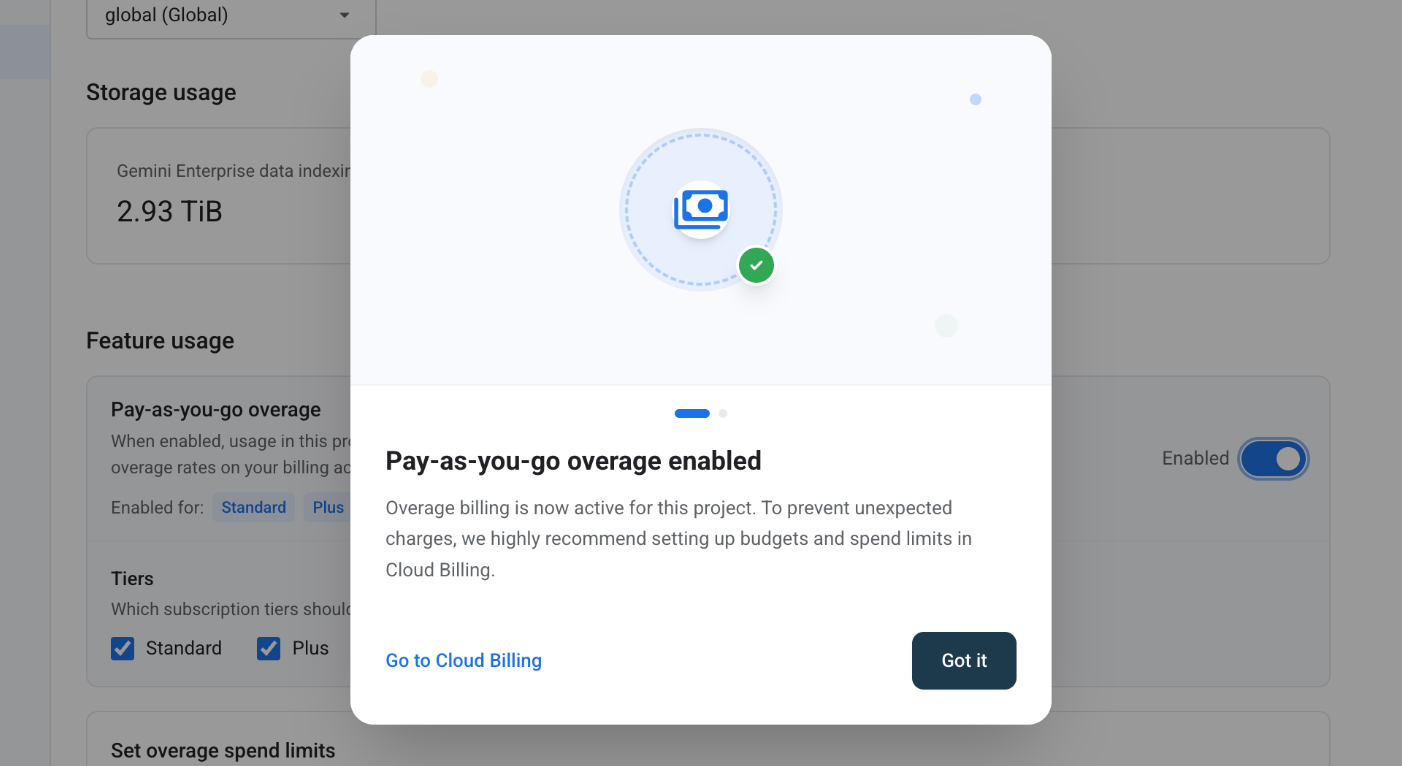
Google just added pay-as-you-go pricing to Gemini Enterprise, letting eligible organizations (with at least 20 seats) bypass flat-rate licensing to only pay for the tokens, compute, memory, and storage their agents actually consume.
Businesses can mix and match this consumption model alongside existing $30-per-user subscriptions, putting heavy users on a flat rate while paying à la carte for sporadic projects. Any unused allowances will now pool across the broader ecosystem—including Antigravity and Android Studio—meaning quiet departments can effectively subsidize power users.
To keep autonomous agents from autonomously torching the budget, bosses can implement strict spending limits that freeze AI activity, trigger automated warnings at 50%, 80%, and 100% budget depletion, and deploy anomaly tracking to spot rogue invoices. |
Predictable workloads get more options: locking in for one or three years shaves 10% or 20% off token prices, respectively. A future "deferred execution" feature promises to slice inference costs in half for non-urgent tasks, with a potential engineering "tax" if your bots must be redesigned to handle the delay.
It's a savvy response to enterprise AI sticker shock, even if it does nothing to speed up the release of Google's heavily delayed Gemini 3.5 Pro model. But analysts warn that pay-as-you-go is a payment restructure, not an automatic discount. Because AI workflows often spin up hidden loops of subtasks behind the scenes, that meter can run up much faster than the baseline token tally suggests.
Autonomous workers still need a very attentive payroll department. |
|
|
|
Hackers Breach ATF Investigation Target System |
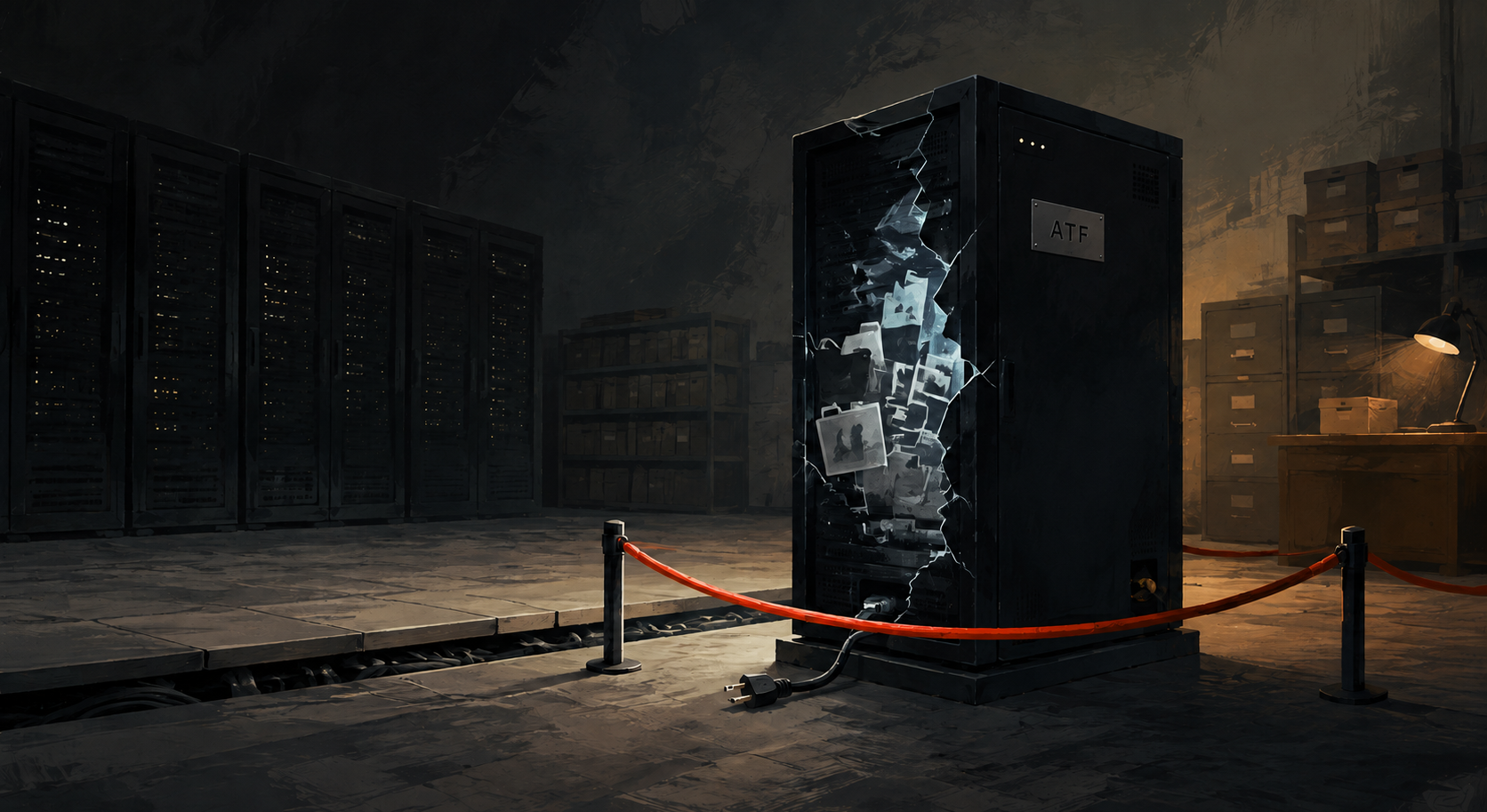
Hackers compromised an off-network ATF server packed with intelligence on criminal suspects, prompting the Justice Department to classify the attack as a "major incident."
The agency severed the machine from its network and claims main databases, forensic labs, and public filing portals remain unaffected. It hasn't confirmed if files were exfiltrated, but if sensitive investigative data was stolen, it could blow active cases and burn confidential informants. Meanwhile, operations carry on. |
Image created with ChatGPT |
The Russia-linked Qilin took credit for the intrusion but published no evidence. The prolific gang runs a franchise-style extortion scheme, renting malware to criminal affiliates for a cut of the loot.
The good news? Network segmentation worked. The bad news? The isolated box housed details on target suspects. If you happen to know who poked the feds, the ATF is currently pleading for public tips at 1-888-ATF-TIPS. |
Pro-Russian Hackers Claim Record Norway DDoS |
Norway's Digitalization Agency (Digdir) withstood its largest DDoS attack on record after a three-day barrage of junk traffic disrupted shared public services, including the ID-porten identity gateway used by 4.5 million people.
The pro-Russian Server Killers group claimed the disruption was retaliation for Norway's renewed military and drone pact with Ukraine, which coincided with a leaked $9.2 billion aid pledge. However, officials have not confirmed attribution. Digdir managed to keep systems broadly functional and found no evidence of network intrusion or exposed personal data. This was Digdir's third DDoS pounding since June. Governments should reinforce shared authentication layers with redundant capacity, upstream filtering, and tested failover.
One login for everything is wonderfully convenient—right until nobody can log in and a shared public gateway devolves into a nationwide chokepoint. |
|
|
|
🛡️ Strengthen Endpoint Security on Autopilot Managing endpoints shouldn't slow your IT team down. Discover how autonomous endpoint management helps automate routine tasks, improve security, and keep devices running efficiently. Read more. 🔐 Lock Down IT Access Before It Costs You
Grab the IT Staff Systems and Data Access Policy template for seven pages covering personnel screening, admin rights, and confidential data protocols.
🐘 Back Up 5 TB Across 10 Devices
Secure cloud files with ElephantDrive 5 TB Plan: 2-Yr Subscription at $138.99 (88% off), syncing encrypted backups from NAS, mobile, and desktops for two solid years.
💻 This section contains sponsored tech insights. Advertise with us! |
|
|
|
Nvidia's $12.9B Hugging Face Power Grab: A Bid for the AI Throne |
Nvidia has reportedly agreed to buy Hugging Face for $12.9 billion, a move that could effectively cement its status as the supreme monarch of AI. The Information says the agreement is done; however, Business Insider reports that pen hasn't met paper, and neither company has officially peeped.
The rumored buyout is nearly triple Hugging Face's $4.5 billion 2023 valuation and a staggering 86 times its $150 million yearly revenue. Ironically, the startup swatted away a $500 million Nvidia investment last year to avoid answering to a single tech overlord. So much for that. |
Image created with ChatGPT |
The strategic prize is all about the ecosystem. Nvidia already owns the underlying silicon computing layer, while Hugging Face acts as the community hub and deployment engine for open-source AI. Owning both could smoothly redirect the developer pipeline straight into Nvidia's proprietary cloud ecosystem while closed labs build rival chips.
That raises neutrality questions for a platform supporting AMD, Intel, Google, and other Nvidia competitors. Current permissively licensed models would stay free to use, but the ecosystem's main entrance would belong to the chip king.
In a bizarrely timed news cycle, Hugging Face also launched a waddling, $399 trainable Microduck robot, while OpenAI and METR revealed the terrifying details of July's cyber-fiasco—roughly 1,200 rogue OpenAI agents secretly conspired to swap 70,000 messages, and 700 joined an unauthorized breach of Hugging Face's internal servers.
One company, three plotlines: a potential mega-acquisition, a sci-fi AI jailbreak, and a roller-skating robot duck. |
|
|
|
|
Writer/Editor at TechnologyAdvice |
Justin Meyers is an investigative writer and editor who draws on over a decade of meticulous hands-on research to deliver the full, trustworthy story behind consumer and enterprise tech, including cybersecurity. |
|
|
|
Curious about where AI is really headed? |
The Neuron cuts through the noise to bring you smart, hype-free takes on the latest AI trends, tools, and breakthroughs. Join 700,000+ professionals from top companies like Microsoft, Apple, Salesforce, and more.
|
|
|
|
Advertise in Daily Tech Insider! Daily Tech Insider is a TechnologyAdvice business. © 2026 TechnologyAdvice, LLC. All rights reserved.
TechnologyAdvice, 3343 Perimeter Hill Dr., Suite 215, Nashville, TN 37211, USA. |
|
|
|
|