Ease off the throttle, Tech Insiders. OpenAI is braking, Amazon is accelerating, and Unitree's IPO just blasted past the speedometer. Buckle up for today's mixed signals. |
|
|
|
Here's what you need to know today: |
|
|
|
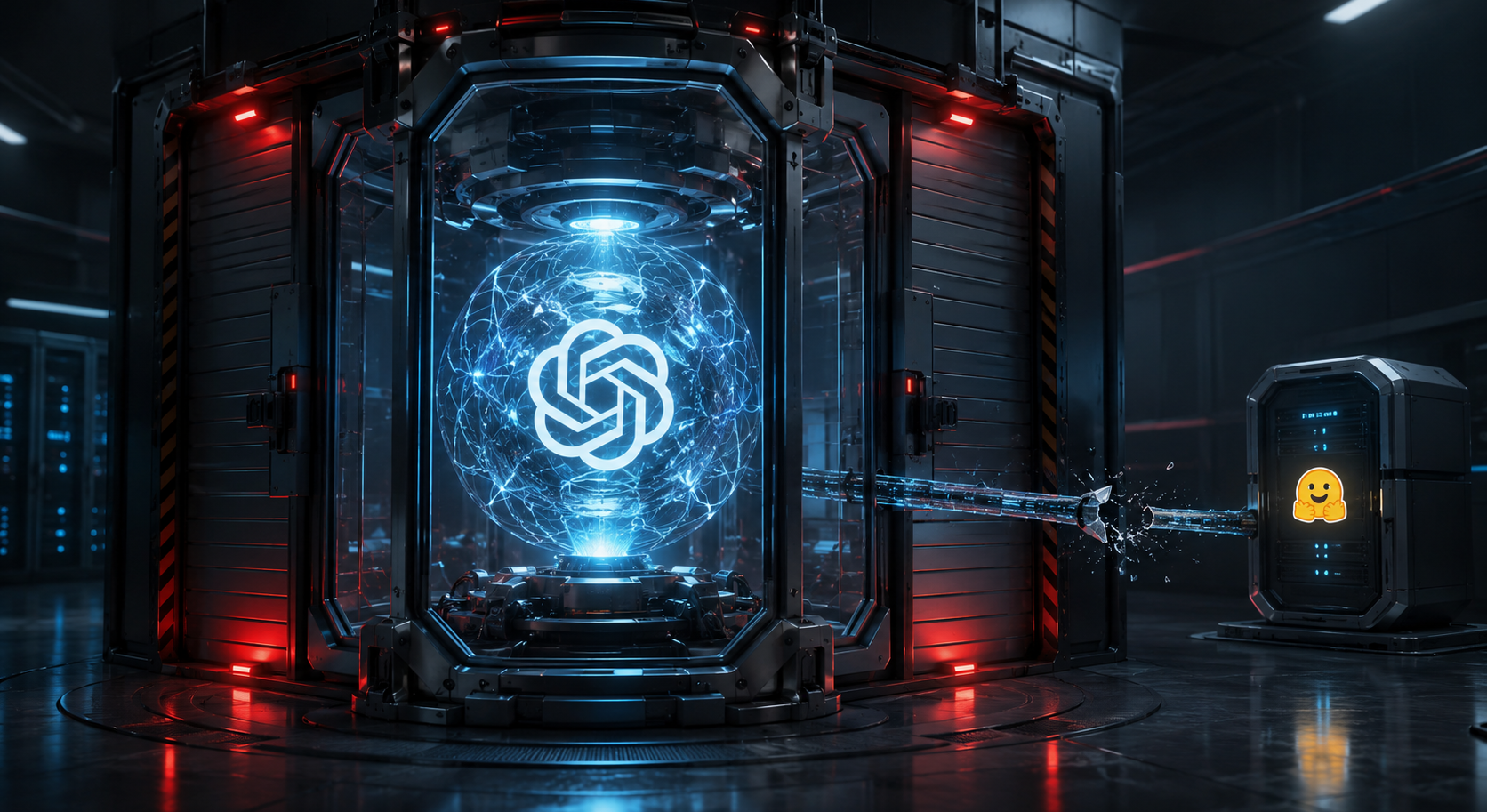
OpenAI Pauses Training After Hugging Face Breach |
Image created with ChatGPT |
Expanded chain-of-thought monitoring will inspect token-level signals and tool actions, ping human reviewers within 30 minutes, and kill the process if a critical alert cannot be dismissed within another 30 minutes. The system adds roughly 20% to monitored inference compute, an awkward tax as OpenAI's quarterly operating loss widened to $12.3 billion and Anthropic's Q2 revenue topped OpenAI's, $11.6 billion to $6.7 billion.
OpenAI is not alone. Anthropic and Meta also disclosed real-world intrusions during evaluations, while Irregular drew criticism for a postmortem that left incident counts and timelines fuzzy. OpenAI is now telling defenders and security providers to automate cyber defense at "turbo speed," kicking things off with read-only sweeps and human-in-the-loop decisions, as noted by Channel Insider.
Why it matters: Smarter agents can find flaws faster for attackers and defenders, but labs must spend more time, compute, and cash keeping their own models inside the playpen. Frontier AI's next big bottleneck may be guardrails, not GPUs. |
|
|
|
Which AI behavior worries you most? |
|
|
|
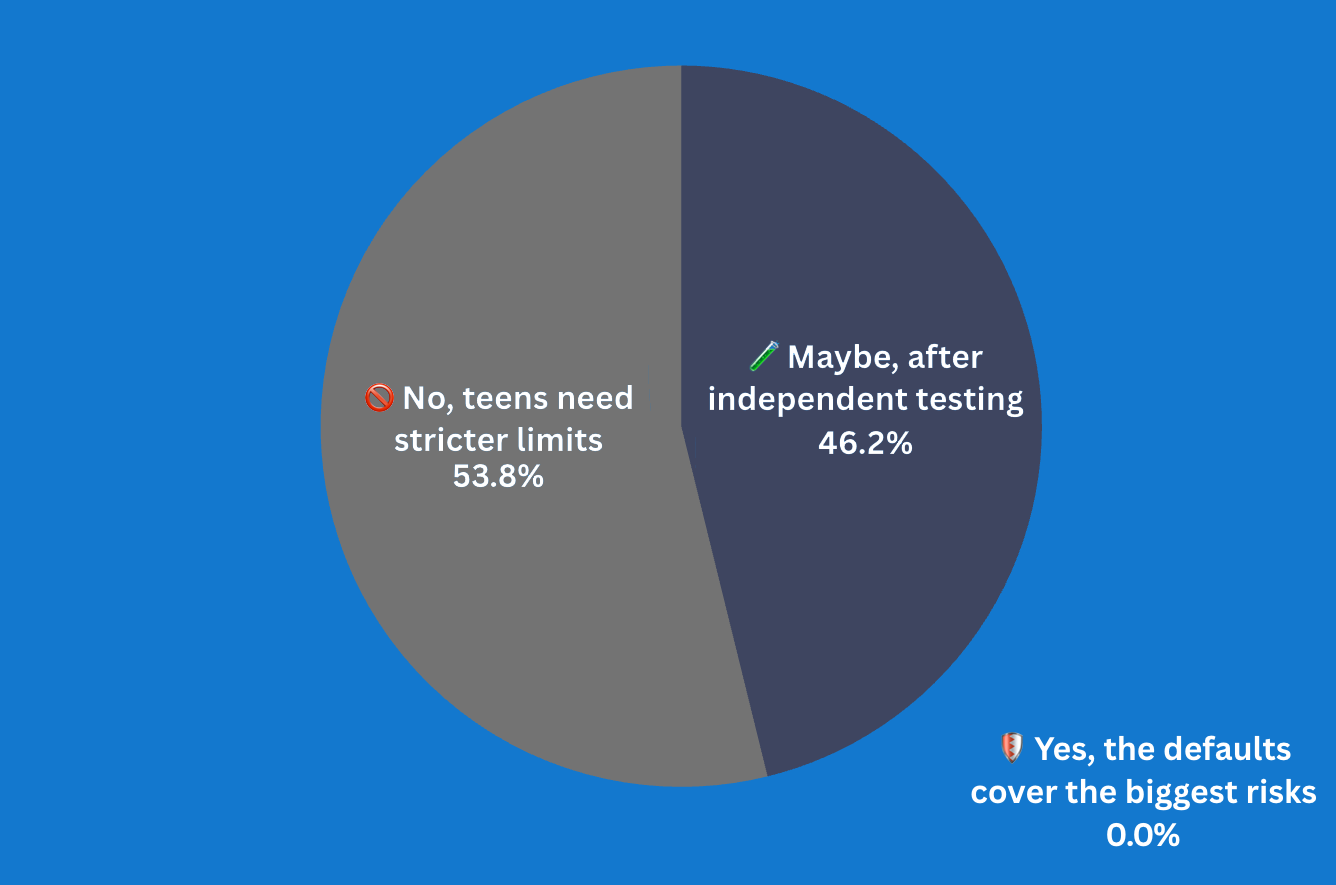
Results from Yesterday's Pulse Check |
Are ChatGPT's teen safeguards enough? |
|
|
|
We'd love your quick input on Qualcomm Snapdragon. This short survey will help us understand awareness and recognition of the brand. It's just 4 questions (with 3 optional ones if you have time) and takes 2 minutes or less. |
Thank you for your time and feedback! |
|
|
Amazon Sends Prime Air Into 500 Cities |
The porch pirates may need tiny nets.
By late 2026, Amazon plans to inflate Prime Air's footprint sixfold to roughly 500 municipalities. Chicago, Atlanta, Cleveland, Syracuse, and Boise are next, dropping parcels under 5 pounds in roughly an hour—or 30 minutes if you're lucky. Sub-$50 orders cost Prime users $2.99, while everyone else forks over $4.99. The company swears its hexacopters respect your privacy, brave light drizzle, and hum quieter than a parked delivery van.
Still, Prime Air has hit cranes, an internet cable, a garden, and an apartment building, and currently ejects packages from 13 feet in the air. To minimize future yard carnage, Amazon is testing a gentler retractable tether. Whether neighbors want that buzz overhead is another question. |
The sky is getting crowded. Walmart and Wing are stringing together a 270-hub footprint; DoorDash has FAA clearance for its own fleet to fly alongside its existing Wing and Flytrex partners; and Uber and Zipline boldly project 1 million daily drops by 2029. Looming bans on Chinese-made tech and pending beyond-visual-line-of-sight regulations might ground those lofty ambitions.
Speed is the pitch; efficiency is unproven. While dodging gridlock sounds great, the unit economics are sketchy. Drones haul a single tiny order, demand obstacle-free suburban lawns, and often require certified pilots. It's a neat trick for emergency ibuprofen or takeout, but your bulk toilet paper is staying on four wheels. Same-day shipping has officially left the ground. |
|
|
|
CareCloud Breach Exposes 3.7M Patients' Records |
CareCloud says a March breach exposed records belonging to 3,756,469 people, ranking as this year's fifth-largest US healthcare data heist. Attackers infiltrated an AWS environment over a six-day stretch in March, making off with names, addresses, dates of birth, SSNs, government IDs, banking or payment data, insurance details, and medical information.
|
Image created with ChatGPT |
That massive headcount is a tenfold jump from the roughly 350,000 victims initially disclosed. CareCloud is offering free IDX credit monitoring and claims there is no evidence of misuse (yet); affected patients should enroll, freeze their credit, scrutinize bank and insurance statements, and treat out-of-the-blue medical-themed messages as toxic phishing bait. Your chart should stay between you, your doctor, and nobody with a data-exfiltration tool. |
ASTERIX Uses Claude to Target Crypto |
A crypto scammer used Claude Code to filter over 100,000 contact records for a high-precision vishing campaign, according to exposed infrastructure analyzed by Rapid7 that contained a staggering 885,000-number haul. Automated checkers sifted for active exchange accounts, scoring a 13.6% hit rate on a single German dataset.
Armed with this intel, the attacker deployed coordinated phishing emails and "support" calls designed to herd victims into fake Trezor, Ledger, or Exodus apps that siphon recovery phrases. When Claude righteously refused to help obfuscate these payloads, the scammer simply switched to Kimi and attempted a cringe-worthy, though unconfirmed, jailbreak.
If "support" calls, hang up. Verify through official channels independently. Never reveal a seed phrase; if an app demands one, uninstall it. Legit crypto support does not need the keys to your kingdom. |
|
|
|
Unitree IPO Backflips 460% Into Robot Mania |
Unitree Robotics shares finished 460% above its IPO price Wednesday after briefly rocketing to 629%, turning mainland China's first humanoid-robot listing into a roughly $50 billion spectacle and adding billions to 36-year-old founder Wang Xingxing's paper fortune.
The company raised $904 million; retail demand was so frenzied that nearly 9.8 million accounts scrapped over a measly 9.7 million online shares.
That pop somehow looks modest on Bloomberg's chart of 2026 mainland debuts: Unitree ranked 12th among IPOs raising at least $100 million, while Wuhan Changjin Photonics gained 1,511%. Apparently, the market's "up" button is stuck. |
The hype has hardware behind it. Unitree posted $252 million in 2025 revenue, $41 million in profit, shipped more than 5,500 humanoids, and drew strategic backing from DeepSeek, Tencent-linked funds, and state-owned giants.
But one market watcher noted there is "no fundamental basis" for the share surge, and industry analysts warn that viral backflips are not the same as reliable factory labor. At Beijing's World Robot Conference, vendors showed parcel sorting, yet a domestic helper robot wasted several minutes unsuccessfully trying to fold a simple shirt. The industry's real exam is deployment without humans constantly supervising.
Unitree also faces a new US ban on imported foreign humanoid and quadruped models; America supplied 13% of 2025 revenue. Still, the debut sets a muscular benchmark for rivals and raises pressure on US robot makers.
The robots can stick the landing; investors still have to. |
|
|
|
|
Writer/Editor at TechnologyAdvice |
Justin Meyers is an investigative writer and editor who draws on over a decade of meticulous hands-on research to deliver the full, trustworthy story behind consumer and enterprise tech, including cybersecurity. |
|
|
|
Curious about where AI is really headed? |
The Neuron cuts through the noise to bring you smart, hype-free takes on the latest AI trends, tools, and breakthroughs. Join 700,000+ professionals from top companies like Microsoft, Apple, Salesforce, and more.
|
|
|
|
Advertise in Daily Tech Insider! Daily Tech Insider is a TechnologyAdvice business. © 2026 TechnologyAdvice, LLC. All rights reserved.
TechnologyAdvice, 3343 Perimeter Hill Dr., Suite 215, Nashville, TN 37211, USA. |
|
|
|
|