









Nvidia is moving its self-driving safety tech from the asphalt to the factory floor to keep upcoming fleets of humanoid robots from accidentally flattening their human coworkers.
Traditional factory robots operate under a simple, rigid rule: if a human gets too close, the machine shuts down completely. While safe, this setup stalls productivity and prevents humans and machines from actually working together.
Nvidia argues that the next generation of physical AI needs to make split-second, intelligent decisions rather than just freeze in place.
To address this, Nvidia announced Halos for Robotics, a full-stack safety system designed to provide machines with a unified architecture for sensing, deciding, and acting. Drawing on over 18,600 years of engineering experience in autonomous vehicle safety across multiple teams, the system combines industrial-grade AI compute via the Nvidia IGX Thor platform with specialized software and sensor connectivity to give robots better awareness of their surroundings.
The technical hurdles of allowing a heavy bipedal robot to interact with people are vastly different from those of driving a car. Humanoids cannot simply avoid all physical contact; they need to touch objects, lift heavy materials, and hand items to human colleagues.
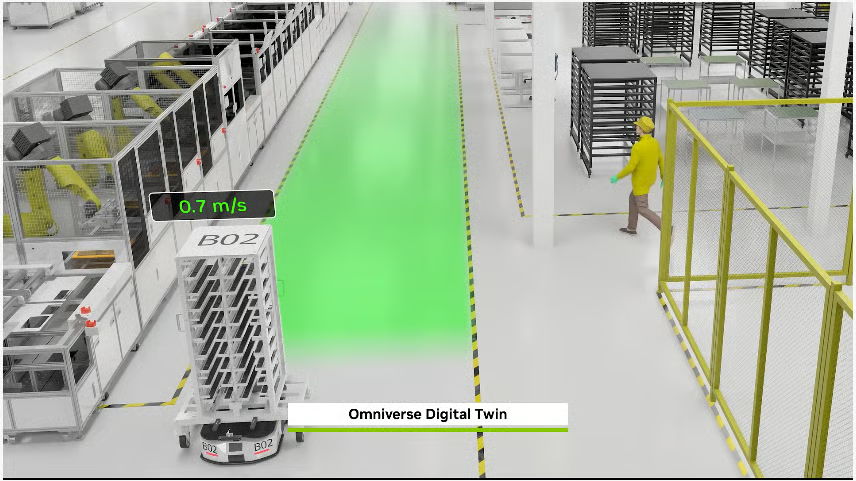
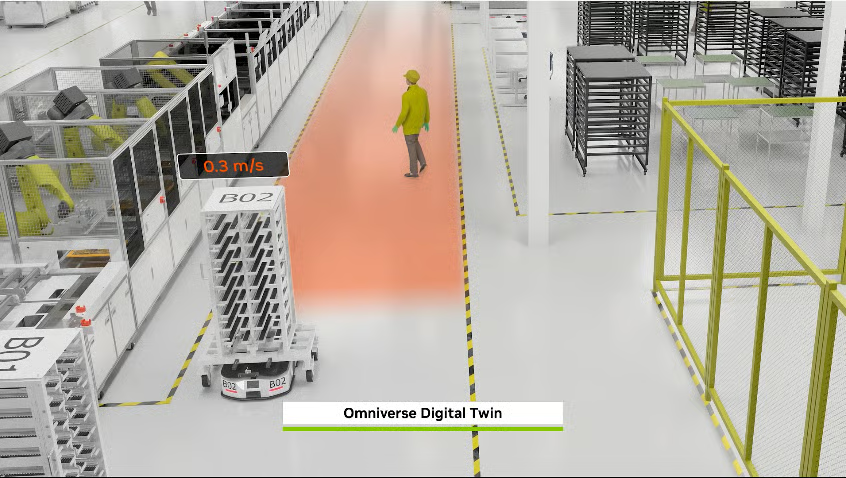
To handle these forces safely, the system uses software such as Halos Core alongside an "Outside-In Safety Blueprint." This allows robots to connect to external warehouse cameras, enabling them to see around blind corners or inside shipping trailers and adjust their speed dynamically before an accident occurs.
Humanoids on the clock
Agility Robotics is the first major pioneer to incorporate Nvidia’s tech, integrating IGX Thor and Halos Core into its humanoid robot, Digit. Digit is already being deployed in real-world logistics and warehouse environments for major customers, including Amazon, GXO, Schaeffler, and Toyota Motor Manufacturing Canada.
“For humanoids to deliver value at scale, safety has to be built into the robot and validated across the entire system,” said Peggy Johnson, CEO of Agility, in a statement. “Partnering with NVIDIA to implement and optimize the Halos for Robotics system extends our leadership in responsible automation, which is a nonnegotiable requirement for bringing humanoids safely into industrial workflows.”
A faster path to the workplace
Beyond software and chips, Nvidia is tackling the regulatory headaches that slow down automation. The company launched the Nvidia Halos AI Systems Inspection Lab, a pre-inspection program accredited by the ANSI National Accreditation Board (ANAB).
The lab lets robot makers test their software and cybersecurity defenses before handing them over to official regulators. It serves as a bridge to third-party certification bodies such as TÜV Rheinland and UL Solutions, ensuring that the next wave of AI-driven workers can safely enter the workforce without years of regulatory delays.
Also read: Nvidia and LG’s AI factory partnership connects robotics, manufacturing, and AI infrastructure as companies push more automation into physical work.