







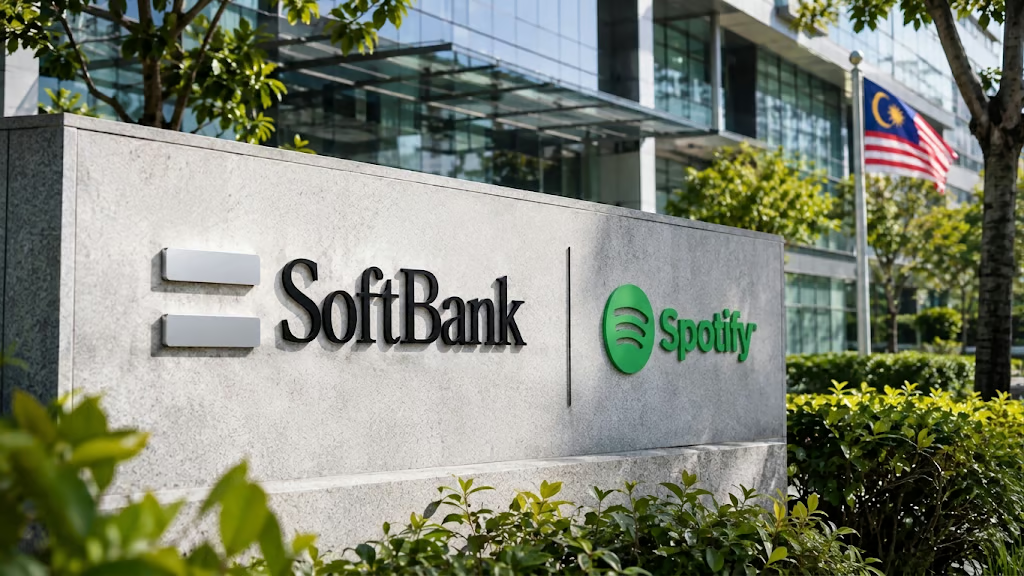
Southeast Asia's AI race is turning into a very expensive game of Monopoly. The properties are data centers, the currency is billions of dollars, and everyone wants a prime spot on the board.
SoftBank and Grab are making their move, announcing plans on Nov. 9 for an initial $1.85 billion investment in AI infrastructure across Malaysia. Working with Malaysian energy company Petroleum Sarawak Berhad (PETROS), the companies have an even bigger ambition: to develop at least five gigawatts (GW) of AI computing capacity over time.
That's an enormous infrastructure target, but there's a catch. Although the agreements include binding funding obligations, the proposed investment is expected to be deployed in stages, subject to development milestones and other conditions. The companies also need customers, additional financing, and enough electricity to power their ambitions.
For businesses across Southeast Asia, the question is whether this billion-dollar bet will eventually translate into more accessible, affordable AI computing.
- Inside SoftBank and Grab's $1.85 billion AI investment plan
- What does five gigawatts of AI computing capacity actually mean?
- What eWeek found: Malaysia's AI ambitions face three major tests
- Why Southeast Asia is becoming an AI infrastructure battleground
- Why Grab is moving deeper into AI infrastructure
- What businesses should watch next
- Malaysia's AI future depends on what gets built
Inside SoftBank and Grab's $1.85 billion AI investment plan
According to the companies' Nov. 9 announcement, the proposed initial funding would be divided among three partners:
- SoftBank Group: $1 billion
- Grab: $750 million
- PETROS: $100 million
The combined investment would support two projects, each with a different ownership and development structure.
Sarawak: The companies plan an initial $1 billion investment in the Malaysian state on the island of Borneo. SoftBank would contribute $800 million, while Grab and PETROS would each contribute $100 million.
SoftBank would lead the development of Sarawak as its majority shareholder. Grab would retain an option to increase its ownership, although SoftBank would remain the majority shareholder under the announced arrangement.
Peninsular Malaysia: A separate project would receive $850 million in proposed initial funding, including $650 million from Grab and $200 million from SoftBank.
Grab would lead that development and seek additional long-term strategic investors as the project expands.
According to the announcement, further development of the Peninsular Malaysia project is expected to be financed through third-party equity and non-recourse project financing. Under such arrangements, lenders generally rely primarily on the project's assets and cash flows for repayment, rather than the broader assets of its sponsors.
This approach could allow the developers to raise additional capital as the project grows, although the availability and terms of financing have not been confirmed.
The companies describe the proposed investment as initial seed capital for a multiyear infrastructure program. Funding is expected to be released in stages, subject to development milestones, customer contracts, and other closing conditions. That distinction matters. The $1.85 billion represents proposed initial capital under agreements containing binding development and funding obligations, rather than confirmation that the full amount has already been invested or spent.
In its regulatory filing, Grab confirmed that the agreements contain binding obligations. The filing states that the operational terms of the joint venture entities and each party's investment terms remain subject to definitive agreements and specified conditions. SoftBank's announcement separately states that the formation of the joint venture entities is subject to those arrangements.
Both disclosures underscore that the projects remain in development, with important legal and financial details still to be finalized.
What does five gigawatts of AI computing capacity actually mean?
The most eye-catching figure in the announcement isn't the investment. It's the ambition to develop at least five gigawatts of AI computing capacity.
For perspective, five gigawatts equals 5,000 megawatts. In data center discussions, megawatts are commonly used to describe electrical power capacity available to support computing equipment and associated infrastructure.
However, the companies have not provided sufficient technical detail to precisely define their AI computing capacity target. That matters because electrical capacity and actual AI performance are different measurements. A five-gigawatt target does not establish how many GPUs will be deployed, how much computing power customers will receive, or how efficiently the facilities will operate.
SoftBank and Grab have not disclosed a complete hardware configuration, confirmed GPU suppliers, a detailed construction schedule, or a target date for achieving full capacity.
Still, the scale of the proposal is striking.
For context, eWeek recently reported on Equinix's $290 million Singapore data center, which opened with eight megawatts of initial capacity and is designed to reach 20 megawatts at full build-out.
These figures should not be treated as directly comparable. Equinix reports its facility's IT power capacity, whereas SoftBank and Grab have not provided sufficient technical specifications to determine whether their five-gigawatt target uses an equivalent metric.
Nevertheless, the announcements illustrate how companies are planning AI infrastructure at very different scales.
Achieving SoftBank and Grab's proposed expansion would require far more than buying advanced processors. Electricity, cooling, networking, land, construction, and customer demand would all become major considerations.
What eWeek found: Malaysia's AI ambitions face three major tests
The announcement highlights a broader shift in Southeast Asia's technology industry. Countries are increasingly competing to host the physical infrastructure behind AI, rather than simply adopting applications developed elsewhere.
Three findings stand out.
1. The investment is substantial, but the five-gigawatt target is still an ambition.
SoftBank, Grab, and PETROS have outlined $1.85 billion in proposed initial capital, but the companies have not established that this amount will finance the full five-gigawatt vision.
According to their announcement, the partners will seek additional investors and hyperscaler customers to support development and expansion.
Their ultimate scale will depend on how successfully those partnerships develop, as well as on the availability of financing, land, electricity, and other essential resources.
2. Electricity could become the biggest competitive advantage.
AI data centers require dependable electricity, efficient cooling, and high-capacity network connections.
The companies plan to develop facilities that comply with Malaysia's renewable energy guidelines and incorporate high-efficiency infrastructure to reduce water consumption and reliance on local power grids.
However, they have not disclosed detailed energy procurement agreements, operating efficiency targets, or independently verified environmental performance. These remain stated development intentions rather than demonstrated operating results.
That leaves an important question: Can Malaysia supply enough reliable and competitively priced energy to support the proposed expansion?
3. The real opportunity extends beyond Malaysia.
The companies intend to serve governments, multinational corporations, and smaller businesses across Southeast Asia and beyond.
Regional computing infrastructure could eventually help organizations run AI applications closer to their users, potentially reducing network latency and providing more deployment choices. However, the actual benefits will depend on service availability, pricing, connectivity, data governance requirements, and the types of AI workloads supported.
For businesses, the announcement indicates where future computing capacity might emerge, rather than an immediately available service.
Why Southeast Asia is becoming an AI infrastructure battleground
Malaysia's latest announcement arrives amid growing investment in AI computing infrastructure across Southeast Asia.
In September, eWEEK covered OpenAI's planned Malaysia data centers, which are expected to deploy Nvidia Vera Rubin systems through an agreement with infrastructure company Firmus.
Indonesia is pursuing similar ambitions. An earlier eWeek report examined Indonesia's $3.1 billion Nvidia AI infrastructure initiative, involving Zankore, Indosat Ooredoo Hutchison, Ooredoo Group, Nvidia, and Nokia. These developments illustrate a regional push to establish domestic computing capacity and attract international technology investment.
SoftBank and Grab's announcement also cites research from Google, Temasek, and Bain & Company suggesting that per capita AI usage across Southeast Asia's six largest economies remains around one-tenth of the US level.
The companies say regional AI usage could increase dramatically by 2030, creating demand for additional infrastructure. That forecast should be treated as a projection, rather than a guaranteed outcome. Actual demand will depend on enterprise adoption, application development, costs, and the availability of computing resources.
The underlying opportunity is clear, though: If more Southeast Asian businesses begin developing and deploying AI at scale, they will need access to the infrastructure that enables those applications.
Why Grab is moving deeper into AI infrastructure
Grab is best known for its ride-hailing, delivery, and financial services operations across Southeast Asia. Building AI infrastructure could represent a significant expansion of AI's role in the regional technology economy.
Grab CEO Anthony Tan said the partnership would help accelerate localized AI development while creating opportunities for businesses and communities.
The company also expects the projects to support employment and skills development in engineering, design, and other technical fields. Tan is expected to oversee the development of both projects while continuing to lead Grab. Dedicated management teams would handle their day-to-day operations.
For Grab, the initiative could create opportunities to develop AI services that support its existing businesses while potentially serving a much broader market. However, the companies have not disclosed specific commercial AI products, customer pricing, or guaranteed service availability resulting from the projects.
The infrastructure plans also carry financial and execution risks. Large AI developments require substantial upfront investment, and their long-term returns depend on securing customers willing to pay for computing capacity.
What businesses should watch next
For companies evaluating AI infrastructure in Southeast Asia, the announcement introduces another potential option, but several questions remain unanswered.
The most important developments to monitor include:
- Construction timelines: When will the first facilities begin operating, and how much capacity will initially be available?
- Computing hardware: Which GPU platforms, accelerators, and networking technologies will the facilities use?
- Customer availability: Will computing capacity be offered directly to enterprises, through cloud providers, or through a combination of services?
- Pricing: How will regional AI computing costs compare with established cloud markets?
- Energy requirements: Can the developers secure sufficient electricity while meeting their environmental commitments?
- Data governance: What hosting, security, and compliance options will be available to organizations operating across different Southeast Asian jurisdictions?
These questions will ultimately determine whether the proposed infrastructure becomes a practical alternative for regional businesses.
Malaysia's AI future depends on what gets built
SoftBank and Grab have outlined one of Southeast Asia's more ambitious AI infrastructure proposals, combining substantial proposed initial funding with a long-term target of at least five gigawatts.
The agreements also show how the AI industry is expanding beyond software models and applications into the energy, land, and computing systems required to operate them.
But investment announcements are only the beginning. The next milestones will be securing additional financing, signing customers, obtaining necessary approvals, and establishing realistic construction and deployment schedules.
For businesses watching the region's AI development, Malaysia is becoming increasingly difficult to ignore. Whether the country can turn that attention into dependable computing capacity will determine how significant this announcement ultimately becomes.
Related reading: Malaysia's AI infrastructure boom extends beyond SoftBank and Grab, with Blue Cloud Softech's $150 million agreement targeting AI computing, cybersecurity, networking, and data center development.