







Uber and Waymo are lobbying for different versions of the US robotaxi market as lawmakers debate how autonomous vehicles should be regulated. Uber favors networks that mix human drivers with driverless vehicles, while Waymo wants the freedom to operate its own commercial services.
The split came into focus in July 2026, when WIRED reported that an Uber lobbyist circulated proposed New Jersey language requiring human drivers to complete 85% of rides on any platform offering driverless service for three years. The provision is not part of the pending bill and has not been enacted, but it could block standalone robotaxi apps from operating in the state. The proposal could influence whether autonomous-vehicle developers can reach riders directly or must operate through established ride-hailing platforms.
The state fight is unfolding as Congress reconsiders federal autonomous-vehicle legislation. The Verge reported from a Senate Commerce Committee hearing on Feb. 4, 2026, where Waymo and Tesla representatives called for national rules and senators remained divided over safety, liability, employment and federal preemption.
Uber and Waymo push different market models
Uber shut down its autonomous-driving program in 2020 and now works with outside vehicle developers. Its preferred hybrid model lets the company route customers to human drivers or robotaxis through the same app while retaining control over dispatch, payments and access to riders.
Uber says human drivers will remain necessary during demand surges, outside robotaxi service areas and when autonomous vehicles cannot complete a trip. Documents reviewed by WIRED show that the proposed New Jersey language would make the hybrid model a temporary legal requirement.
Waymo has a different incentive. Although it partners with Uber in Austin and Atlanta, the Alphabet-owned company also operates Waymo One directly. That approach gives Waymo more control over pricing and expansion, while leaving it responsible for safety issues such as its June 2026 robotaxi recall. A mandatory hybrid-network rule could also limit its ability to reach riders through its own app.
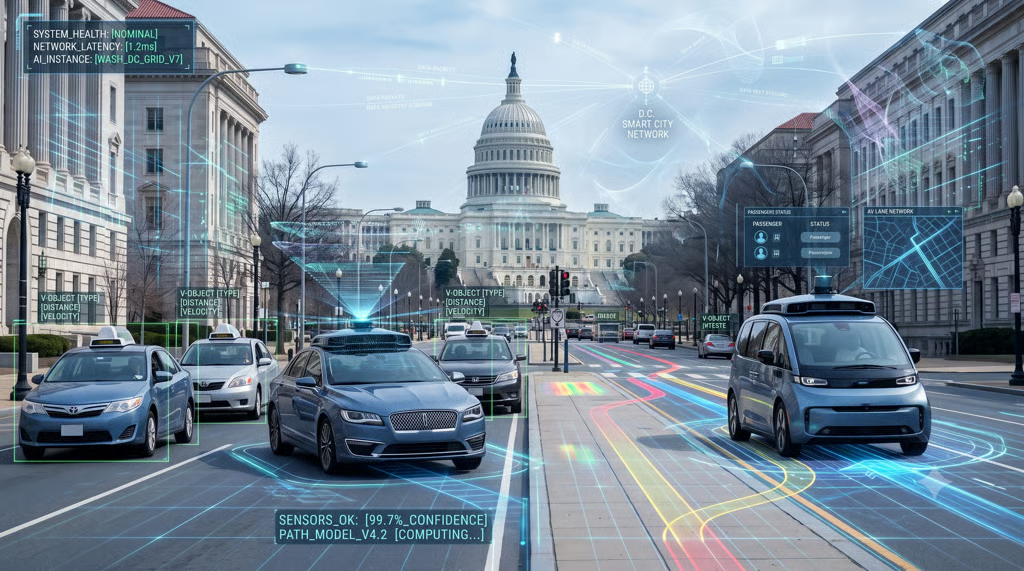
The dispute is also playing out in Washington, D.C. Waymo is developing two service centers and says it could hire hundreds of workers if the District permits commercial driverless service. A D.C. Council proposal remains under consideration after a July 13 hearing, with no vote expected before fall 2026.
The model is gaining traction outside the US as well: Japan’s GO has taken a platform-focused approach, with its $553 million IPO underscoring the value investors place on fleet operations and customer access.
Federal authority and oversight remain unsettled
Federal preemption will determine how much authority states retain, but regulation is already divided. The National Highway Traffic Safety Administration generally oversees vehicle design and safety, while states and cities handle licensing, insurance, traffic enforcement and commercial ride-hailing operations.
Purpose-built robotaxis complicate that split. Zoox, for example, has been waiting for a NHTSA decision on its driverless design, showing how federal standards can determine whether an operator may deploy at scale.
Senate Commerce Committee Chair Ted Cruz has argued that national standards could reduce fragmented state requirements. Sen. Maria Cantwell has supported legislation written specifically for autonomous vehicles but questioned whether proposed preemption language would leave states enough authority to respond to safety problems.
NHTSA already requires manufacturers and operators to report certain crashes involving automated driving systems and Level 2 driver-assistance systems. Any federal framework would still need clear reporting, testing and enforcement requirements.
The rules could determine whether the robotaxi market favors vehicle developers, ride-hailing platforms or partnerships between them. Until Congress resolves preemption, reporting and enforcement, companies will still face uncertainty over who sets the rules and who verifies compliance.
Read more: Questions about who controls autonomous vehicles are also growing as Tesla acknowledges remote human involvement in some robotaxi operations.