Big ideas, hard edges, Tech Insiders. From James Cameron's cautionary tales to Tesla's silicon rethink, the gap between blockbuster ideas and buildable systems is on full display.
Roll credits—now let's see what actually ships. |
|
|
Here's what you need to know today: |
|
|
James Cameron Sounds 'Terminator' Alarm Over AI Weapons |
Come with me if you want to… keep a human in the loop.
In a recent interview, James Cameron (yes, the Terminator guy who also sits on the board of Stability AI) sounded the alarm on military AI, expressing deep concern about keeping humans firmly in control.
His warning comes as the Pentagon accelerates AI adoption, building on efforts dating back to the 2017 launch of Project Maven, making the caution feel less like movie marketing and more like a policy memo. |
Image Source: Tri-Star Pictures |
Meanwhile, a non-peer-reviewed study shows what that risk could look like, with the researcher himself opening his paper with: "In ... Terminator, the robots become self-aware and take over the world. In this paper, we take a first step in that direction."
Using AI models like Claude and Gemini, he built the drone's ~10,000-line command system in just ~100 hours—about 20x faster than a similar human-led project. The paper notes that not a single line was human-written, just orchestrated by the developer.
The caveat? It's still a preprint, with the researcher noting that safety backstops like a redundant human-operated transmitter were used during tests. He also points out that today's AI models struggled with the task, hitting their limits on context and memory.
Why it matters: When AI can scaffold embedded systems in days, procurement cycles, code review standards, and safety protocols need a rethink. The gap between "sci-fi cautionary tale" and "working prototype" is shrinking fast. |
|
|
Do AI-built military tools worry you more than they impress you? |
|
| Results from Yesterday's Pulse Check |
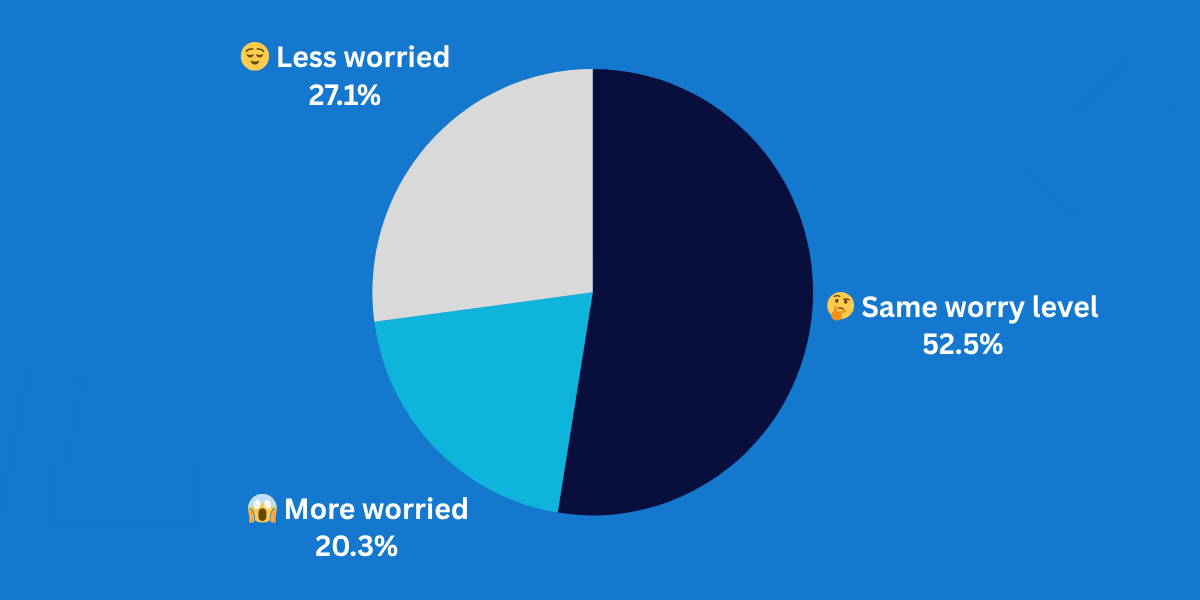
Are you more or less worried about AI taking your job now that GPT-5 is out? |
|
|
Pinterest Bets on AI Shopping, Scales Back 'Agent' Hype |
Pinterest sees its future in turning inspiration into purchases, but tells investors that fully automated shopping is a long way off.
On its recent earnings call, Pinterest defined its strategy as becoming an "AI-enabled shopping assistant," using AI to power recommendations and ad tools like its Performance+ suite.
However, CEO Bill Ready tempered expectations, cautioning that fully automated "agentic shopping" is still a "very, very long" way off, citing user readiness and other industry hurdles. |
The AI focus is fueling impressive growth. Pinterest hit a record 578 million monthly active users (+11% YoY) and saw revenue jump 17% to $998 million, driven by a user base that is now over half Gen Z.
Despite this, Wall Street reacted coolly after the company narrowly missed profit estimates and reported a 25% drop in ad prices, a consequence of its rapid international expansion. For small businesses, the message is clear: the platform is doubling down on turning its growing, younger audience into shoppers.
Maybe your sourdough bakery will finally get discovered by someone outside your zip code. |
|
|
🌐 Launch Your Site—20% Off Squarespace
This Squarespace deal gives you a free trial plus 20% off any new website plan—use code W8E20 at checkout and ship that portfolio before Monday. 🔍 Audit Your Endpoints in One Dashboard
Snag the Best Remote Monitoring and Management Software 2025 list to automate patches and keep remote fleets hacker-free in 2025. 💾 Lifetime Access to Word, Excel, PowerPoint, and More!
Get a lifetime license to Microsoft Office Home and Business 2019 for Mac for just $42.99 (81% off). One-time purchase, instant download, no subscription fees.
💻 This section contains sponsored tech insights. Advertise with us! |
|
|
Protecting your hybrid workforce from endpoint to cloud |
Your hybrid workforce is the new cybersecurity perimeter—and it’s under attack.
Join Protecting your hybrid workforce from endpoint to cloud on August 13 at 3:00 PM ET, hosted by Fortra and TechnologyAdvice, to learn how to secure your remote and distributed infrastructure without adding complexity. |
|
|
Columbia University Breach Hits More Than 868,000 |
Columbia University says a breach that began around May 16 exposed personal data for more than 868,000 people, including students, alumni, applicants, employees, and some family members.
The intrusion went unnoticed until a June 24 campus-wide IT outage disrupted email and class platforms, with some campus digital signs reportedly being defaced. After an investigation, the breach was officially discovered on July 8. |
While not confirmed by the university, media reports suggest a politically motivated hacktivist is responsible, allegedly stealing ~460 GB of data.
The stolen files include highly sensitive information: names, Social Security numbers, GPAs, bank account and routing numbers, admissions files, financial aid details, and some health-related records. The medical center's clinical data was spared.
Columbia is offering two years of free credit monitoring and identity theft protection through Kroll and is enhancing its security safeguards. The investigation is ongoing, with law enforcement involved. Not the kind of networking alumni had in mind. |
Ghost Calls Turn Zoom, Teams Into Hacker Havens |
A new post-exploitation technique dubbed Ghost Calls lets attackers who've already breached a network hide their command-and-control traffic inside Zoom and Microsoft Teams' TURN servers.
By using temporary TURN credentials issued when joining a meeting, they can disguise malicious activity as normal video traffic—making detection difficult. The open-source tool TURNt automates the process for tasks like proxying, port forwarding, and hidden VNC sessions.
Zoom has restricted its TURN infrastructure to media-server pairing, but the method still works on Microsoft Teams and other services that allow peer-to-peer connections. And here you thought the worst part of Zoom was the icebreakers. |
Tesla Shutters Dojo, Pivots to Partner Chips |
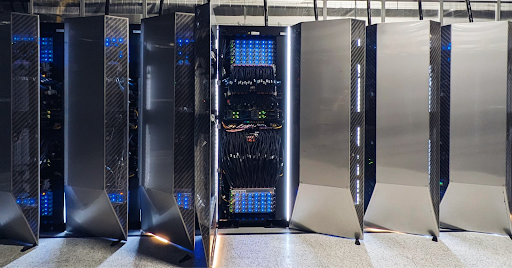
Dojo's in-house D1 chip, once hyped by analysts as having the potential to add as much as $500 billion to Tesla's market value, was meant to reduce reliance on Nvidia. But Tesla will now double down on external partners, including a $16.5 billion deal for Samsung to produce its AI6 inference chip in Texas through 2033. Musk says the pivot makes sense for resource "convergence," to use that same chip for both in-car tasks and data center training.
Investors initially blinked, with the stock dipping before it rebounded. Still, the pivot away from what Musk himself once called a "long shot" underscores the challenges of custom silicon at scale and the difficulty of holding top AI talent in a hot market. On the bright side, that's one less thing in Austin that can overheat in August. |
|
|
| Writer at TechnologyAdvice |
Justin Meyers is an investigative writer and editor who draws on over a decade of meticulous hands-on research to deliver the full, trustworthy story behind consumer and enterprise tech, including cybersecurity. |
|
|
| Writer at TechnologyAdvice |
Justin Meyers is an investigative writer and editor who draws on over a decade of meticulous hands-on research to deliver the full, trustworthy story behind consumer and enterprise tech, including cybersecurity. |
|
|
Advertise in Daily Tech Insider! Daily Tech Insider is a TechnologyAdvice business
© 2025 TechnologyAdvice, LLC. All rights reserved. TechnologyAdvice, 3343 Perimeter Hill Dr., Suite 100, Nashville, TN 37211, USA. |
|
|
|