Brace for heavy weather, Tech Insiders. AI-driven job jitters, data breaches, and energy spin are storming every forecast. Grab your digital umbrella and wade into today's tech downpour.
|
|
|
Here's what you need to know today: |
|
|
7 in 10 Americans Believe AI Won't Just Take Jobs… It’ll Keep Them |
As if Mondays weren't scary enough, most Americans now think bots want their badges. A new Reuters/Ipsos poll of 4,446 adults finds 71% worry AI will put "people out of work permanently." But fears stretch far beyond layoffs: |
-
77% think rivals will weaponize AI to sow political chaos
- Two-thirds worry we'll trade friends for AI companions
- Nearly half oppose AI setting military strike targets
|
Tech optimists counter with sunnier forecasts, pointing to a still-low 4.2% US unemployment rate for July. And the World Economic Forum sees 170 million new jobs worldwide by 2030, outstripping the 92 million they expect to disappear. |
Yet anecdotes pile up. Microsoft research shows writing, teaching, and customer-service roles overlap heavily with generative AI. Anthropic's CEO warns half of entry-level white-collar roles could evaporate within five years. Meanwhile, companies forge ahead, with Salesforce saying automation already handles almost half its workload.
The disconnect? This surge in anxiety marks a sharp turn from just a year ago, when polls showed most workers worried about AI's impact on their industry but felt secure in their own jobs. Now, only 22% of employees say leadership has explained how AI will actually be used.
Without clear road maps, public anxiety fills the void, fueling policy debates on retraining, social safety nets, and guardrails for runaway automation.
Why it matters: Whether you're a manager automating tasks or a new grad eyeing that first gig, understanding AI's labor impact shapes reskilling plans, career bets, and ballot choices. TL;DR: Ignoring the robo-rumblings could leave you professionally ghosted. |
|
|
Are you personally worried AI will take your job? |
|
|
Results from Friday's Pulse Check |
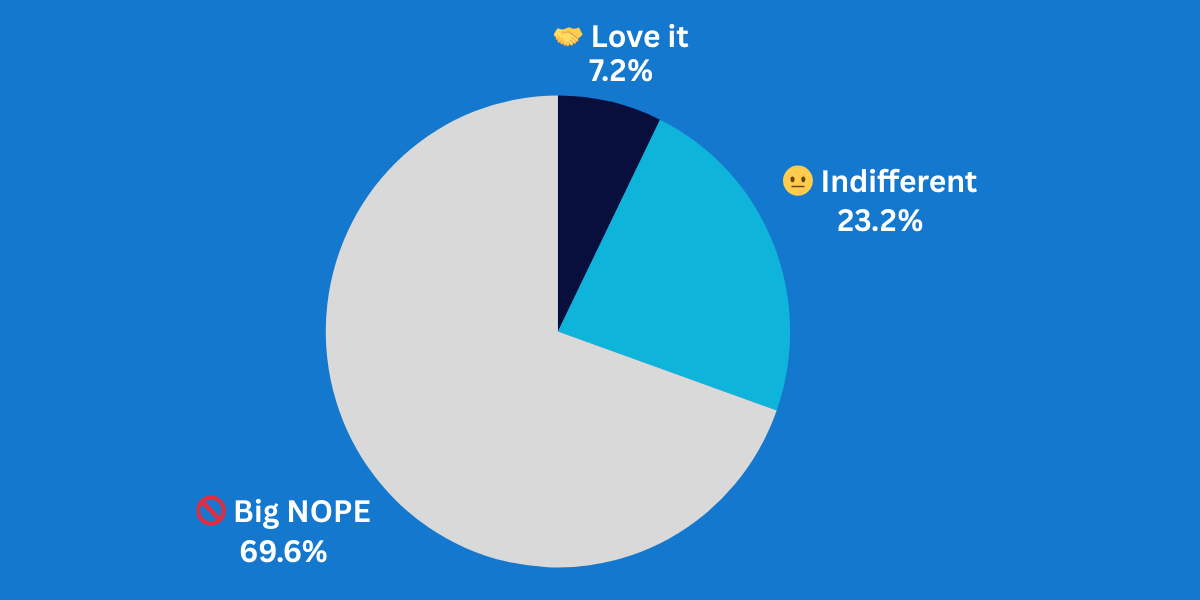
How do you feel about phones predicting your moves? |
|
|
Major Outlets Yank AI-Generated 'Journalism' |
Fake reporter "Margaux Blanchard" just pulled a Houdini and took at least six publications with her.
Wired, Business Insider, SFGate, and three smaller publishers have scrubbed features credited to Blanchard after Press Gazette revealed the byline likely belongs to generative AI.
One Wired piece about a Minecraft wedding vanished with an editor's note saying it failed to meet editorial standards. BI zapped two first-person essays; Index on Censorship and Cone Magazine followed suit. Youth politics site Naked Politics later pulled its piece, too. The scheme: Pitch colorful stories, cite nonexistent sources, collect freelancer paychecks (potentially thousands, with Wired's pay for such features starting at about $2,500), repeat.
|
Dispatch editor Jacob Furedi smelled something synthetic when Blanchard proposed an exposé on a secret corpse-training town that, surprise... doesn't exist.
Attempts to verify "Jessica Hu," a Chicago "digital celebrant," also fizzled, as did checks on a supposed Disney superfan named "Kayla Reed."
Publishers blame stretched fact-checking and AI's growing polish. Critics warn the incident erodes trust, with Furedi noting that while AI can fake an op-ed, "you can't make up a place." In response, publications have started bolstering their verification protocols and reviewing editorial processes. Reminder: Journalists need coffee breaks. If yours doesn't, start asking questions. |
| |
☎️ Cut the Cord on Office Phones
RingCentral RingEX delivers AI-powered calls, chat, and video for as low as $20/month, spinning up in minutes and slicing business phone costs by up to 30%.
🔍 Audit Your Endpoints in One Dashboard
Snag the Best Remote Monitoring and Management Software 2025 list to automate patches and keep remote fleets hacker-free in 2025.
🚀 Turbo-Charge Your WordPress Site Speed
Get WP Buzz Managed WordPress Hosting (3-Year Plan) at 67% off for unlimited SSD space, free SSL, a global CDN, and 10× faster load speeds for one WordPress site. Redeem within 30 days to lock in the deal. 💻 This section contains sponsored tech insights. Advertise with us! |
| |
Clickjacking Bugs Plague Top Password Managers |
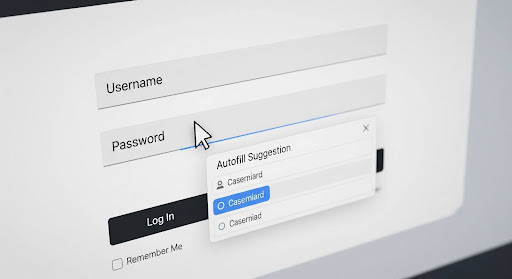
At least six leading password managers, including 1Password, Bitwarden, Enpass, iCloud Passwords, LastPass, and LogMeOnce, were found vulnerable to a clickjacking trick that hides invisible autofill buttons beneath legitimate ones, letting attackers steal credentials, 2FA codes, and card data with a single misplaced click. |
Image Source: ChatGPT (DALL·E) |
Researcher Marek Tóth demoed the hack at DEF CON 33. Bitwarden has released a fix, while Dashlane, NordPass, Proton Pass, and Keeper are already patched. Vendors like 1Password and LastPass call the report "informative," arguing it's a broader browser-level risk, as their fixes lag.
Until patches land, turn off autofill, set extensions to "on click" only, or follow 1Password's advice and lock the extension on risky sites, because once you click fill, "the responsibility ... transfers to you." |
Grok Chats Accidentally Indexed Online |
xAI's "share" button quietly made over 370k Grok conversations searchable on Google, revealing everything from crypto-wallet hacks to recipes for (gulp) illicit substances, instructions for dangerous items, and even detailed threats of physical harm.
The kicker? This happened right after Musk gloated that Grok had no such feature when mocking ChatGPT for the exact same blunder. Surprise! And naturally, marketers are already exploiting the privacy hole for SEO.
Before oversharing with AI, ask if it believes in privacy... or just enjoys long walks on the search index. |
Google Says Gemini Uses 'Five-Drop' Energy |
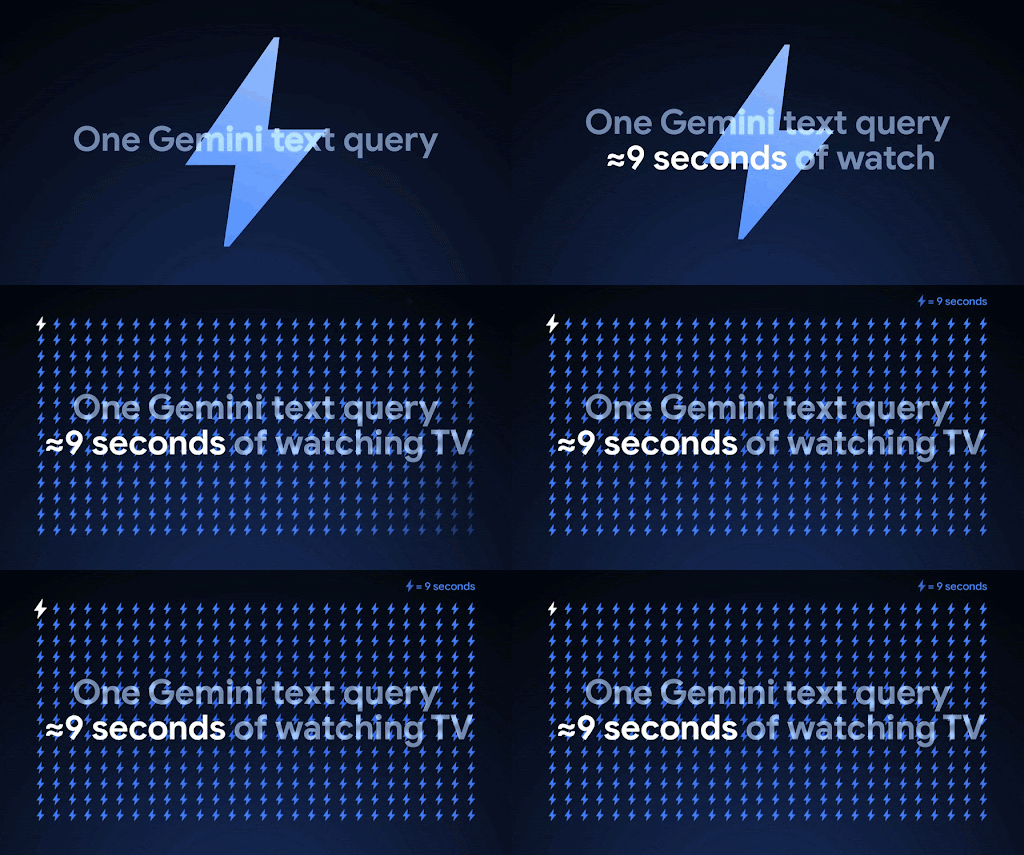
Google claims a median text-only prompt in its Gemini app now guzzles just 0.24 Wh of electricity, emits 0.03 g of CO₂e, and slurps 0.26 mL of water (about five drops).
That's 33× less energy and 44× less carbon than last year, thanks to model tweaks, custom Tensor Processing Units, and data centers so efficient they achieve an industry-leading power usage effectiveness average of 1.09 (where a perfect score is 1.0).
This primary figure uses its proposed "comprehensive" methodology; the company notes a narrower calculation, similar to existing benchmarks, would yield just 0.10 Wh. |
Critics note figures exclude training costs and rely on Google's market-based carbon math.
Still, the detailed methodology, covering idle servers and cooling overhead, outshines rivals' tendency to share numbers without the underlying math. While OpenAI has reported a figure of 0.34 Wh per ChatGPT query, how it arrived at that number remains a secret, highlighting the gap Google's transparency aims to fill.
Google wants the industry to adopt its framework; skeptics want independent audits. Either way, if true, one binge-scroll could be greener than microwaving something like popcorn for a second... though your snack still wins on flavor. So yes, your existential AI query might cost fewer drops than the tears you shed reading it. |
|
|
| Writer at TechnologyAdvice |
Justin Meyers is an investigative writer and editor who draws on over a decade of meticulous hands-on research to deliver the full, trustworthy story behind consumer and enterprise tech, including cybersecurity. |
|
|
| Writer at TechnologyAdvice |
Justin Meyers is an investigative writer and editor who draws on over a decade of meticulous hands-on research to deliver the full, trustworthy story behind consumer and enterprise tech, including cybersecurity. |
|
|
Curious about where AI is really headed? |
The Neuron cuts through the noise to bring you smart, hype-free takes on the latest AI trends, tools, and breakthroughs. Join 500,000+ professionals from top companies like Microsoft, Apple, Salesforce and more.
|
|
|
Advertise in Daily Tech Insider! Daily Tech Insider is a TechnologyAdvice business
© 2025 TechnologyAdvice, LLC. All rights reserved. TechnologyAdvice, 3343 Perimeter Hill Dr., Suite 100, Nashville, TN 37211, USA. |
|
|
|