Prepare for zero trust, Tech Insiders. Whether it's your Roomba's new AI brain, your unvetted sideloaded apps, or your always-a-target Social Security number, nothing gets a free pass.
Let's audit the future one headline at a time. |
|
|
Here's what you need to know today: |
|
|
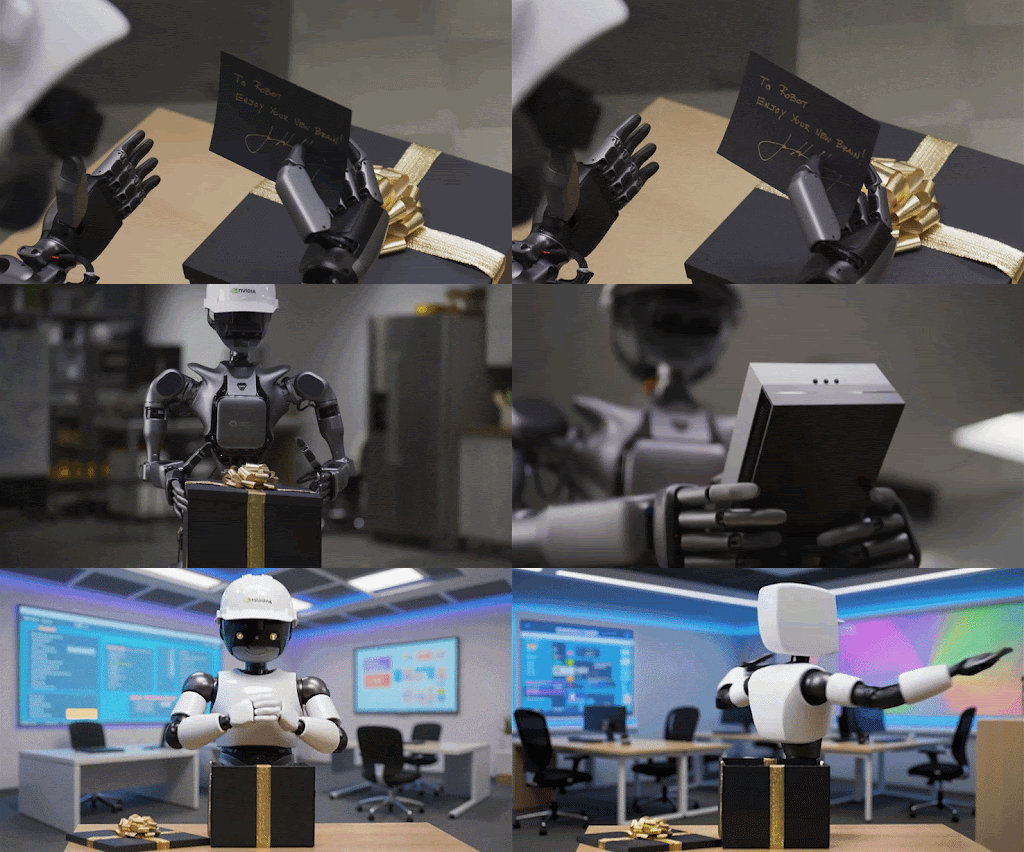
Nvidia's Thor Gives Robots 2K-TFLOP Brains |
Great... now the Roomba will judge my life choices.
Nvidia's Jetson AGX Thor modules are finally on sale, packing the power to perform over 2,000 trillion specialized AI calculations per second (or 2,000 TFLOPs, for the spec-sheet junkies) into edge devices and autonomous vehicles.
The high-end T5000 model combines Nvidia's newest graphics chip with a 14-core processor and loads of memory. Despite its power, it runs surprisingly efficiently—using about the same amount of electricity as an incandescent light bulb or a high-end LED TV. Compared to Nvidia's 2022 kit, it's more than seven times faster and over three times more energy-efficient.
Production modules run for $2,999, while the main developer kit is priced at $3,499. A DRIVE-flavored version aimed at self-driving fleets is set to ship in September. |
Nvidia says Thor can simultaneously juggle multiple large models, enabling mixture-of-experts robotics, generative vision-language AI, and real-time sensor fusion.
Early adopters range from Boston Dynamics' Atlas humanoid to Volvo and Caterpillar trucks, and the usual research labs are salivating. Thor also integrates seamlessly with Nvidia's Isaac, Metropolis, and Holoscan stacks—an ecosystem that already serves over 2 million developers. Because of course it's sticky.
Why it matters: If your factory, farm, or future robo-butler needs server-class AI without the server, Thor may be the missing piece. Translation? Smarter bots capable of so-called "physical AI," less latency, and yet another Nvidia chip your budget didn't plan for. |
|
|
Would you trust a 2K-TFLOP robot to handle delicate tasks? |
|
|
Results from Yesterday's Pulse Check |
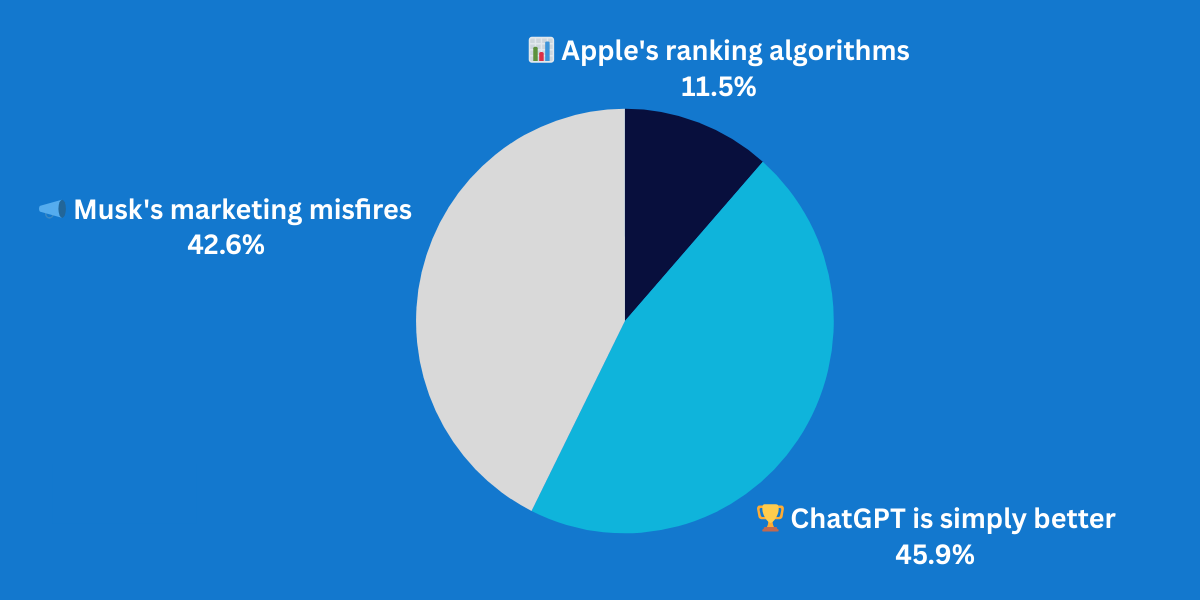
What's the biggest reason Grok isn't topping the App Store? |
|
|
Google Tightens the Screws on SideloadingWhistleblower Says SSA Copied Everyone's Data to Cloud |
Google: "Open means open... after some paperwork. Organizations, please form a line and have your $25 ready."
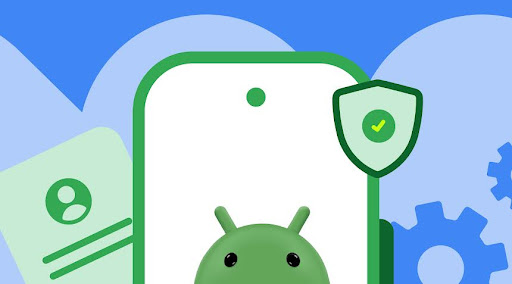
Starting September 2026, every app installed on a certified Android device—whether sideloaded or pulled from third-party stores—must be tied to a verified developer ID. Hobbyists and students get their own Android Developer Console free of charge, but they'll still need to submit a government ID and phone number.
The rollout will initially target Brazil, Indonesia, Singapore, and Thailand, with a gradual global expansion beginning in 2027.
Google frames it as an ID check at the airport, citing research that apps outside the Play Store host 50× more malware. |
Conveniently, this security push comes just as antitrust rulings are forcing Google to open its ecosystem. Critics call it a walled-garden move that could break F-Droid repos, indie projects, and privacy-minded devs.
Verification data from the new console won't be shown to users, but developers worry about bans, bureaucracy, and potential misuse. Meanwhile, Apple, whose Gatekeeper feature already notarizes apps distributed outside the Mac App Store, chuckles from the sidelines.
Under the hood, future Android builds will block installation of any package lacking a registered signing key. ADB installs may survive (for now), but mainstream users could soon need Google's blessing to run home-grown APKs. Since this only impacts Google-certified Android devices, GrapheneOS and LineageOS might need bigger waiting rooms. |
|
|
🚀 Speed Up Sprints With a monday dev Free Trial
Spin up boards and CI/CD hooks via Develop with precision and speed with monday dev built by monday.com, and ship faster. 🛠️ Tame Your IT Assets Fast
This IT Asset Management Software comparison highlights the top platforms to minimize license waste and stay audit-proof in one concise read. 📄 Unlock Lifetime PDF Editing Power
PDF Extra Ultimate: Lifetime Subscription puts professional-grade editing, converting, and e-sign tools on all your devices for a one-time $99.99, so you control any PDF without monthly fees. 💻 This section contains sponsored tech insights. Advertise with us! |
|
|
Whistleblower Says SSA Copied Everyone's Data to Cloud |
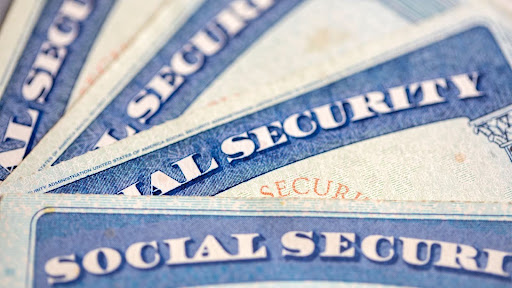
A Social Security chief data officer alleges Elon Musk's DOGE staffers cloned the entire Numident database, which includes names, birthdates, and over 450 million SSNs, into a private corner of the SSA's own AWS cloud with lax oversight. The move came just weeks after the Supreme Court granted them access.
Internal risk memos called the impact "catastrophic," but the agency's CIO, a former Musk tech exec, personally accepted "all risks," writing "the business need is higher than the security risk." |
SSA says the server is "walled off from the internet" and uncompromised, yet Congress and the US Office of Special Counsel (OSC) are poking around. If a breach occurs, reissuing every SSN is on the table—fun times for identity-theft hawks. Sleep well, America. Your data is... somewhere. |
UpCrypter Phish Hooks Windows Users |
Fake missed-voicemail and purchase-order emails are back, this time dropping a malware delivery tool that unpacks spyware, giving hackers complete remote control of your PC.
Fortinet tracked global spikes that doubled in two weeks, with the manufacturing, tech, and healthcare industries being hit hardest. The campaign is extra convincing, using phishing pages that automatically slap your own company's logo on them before the JavaScript dropper evades sandboxes, fetches payloads hidden in stego-images, and plants Run keys for persistence.
TL;DR: Click-happy employees can give attackers remote desktops in one "play message" click. Tell Bob in accounting that voicemails and surprise invoices never arrive as a ZIP file. |
AT&T Drops $23 Billion on EchoStar Spectrum |
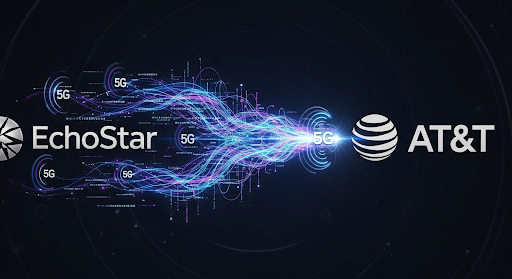
AT&T has agreed to buy roughly 50 MHz of low- and mid-band airwaves from debt-laden EchoStar for $23 billion cash, a lifeline deal that sent EchoStar's stock soaring over 70%.
The haul—a 30 MHz slice of 3.45 GHz mid-band and 20 MHz of 600 MHz low-band licenses in over 400 US markets—bolsters AT&T's 5G and fixed-wireless plans, although the new low-band airwaves will take years to be fully deployed.
The sale gives EchoStar funds (and maybe FCC goodwill) after questions about its thin 5G build-out, spurred by complaints from none other than Elon Musk's SpaceX. |
Closing is slated for mid-2026; AT&T will finance with cash and new debt, briefly pushing its total debt to about three times its annual earnings before sliding back down in three years.
EchoStar, meanwhile, pivots Boost Mobile into a hybrid MVNO on AT&T's network, effectively abandoning dreams of a standalone nationwide cellular build by agreeing to decommission parts of its own radio network over time. Regulators will review, but with Trump nudging for a deal and consumers eyeing faster home internet, odds look good.
When a company cashes out its crown jewels for $23 billion, you know its CFO just found the espresso machine… and the emergency exit. |
|
|
|
Writer at TechnologyAdvice |
Justin Meyers is an investigative writer and editor who draws on over a decade of meticulous hands-on research to deliver the full, trustworthy story behind consumer and enterprise tech, including cybersecurity. |
|
|
| Writer at TechnologyAdvice |
Justin Meyers is an investigative writer and editor who draws on over a decade of meticulous hands-on research to deliver the full, trustworthy story behind consumer and enterprise tech, including cybersecurity. |
|
|
Curious about where AI is really headed? |
The Neuron cuts through the noise to bring you smart, hype-free takes on the latest AI trends, tools, and breakthroughs. Join 500,000+ professionals from top companies like Microsoft, Apple, Salesforce and more.
|
|
|
Advertise in Daily Tech Insider! Daily Tech Insider is a TechnologyAdvice business
© 2025 TechnologyAdvice, LLC. All rights reserved. TechnologyAdvice, 3343 Perimeter Hill Dr., Suite 215, Nashville, TN 37211, USA. |
|
|
|