Eyes on the dashboards, Tech Insiders.
GPT-5.4 and Google Canvas turn clicks into commands, while leaks, 9.8-rated bugs, and data-center debts remind us that every shortcut comes with a receipt. Cue the status report; we've got metrics to crunch. |
|
|
Here's what you need to know today: |
|
| OpenAI's GPT-5.4 Gets Down to Business |
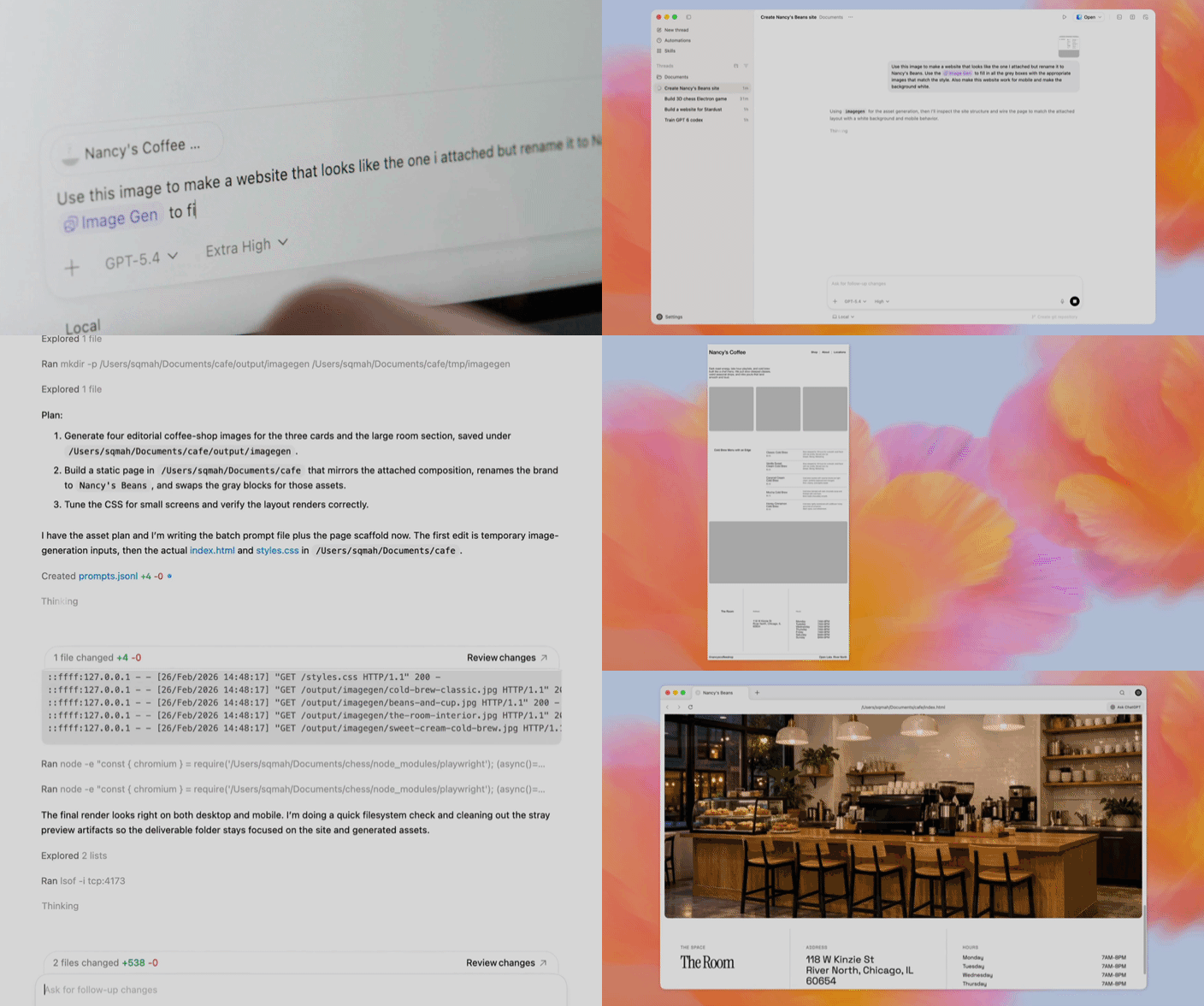
OpenAI's newest model, GPT-5.4, just dropped in two flavors: Thinking for everyday reasoning and Pro for the truly gnarly workloads.
Both models are aimed squarely at real professional output, arriving just two days after GPT-5.3 Instant, because nothing distracts from a controversial new Pentagon contract quite like back-to-back frontier AI drops.
Beyond faster code generation and a hefty 1-million-token context window, the headline feature is native computer use: the model can interpret screenshots, click buttons, and juggle multistep workflows across apps. The standard model posted a 75% success rate on a benchmark testing how well AI navigates desktop environments—officially better than the average human.
|
Efficiency got a makeover, too. A new Tool Search system loads function definitions only when needed, slashing token use by 47% in benchmark runs for the standard model. On a test measuring performance across 44 real-world office jobs, GPT-5.4 matched or beat human pros in 83% of tasks, and internal tests show it nailed junior-analyst-level spreadsheet modeling at 87.3%, up from 68.4% in GPT-5.2.
The launch pairs with a new ChatGPT add-in for Excel (beta), letting the bot build, audit, and update workbooks inside your grid of doom. Developers can also access the new models through Microsoft Foundry. Pricing starts at $2.50 per million input tokens, which is steeper than 5.2 but billed as cheaper overall thanks to fewer retries. Legacy GPT-5.2 Thinking sails off into the sunset June 5.
Why it matters: GPT-5.4 doesn't just chat, it executes. If it can truly handle desktops, slash hallucinations by a third, and halve token burns while dodging PR disasters, the debate shifts from "Will AI take my job?" to "How many keystrokes can I delegate before lunch?" |
|
|
Would you let an AI click around your desktop unattended? |
|
|
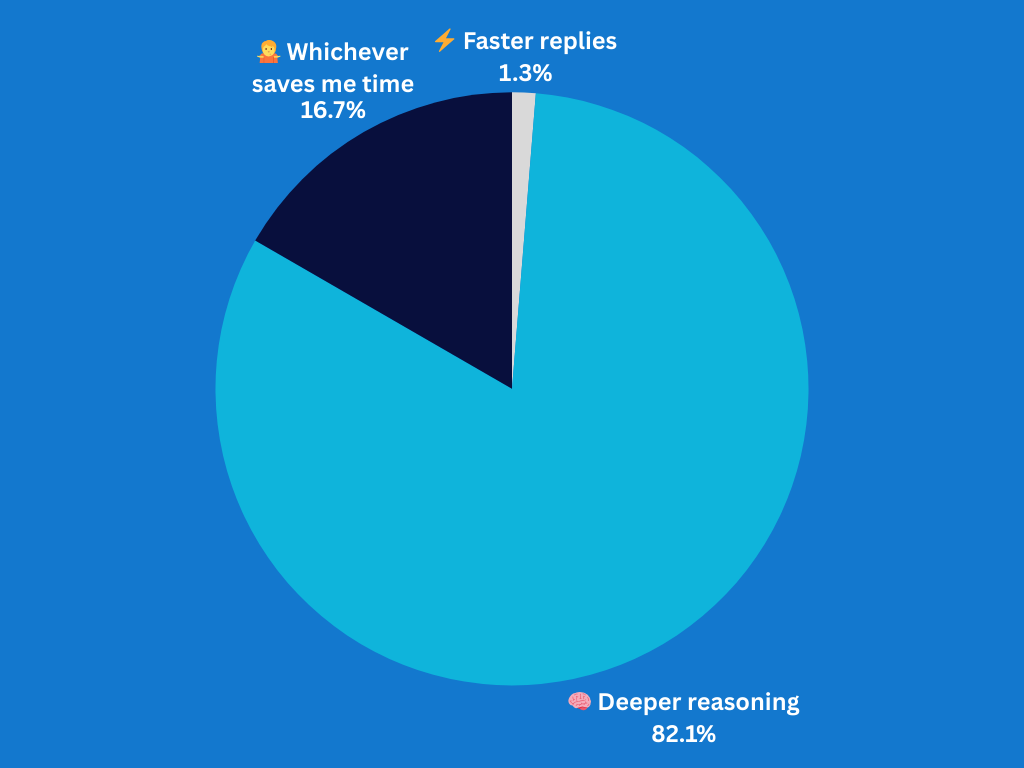
Results from Yesterday's Pulse Check |
What matters more in a chatbot upgrade? |
|
|
Google Canvas Brings Build-It Workspace to Search |
Because why open Docs when Search can code?
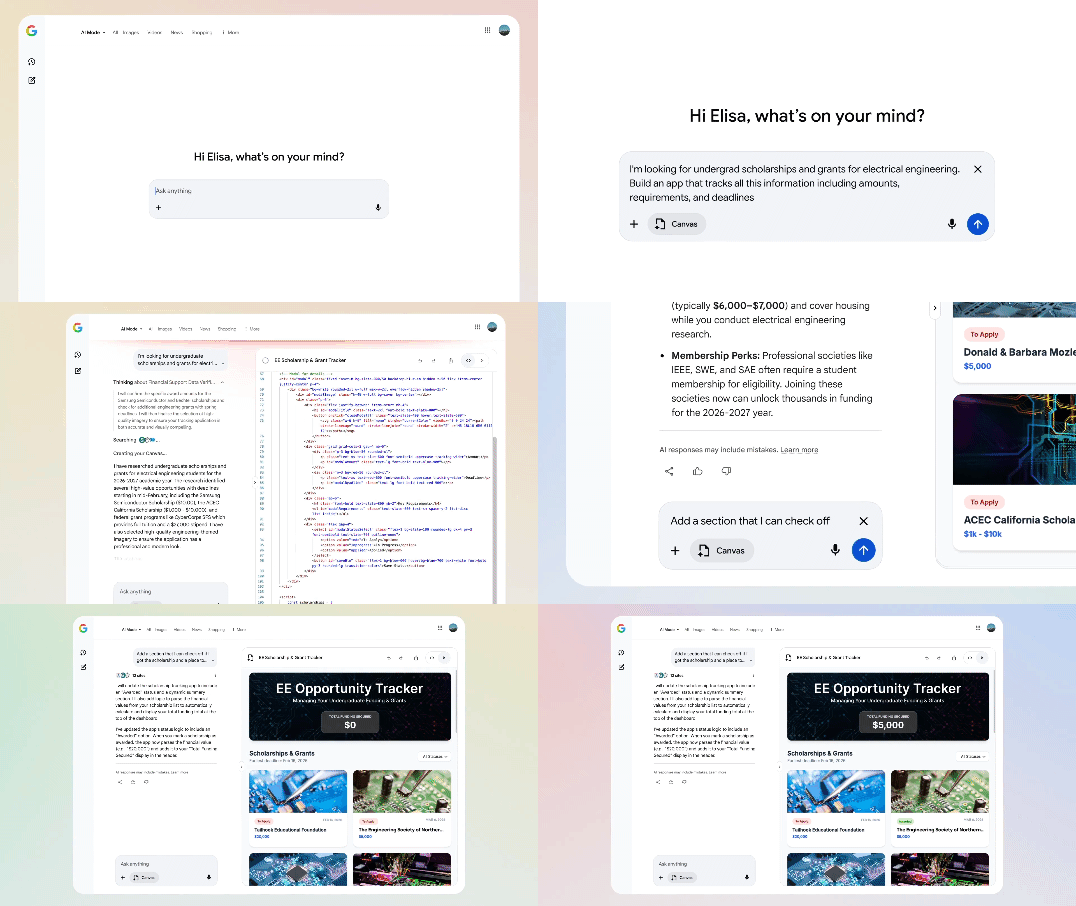
Google has rolled out Canvas in AI Mode to every US Search user (English only), slotting a persistent project panel beside results.
From the tool menu (+), click Canvas, describe an idea—say, a scholarship-deadline dashboard or a freshly drafted document—and AI Mode generates a live prototype, updating on the fly as you chat.
The panel sticks around between sessions, so you can keep iterating: expand outlines, refine prose, or hop into the code view to tweak the scaffold that Gemini whipped up. Canvas pulls fresh web data and Knowledge Graph facts to keep projects current, then lets you test functionality without leaving the results page. |
Early testers used the tool for trip planners and study guides, but Google's upgrade adds creative-writing help and full coding support, positioning Canvas as a direct rival to workspaces from OpenAI and Anthropic.
Dropping Canvas inside Search's AI Mode means millions of US users now have an AI workbench one query away—and a brand-new excuse to keep ninety tabs open. Procrastination just got an upgrade. |
|
|
Build a Resilient Epic Future |
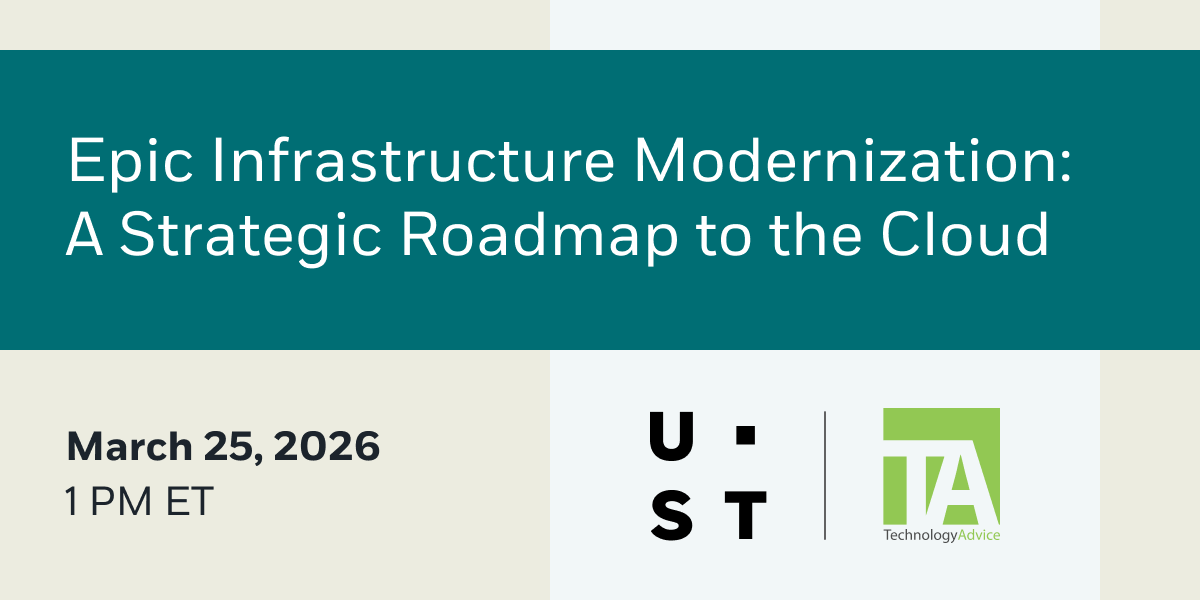
Epic modernization is no longer optional; it's strategic. Without a defined cloud road map, organizations risk rising costs and operational complexity.
Hosted by TechnologyAdvice with UST on March 25, 2026, at 1:00 p.m. ET, this session will explore how to transition Epic to the public cloud with improved cybersecurity, scalability, and cost optimization. Build a road map that protects care delivery while enabling growth. |
|
|
LexisNexis Cloud Breach Exposes Legacy Client Data |
Legal-data giant LexisNexis Legal & Professional says hackers slipped into its AWS environment on Feb. 24, exploiting an unpatched React2Shell flaw to swipe roughly 2 GB of files, later leaked online.
The intruders, FulcrumSec, claim they accessed 3.9 million records, 53 plaintext AWS secrets, and 400,000 user profiles, including 118 .gov emails. LexisNexis counters the haul was legacy, pre-2020 contact data, stressing no SSNs or financial info were compromised. |
Image created with ChatGPT |
Whether vintage or not, leaked details aid phishing. Customers should rotate passwords, enable MFA, and watch for spear phishing. Dev teams: patch React2Shell, audit IAM roles, and lock AWS Secrets Manager.
Pro tip from the leaked files: If your master password is "Lexis1234," your real vulnerability is creativity. |
Critical MS-Agent Flaw Lets Prompts Run Your Servers |
A bug (CVE-2026-2256) in ModelScope's MS-Agent (an open-source AI automation framework) enables remote command execution via poisoned prompts. The CVSS 9.8-rated flaw launches OS commands when fed the right characters, no creds required.
Researchers blame the Shell tool's flimsy regex denylist: attackers hide instructions in documents, the agent selects its helper, and the payload runs with host privileges.
Until patched, sandbox MS-Agent, enforce least privilege, strictly allowlist commands, and monitor system calls, per CERT Coordination Center guidance. If your bot suddenly volunteers to tidy up /var with rm -rf, it's time for a timeout. |
Oracle Slashes Jobs to Feed AI Data Centers |
Oracle is reportedly prepping its largest-ever workforce trim, eyeing "thousands" of layoffs just days before Tuesday's Q3 earnings call.
Insiders say the cuts will sweep across multiple divisions as soon as this month, targeting roles the company believes automation and generative AI will soon render redundant.
Chairman Larry Ellison has committed up to $50 billion this year to build AI-ready cloud campuses for marquee customers such as OpenAI, Meta, and xAI, largely fueled by a massive $300 billion deal with the ChatGPT maker. |
Image created with ChatGPT |
The spending spree, which analysts expect will push free cash flow negative until 2030, already forced Oracle to freeze many open cloud-unit requisitions and plan a record-high $1.6 billion restructuring charge for fiscal 2026.
Investors, once thrilled by Oracle's late-game cloud momentum, are jittery: the stock has shed more than half its value since its September 2025 peak as capex forecasts ballooned. Yet Wall Street cheered similar AI-budget layoffs at Microsoft and Block, suggesting Oracle's belt-tightening may prove a short-term reputational bruise rather than a mortal wound.
Bad news for pink-slip printers... even they might be automated next. |
|
|
|
Writer at TechnologyAdvice |
Justin Meyers is an investigative writer and editor who draws on over a decade of meticulous hands-on research to deliver the full, trustworthy story behind consumer and enterprise tech, including cybersecurity. |
|
|
Curious about where AI is really headed? |
The Neuron cuts through the noise to bring you smart, hype-free takes on the latest AI trends, tools, and breakthroughs. Join 500,000+ professionals from top companies like Microsoft, Apple, Salesforce and more.
|
|
|
Advertise in Daily Tech Insider! Daily Tech Insider is a TechnologyAdvice business.
© 2026 TechnologyAdvice, LLC. All rights reserved. TechnologyAdvice, 3343 Perimeter Hill Dr., Suite 215, Nashville, TN 37211, USA. |
|
|
|