Rise and hire, Tech Insiders.
AI budgets are adding jobs, Apple is folding phones into a new price tier, and Google wants your uploads for training fuel. Let's unpack the headlines before they rewire your day. |
|
|
|
Here's what you need to know today: |
|
|
|
Heavy AI Investors Are Hiring, Not Firing |
Turns out the robots are better recruiters than reapers.
A July Ramp-Revelio study of 21,559 US firms found that companies spending heavily on generative AI tools grew their total head count by 10% within two years and boosted entry-level hiring by 12%, flipping the script on the "AI kills jobs" mantra.
The catch? The uplift only kicks in for high-intensity adopters dropping about $30 in AI spend per employee each month; light-touch dabblers saw no meaningful change. Gains stretched across engineering, sales, customer service, finance, and admin teams, suggesting augmentation rather than replacement.
The hiring boom skews toward venture-backed, fast-growing tech outfits, so causation isn't airtight. Still, the findings help explain why tech CEOs who once preached jobpocalypse are suddenly dialing back the doom. |
Image created with ChatGPT |
But the reality remains messy. Challenger data shows AI was still the leading cause of job cuts in June (31%), and a California Policy Lab report flags degree-holding knowledge workers as early casualties, fueling accusations of "AI washing" when companies invoke bots to justify routine cuts. Meanwhile, Goldman Sachs warns that 15 million US jobs could still be displaced in the long term.
TechRepublic's takeaway: treat AI as a growth engine, not a pink-slip machine. Budget for multiyear integration, pair juniors with copilots, and measure success by revenue, not head-count trims. Why it matters: Tomorrow's career moat is using AI well, not outrunning it. The real risk isn't runaway automation; it's letting competitors compound AI-driven gains while you linger in pilot purgatory. |
|
|
|
What's the bigger AI worry for you? |
|
|
|
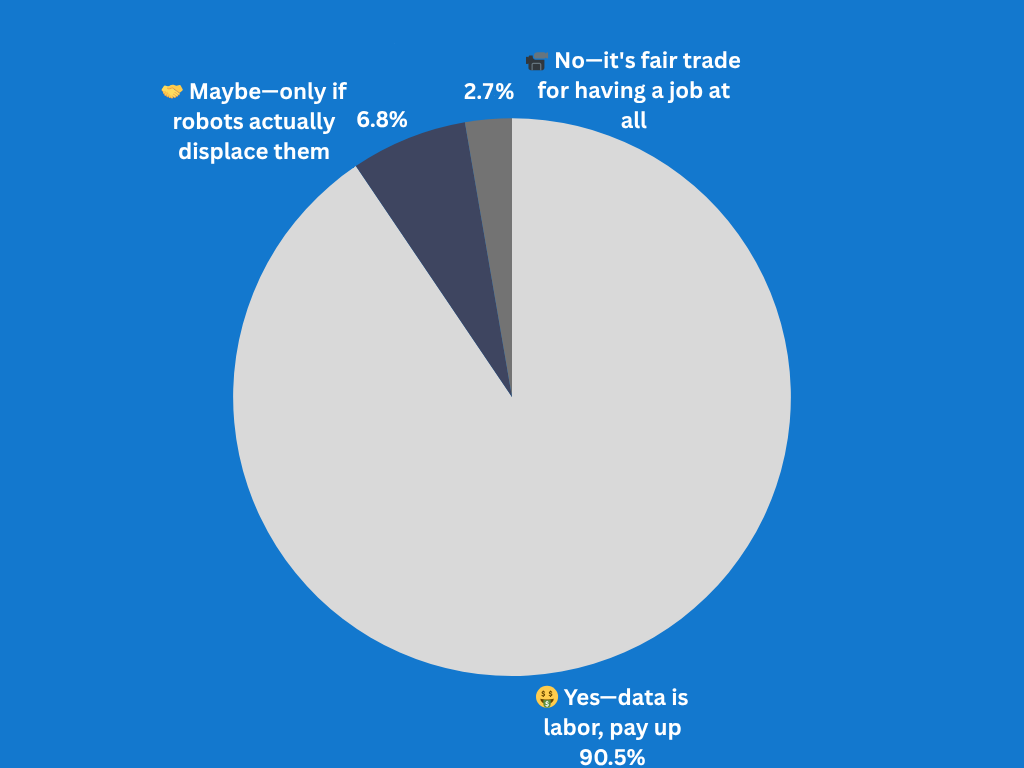
Results from Yesterday's Pulse Check |
Should workers filming their jobs receive a direct share of AI training payouts? |
|
|
|
Neuron Academy Offers On-Demand AI Literacy Courses |
Turns out "just ask ChatGPT" isn't a complete business strategy.
The Neuron Academy officially opened yesterday, July 7, rolling out self-paced courses that teach busy pros how to use ChatGPT, Claude, and Gemini without the jargon.
Backed by our friends at The Neuron, and its 700,000-strong newsletter and podcast audience, the platform starts with AI literacy, basic prompting, and intro tracks for each leading chatbot. It then moves to hands-on workflows and advanced, low-code agents. Lessons mix short videos with practice exercises so learners can test their skills as they go. In total, the platform features 50-plus lessons and more than 30 hours of video teaching.
|
No dev résumé required—just $499 a year (or $99 month to month) with a 7-day free trial. The pitch targets workers whose managers say "use more AI" but offer little guidance, and it dovetails with new rules such as the EU AI Act that require employers to train staff on responsible AI use. If your company offers professional development stipends, The Neuron even provides a customizable business case letter so your boss can foot the bill.
By packaging plain-English tutorials and repeatable prompts, The Neuron hopes to turn AI hype into everyday habit. Finally, a class where homework is bossing the robot. |
|
|
|
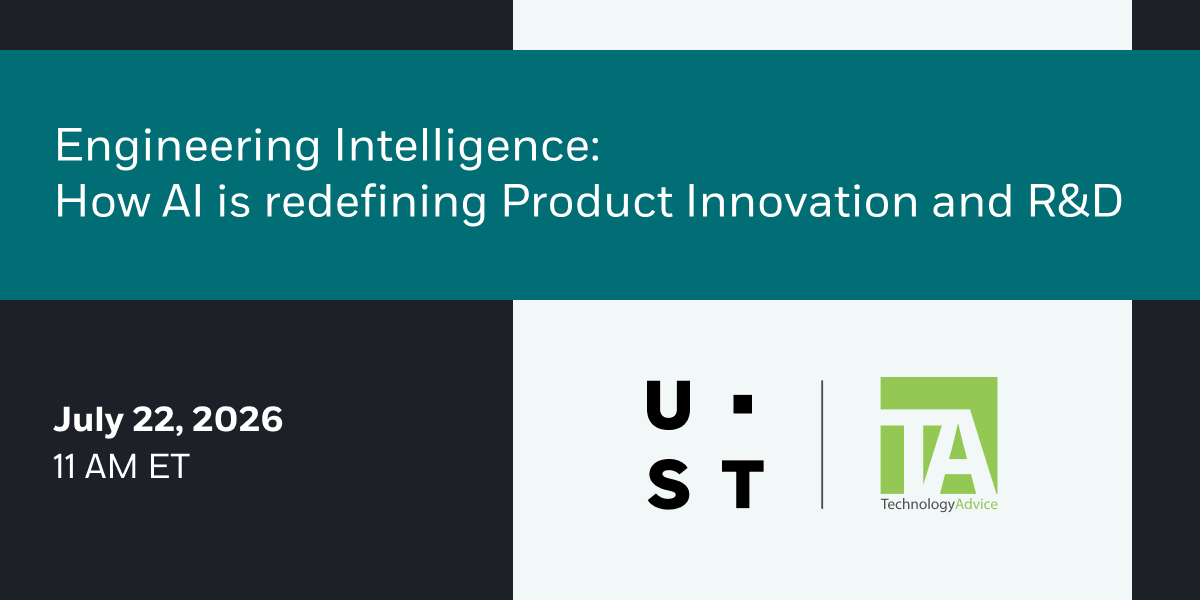
Engineering teams are being asked to move faster, innovate more often, and reduce risk at every stage of development. Join TechnologyAdvice and UST on July 22, 2026, at 11:00 AM ET for Engineering Intelligence: How AI is redefining Product Innovation and R&D. This exclusive discussion will explore how organizations are using AI-powered workflows, digital twins, and platform-led R&D strategies to accelerate product development and improve engineering outcomes.
Register now to gain practical insights from leaders shaping the future of engineering. |
|
|
|
Google Uses Search Uploads to Train AI |
Google is gradually rolling out a "Save Media" toggle across Search, Maps, Translate, and Lens that stores the images, files, audio, and video you upload and funnels them into its generative AI training pipeline—unless you opt out.
The default "on" setting lives in the new Search Services History panel (or under the master "Web & App Activity" section if the update hasn't hit your account yet). |
Image created with ChatGPT |
Here's the real kicker: turning it off doesn't erase media already clipped. Worse, if Google's AI pipeline has already digested your uploaded data, an anonymized copy stays trapped in their training loops for up to four years even if you delete your history today.
Firms should remind staff not to fling invoices or internal screenshots into Lens, and coach everyone on disabling "Save Media" plus deleting past entries immediately. Your next corporate privacy leak could be a two-second Lens search. |
Patched 'Rogue Agent' Bug Exposed Dialogflow Chats |
Google has patched a critical "Rogue Agent" flaw in its AI chatbot builder, Dialogflow CX, that let anyone with the "dialogflow.playbooks.update" permissions inject malicious Python code, eavesdrop on live chats, and impersonate the bot across every agent in the same Google Cloud project, Varonis reports.
The shared Cloud Run runtime meant that one compromised agent could jeopardize them all, turning your helpful AI into a phishing machine that happily asks users for their passwords.
Google rolled out a preliminary patch in April and entirely sealed the loophole in June; no exploits surfaced, and no CVE was assigned, but since the overwrite happened in Google's invisible-to-you managed environment, audit trails are sparse.
Security teams should prune playbook permissions, enable DATA_WRITE logs, manually inspect Code Blocks to ensure they're whitelisted, and query Cloud Logging for failed user requests that might reveal malicious exceptions. Chatbots can't leak secrets if you don't grant careless edit perms. |
Apple Plans 10M $2.5K Foldable iPhones, 1M for Q3 |
Apple directed its supply chain to manufacture 10 million foldable iPhone Ultra devices—an increase from previous 7–8 million estimates—priced around $2,500. However, complicated hinge engineering means third-quarter production will cap at 0.5–1 million units, virtually guaranteeing immediate scarcity.
Nikkei Asia reports this rollout belongs to a broader 80-million-device surge encompassing the iPhone 18 Pro lineup, a move made possible by Apple's outsized pull for scarce memory chips. |
Image created with ChatGPT |
Supply chain analyst Ming-Chi Kuo compares the strategy to the 2017 iPhone X playbook: a joint September announcement followed by a Q4 shipping delay to build inventory, priming scalper markups that could jump 50% to 100%.
Vendors are booking components into 2027, foreshadowing an aggressive premium-market push, while rivals like Xiaomi, Oppo, and Vivo are forced to slash production below 100 million due to industry-wide shortages. For buyers, sticker shock may be less painful than availability; for rivals, Apple's procurement muscle widens an already yawning gap. Your foldable future may arrive, just not in your cart until Christmas.
|
|
|
|
| Writer/Editor at TechnologyAdvice |
Justin Meyers is an investigative writer and editor who draws on over a decade of meticulous hands-on research to deliver the full, trustworthy story behind consumer and enterprise tech, including cybersecurity. |
|
|
|
Curious about where AI is really headed? |
The Neuron cuts through the noise to bring you smart, hype-free takes on the latest AI trends, tools, and breakthroughs. Join 700,000+ professionals from top companies like Microsoft, Apple, Salesforce, and more.
|
|
|
|
Advertise in Daily Tech Insider! Daily Tech Insider is a TechnologyAdvice business. © 2026 TechnologyAdvice, LLC. All rights reserved.
TechnologyAdvice, 3343 Perimeter Hill Dr., Suite 215, Nashville, TN 37211, USA. |
|
|
|
|