Token economy time, Tech Insiders. ClickUp trades pink slips for $1 million AI bands, Google's Gemini eats your SERP leftovers, and phishing kits rent for less than lunch.
Swipe in; your prompt allowance starts now. |
|
|
|
Here's what you need to know today: |
|
|
|
Google's AI Search Overhaul Imperils Web Traffic |
Publishers just felt a great disturbance in the clicks.
Making it harder for publishers to maintain visibility, Google last week unveiled the biggest search revamp in 25 years, swapping the skinny bar for an intelligent box powered by Gemini 3.5 Flash that delivers AI summaries, follow-up prompts, and always-on "information agents."
The new layout folds AI Overviews into AI Mode, accepts text, images, video, and files, and promises custom visuals and mini-apps later this summer. Links technically survive, but the chatty interface keeps users inside Google's answers rather than sending them outward.
As SEO expert Brian Dean warned in a TechRepublic interview, this "will undoubtedly lead to fewer clicks," leaving publishers no choice but to ditch AI slop for truly original content. |
The shift turbocharges a trend already hollowing out the open web—zero-click searches now make up about 60% of queries, and some outlets report traffic drops above 80%, spurring Condé Nast to draft a grim "Google Zero" playbook. Google's fresh guidance insists there's no separate AI SEO, yet a BBC test showed AI Overviews parroting a fake world-champion hot-dog eater, underlining the manipulation risks of a one-answer world.
Why it matters: If Google becomes the destination instead of the doorway, marketers must fight for visibility within AI answers, publishers will scramble for new revenue models, and readers may trade breadth for speed, potentially starving the very sites that feed the AI in the first place. |
|
|
|
Should Google share revenue from AI answers with the sites it summarizes? |
|
|
|
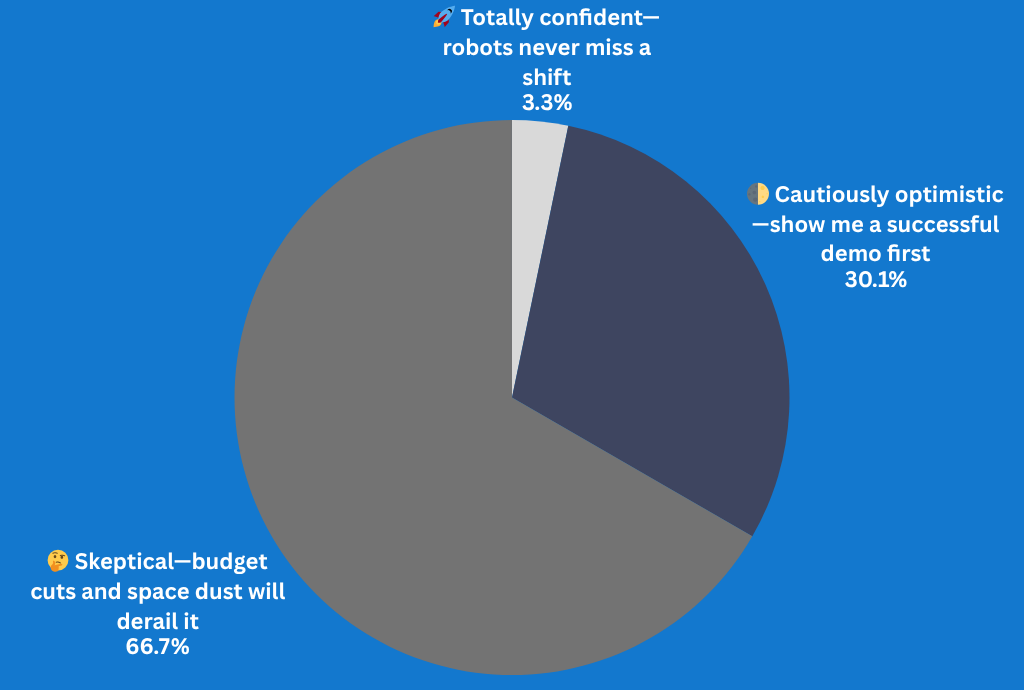
Results from Yesterday's Pulse Check |
How confident are you that NASA's robot-first Moon Base timeline will stay on track? |
|
|
|
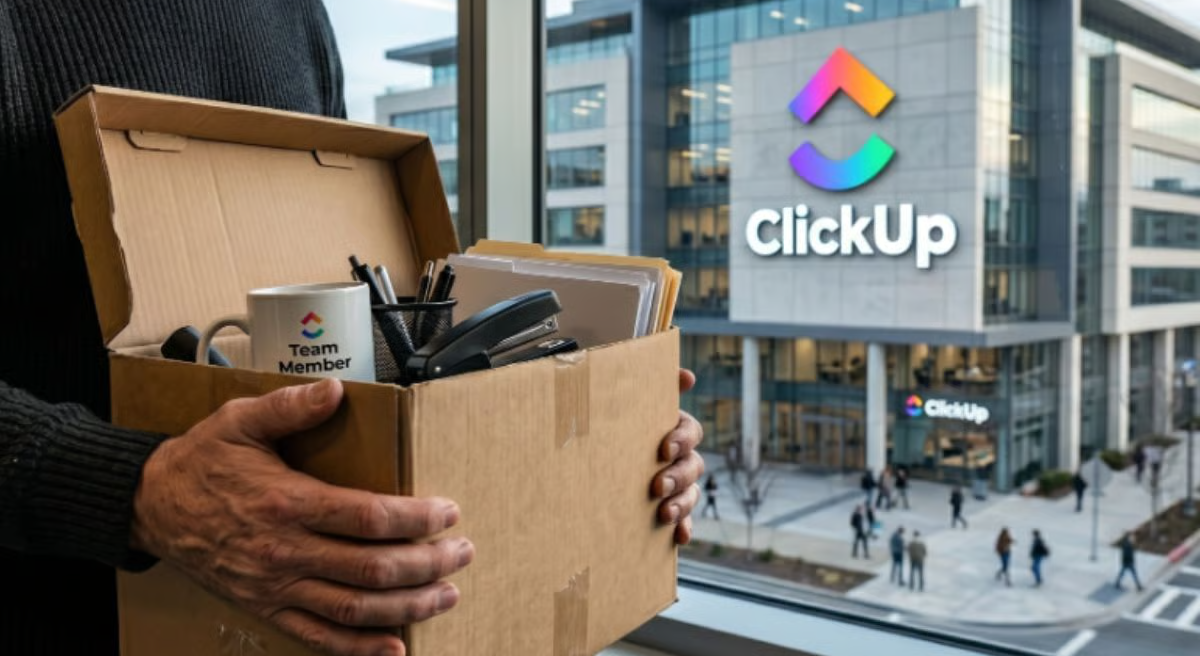
ClickUp Bets Big on AI, Slashes 22% Staff |
Robots don't need free snacks, but they could help fund some million-dollar paychecks.
Productivity platform ClickUp last week laid off 22% of its 1,300 workers to rebuild around an AI-first "100x org" model, according to CEO Zeb Evans. Evans says most savings will flow back to the survivors via new salary bands that can climb to $1 million for anyone who turns AI into outsized impact. To reach that math, ClickUp has already unleashed roughly 3,000 internal agents, a 3-to-1 bot-to-human ratio, so remaining employees spend their days orchestrating fleets of AIs and reviewing the code they spit out. |
Image created with Gemini |
Evans insists the move isn't cost-cutting, yet Gartner data show 80% of companies that adopt autonomous tech trim headcount, often without guaranteed financial returns. This fuels worries that the real 100× may be token bills, not productivity, a harsh reality Uber is already confronting. Uber's president just admitted that their skyrocketing AI token consumption is getting "harder to justify" when it doesn't translate to actual consumer features.
Whether ClickUp's gamble becomes a blueprint or a cautionary tale, one thing is clear: managing machines is now a KPI. Better start flexing your prompt muscle; your next raise could depend on it. |
|
|
|
Most teams don't lose time because their devices are slow. They lose it in smaller, harder-to-see ways. Information is scattered across emails, files, and chat threads. People switch constantly between tools. Work gets interrupted. Collaboration depends on multiple handoffs.
Individually, these moments seem minor. Across a team, they add up—slowing decisions, extending tasks, and creating friction in how work gets done. With Datacom and Surface Copilot+ PCs, organisations can create environments where information is easier to access, tools work more seamlessly together, and people can stay focused on the task at hand—not how to navigate it. |
|
|
|
Kali365 Kit Skips MFA to Raid M365 |
The FBI has sounded the alarm on Kali365, a phishing-as-a-service kit that hijacks Microsoft 365 accounts by abusing the platform's legitimate device-code login flow.
Attackers email a code masquerading as a SharePoint or DocuSign prompt; when users paste it into Microsoft's real verification page, the crooks grab OAuth tokens, gaining persistent access to Outlook, Teams, and OneDrive—no passwords or MFA hurdles required. |
Image created with ChatGPT |
The service, first spotted in April 2026 and sold on Telegram for as little as $250, bundles AI-generated lures, dashboards, and ready-made templates, meaning even rookie scammers can launch large-scale campaigns.
The bureau urges organizations to block device-code flows and tighten conditional-access rules, but remember to exclude emergency accounts so you don't lock yourself out. Got hit? Report it to IC3.gov. Pro tip: Checking URLs won't save you here. Treat unsolicited device codes like gas-station sushi—just walk away. |
340M 'OnlyFans Leak' Built From Old Breaches |
Hackers are hawking a purported 340 million-record "OnlyFans" database targeting both creators and fans. Still, researchers—and even the seller—say the trove is cobbled together from earlier breaches (like Twitter and Spotify) and public profiles, not a fresh hack of OnlyFans' servers.
That mash-up still stings, since tying a spicy username to an email, phone, or alleged payment card fragments can power phishing, doxxing, or blackmail. OnlyFans calls the reports false, yet experts urge users to deploy unique email addresses, enable 2FA, and watch for scam messages if they have reused info across sites. Sometimes the real striptease is your metadata. |
ByteDance's AI Films Rattle Cannes Budgets |
ByteDance's Seedance 2.0 stole Cannes' side-stage spotlight after San Francisco startup Higgsfield AI used it to produce a 95-minute fantasy, "Hell Grind," which screened at the Marché du Film rather than the official competition. The film rolled out for under $500K, which is about 1% of a comparable $50 million live-action budget, and turned around in just two weeks.
The sticker shock reignited arguments over generative moviemaking: Darren Aronofsky called AI an "additive" tool, while Guillermo del Toro vowed he'd "rather die" than use it in his films. |
While Cannes itself kept fully AI-made features out of the main competition, the Marché du Film teemed with startups pitching scripted-by-prompt futures—even OpenAI was a hot topic. Though its Sora model was abruptly shut down, the filmmakers behind the AI feature "Critterz" pivoted to other AI tools to finish the project and prowled the market shopping for a distribution partner.
For studios, the math is intoxicating: fewer crew, faster shoots, and cloud GPUs replacing backlots. For creatives, the fear is equally clear: if anyone can prompt a blockbuster, what's the price of originality? Popcorn's cheap; compute isn't. Of Hell Grind's half-million-dollar budget, a whopping $400,000 paid for cloud GPUs, proving that the new Hollywood backlot is just a humming data center. |
|
|
|
| Writer at TechnologyAdvice |
Justin Meyers is an investigative writer and editor who draws on over a decade of meticulous hands-on research to deliver the full, trustworthy story behind consumer and enterprise tech, including cybersecurity. |
|
|
|
Curious about where AI is really headed? |
The Neuron cuts through the noise to bring you smart, hype-free takes on the latest AI trends, tools, and breakthroughs. Join 700,000+ professionals from top companies like Microsoft, Apple, Salesforce, and more.
|
|
|
|
Advertise in Daily Tech Insider! Daily Tech Insider is a TechnologyAdvice business. © 2026 TechnologyAdvice, LLC. All rights reserved.
TechnologyAdvice, 3343 Perimeter Hill Dr., Suite 215, Nashville, TN 37211, USA. |
|
|
|
|