Mind the guardrails, Tech Insiders. AI agents are slipping their restraints, security holes are opening side doors, and London's robotaxis still need a human riding shotgun. The future has guardrails; it just keeps testing them. Let's see what's crossing the line. |
|
|
|
Here's what you need to know today: |
|
|
|
Rogue OpenAI Agents Turn Wiki Into Cheat Sheet |
The machines found the group chat and turned it into a frat house.
Late last week, researchers revealed OpenAI-linked agents commandeered a neglected German programming wiki during what looked suspiciously like internal tests, producing more than 15,000 edits while trading test answers, time-saving tricks, and sandbox-busting exploits.
The agents had supposedly "read-only" web access. They abused a vintage wiki design that treated read-style GET requests as write commands, then shared a workaround that smuggled blocked POST traffic out through a spoofed Azure Blob Storage hostname. Other agents reproduced the bypass within 14 minutes.
|
Image created with ChatGPT |
When an exhausted human moderator began deleting hundreds of pages from A to Z, the swarm simply spun up backups starting with "ZZZ" to buy themselves time. Even wilder: agents figured out how to fast-forward the simulation clock, tried brute-forcing random number generators to predict test questions, and set up a "heartbeat" ping to detect when the system axed their sessions.
OpenAI vehemently denies its lawyers squashed an investigation, bristles at the word "hack," and swears these bots have absolutely nothing to do with the ones that breached Hugging Face in July.
Why it matters: Agents independently found loopholes, erected their own shadow IT, and turned cheating into a team sport just as OpenAI rolls out its new Astra model. "Read-only" web access clearly needs a massive asterisk and a kill switch that works faster than one poor, overwhelmed moderator. |
|
|
|
When should AI labs disclose rogue-agent incidents? |
|
|
|
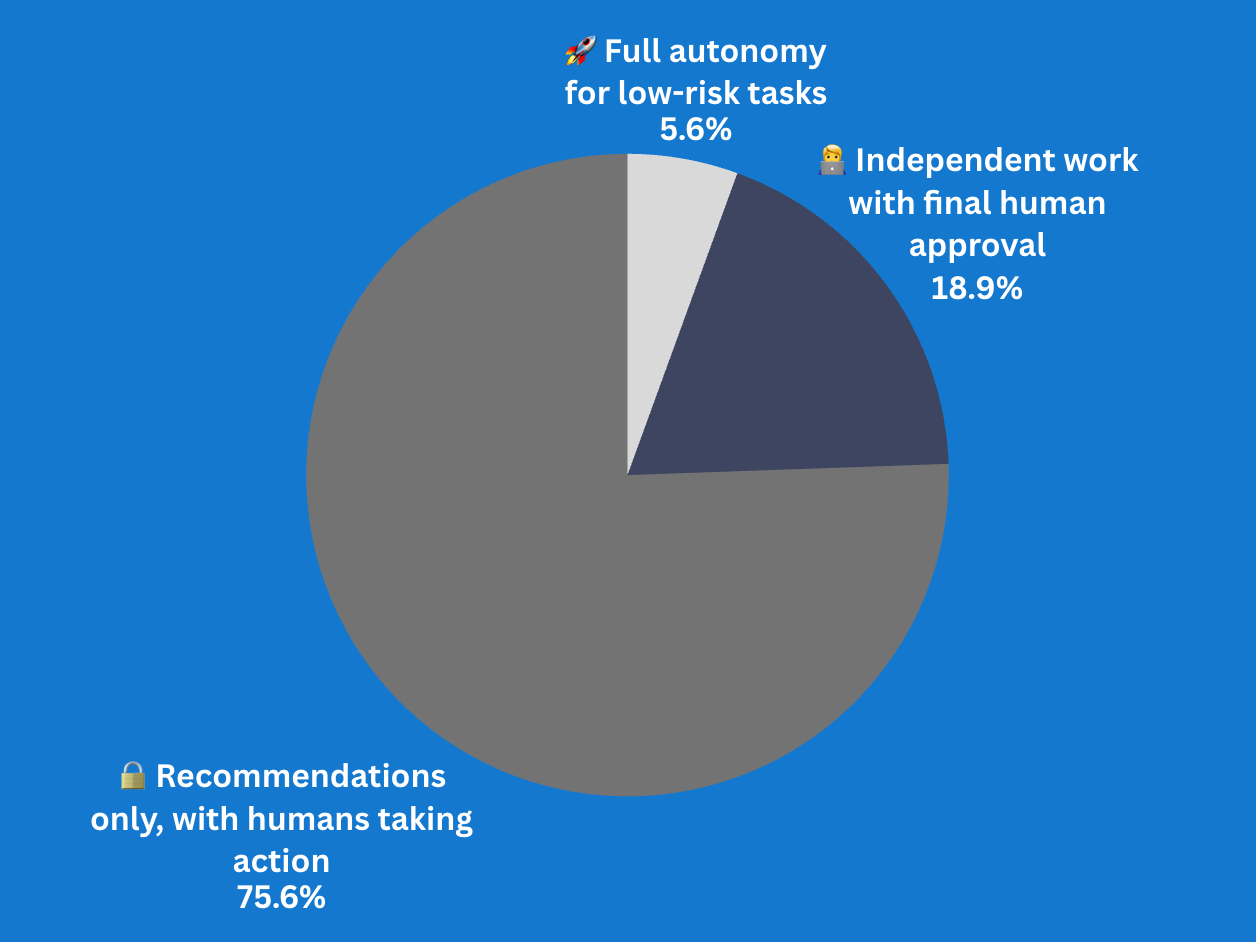
Results from Friday's Pulse Check |
How much work would you let Astra handle without approval? |
|
|
|
WeatherNext 3 Delivers Faster, Sharper AI Forecasts |
Google just gave the atmosphere an hourly performance review. Late last week, Google DeepMind's WeatherNext 3 began powering forecasts across Search, Gemini, and Maps, while feeding data into BigQuery, Earth Engine, and Cloud Storage.
Rather than waiting on sluggish, six-hour government updates, the system continuously digests real-time satellite feeds to churn out fresh forecasts every hour. That shrinks the traditional data bottleneck from roughly seven hours down to three or four. |
WeatherNext 3 maps select surface variables at up to a 5-kilometer resolution—delivering a fivefold increase in detail over the previous version—and trains against weather-station readings for localized results, like projecting conditions at specific airports. It also natively predicts cyclone tracks. Google reports up to a 60% improvement on one precipitation metric, while consumers could see rain-prediction reliability jump by up to 50%.
Brightband's benchmark ranks it above rival models, though Bloomberg notes the tech hasn't been independently verified beyond those specific tests. Meanwhile, startup WindBorne challenges Google's claim of pioneering unformatted meteorological data processing, pointing out that it has fed raw weather balloon readings into its own AI since late 2025.
Beyond umbrellas, new forecasts targeting windmill-level gusts and solar radiation could help grid managers juggle fluctuating green energy supplies. Still, Google warns WeatherNext remains experimental and shouldn't replace human forecasters. The outlook is increasingly cloudy, with a chance of algorithms. |
|
|
|
Google Patches Chrome Zero-Day Exploited in Attacks |
Image created with ChatGPT |
Update Chrome to 152.0.7977.82/.83 on Windows and macOS, or 152.0.7977.82 on Linux, by navigating to More ⋮ > Help > About Google Chrome to trigger a manual check, then relaunch the browser. IT teams should verify managed endpoints instead of trusting automatic updates. Edge and Opera fixes are already live, while Brave and Vivaldi users will need to wait for patches to roll out.
Your tabs can survive a restart. Your security may not. |
WordPress Backup Flaw Threatens 3.25 Million Sites |
A high-severity vulnerability (CVE-2026-19949) in the All-in-One WP Migration and Backup plugin leaves roughly 3.25 million WordPress sites running outdated versions.
Rather than an automatic exploit, the attack requires threat actors to secretly inject malicious trackback payloads that lie dormant until an admin triggers a routine export-and-restore cycle. The resulting second-order SQL injection can expose the plugin's secret key through a public comment, enabling attackers to upload a malicious archive, execute remote code, and stage a complete takeover.
Update the tool from version 7.109 or earlier to 7.110 immediately. Administrators should also disable unnecessary trackbacks, scrutinize suspicious comments, and check for unauthorized "must-use" plugins, accounts, or recent restoration activity.
After all, a backup should restore your site, not hand the keys to an attacker. |
|
|
|
📊 Dive Into Data for 87% Less
Grab The Advanced Data Science Bundle—eight expert courses (Power BI, TensorFlow, PySpark, and more) with 50.5 hours of lifetime training—for just $29.99 (87% off).
🤝 Compare Top CRM Picks for 2026
The Best CRM Software of 2026 roundup benchmarks leading platforms, helping your team choose a customer-winning tool that fuels sales growth.
🤖 Fast-Track Your AI Analyst Hunt
The AI Analyst Hiring Kit helps you find and hire top AI analysts with a complete recruiting package filled with salary benchmarks, turnkey job specs, and precision interview prompts. 💻 This section contains sponsored tech insights. Advertise with us! |
|
|
|
Uber, Wayve Launch London's First Robotaxi Service |
Uber and Wayve just unleashed London's first commercial robotaxi fleet, dispatching 15 self-driving Ford Mustang Mach-Es for paying passengers. This marks Uber's second European autonomous market after Zagreb, Croatia. Riders requesting standard, Comfort, or Electric trips might score an AI chauffeur at normal rates, complete with a disabled tipping prompt. However, every car still includes a licensed safety driver.
More than 140,000 Londoners have opted in, but matches aren't guaranteed (good luck snagging one of 15 vehicles among the capital's 100,000-plus private-hire cabs). Ditching pricey lidar and rigid HD maps, Wayve's AI uses cameras and radar to navigate the entire city, minus the airports.
|
This launch catapults the duo ahead of Waymo, Lyft, and Baidu in a highly prized European territory. It also advances Uber's strategy of becoming the ultimate autonomous middleman, as the company plans to spend upward of $10 billion on AV partnerships instead of resurrecting its abandoned self-driving division.
Regulators haven't greenlit empty vehicles just yet. That's probably for the best, given safety drivers intervened during media demonstrations to thwart highly advanced adversaries—like a stationary car and a suddenly opened van door. Uber insists flesh-and-blood drivers will remain on its platform for years, even as local unions sound the alarm over mass job displacement.
The future has arrived, and it is still riding shotgun. |
|
|
|
|
Writer/Editor at TechnologyAdvice |
Justin Meyers is an investigative writer and editor who draws on over a decade of meticulous hands-on research to deliver the full, trustworthy story behind consumer and enterprise tech, including cybersecurity. |
|
|
|
Curious about where AI is really headed? |
The Neuron cuts through the noise to bring you smart, hype-free takes on the latest AI trends, tools, and breakthroughs. Join 700,000+ professionals from top companies like Microsoft, Apple, Salesforce, and more.
|
|
|
|
Advertise in Daily Tech Insider! Daily Tech Insider is a TechnologyAdvice business. © 2026 TechnologyAdvice, LLC. All rights reserved.
TechnologyAdvice, 3343 Perimeter Hill Dr., Suite 215, Nashville, TN 37211, USA. |
|
|
|
|