Heads up, Tech Insiders. Models are quarantined, couriers are upskilling, and cameras are stalking your earbuds, proof that everything smart this week comes with a chaperone.
Strap in; the watchdogs are busier than the inventors. |
|
|
|
Here's what you need to know today: |
|
|
|
GPT-5.6 Debuts Under US Watch |
OpenAI just rolled out its latest model, but only for those on the velvet-rope list.
OpenAI is previewing GPT-5.6, a three-pack of models dubbed Sol, Terra, and Luna, but the keys are in the hands of a tiny set of "trusted" partners vetted by the US government at the Trump administration's request.
Sol is the heavyweight, promising deeper reasoning. Terra targets everyday workloads with GPT-5.5-level performance at half the cost. Luna trades some raw power for speed and bargain pricing.
The company says the gated launch will run for a few weeks, after which the models will open up, through ChatGPT, Codex, and OpenAI's API, once Washington finishes crossing t's on a new AI-safety playbook. |
It's a déjà-vu moment: Anthropic's Fable 5 and Mythos 5 faced similar heavy-handed government intervention weeks ago when they were shut down three days after their release. Washington did just toss Anthropic a bone, though, partially unblocking Mythos 5 for a hand-picked list of US entities on the exact same day it restricted GPT-5.6. Meanwhile, the White House is still hammering out longer-term guardrails for "frontier" AI.
OpenAI is also testing a "max reasoning effort" toggle, a swarm-of-subagents trick for heavier code and research tasks, plus a sturdier safety stack meant to neuter offensive cyber use. That extra diligence, OpenAI says, should ease regulators' nerves before the models hit general release.
Still, OpenAI isn't exactly thrilled, openly grumbling that this flavor of government gatekeeping shouldn't become the "long-term default." Why it matters: The hottest new AI is arriving in quarantine, underscoring how quickly cutting-edge models have become geopolitical assets. If US vetting becomes the norm, innovators and enterprises may need fresh playbooks (and patience) before next-gen tools reach the open market. |
|
|
|
Should the US government preapprove every frontier AI model release? |
|
|
|
Results from Friday's Pulse Check |
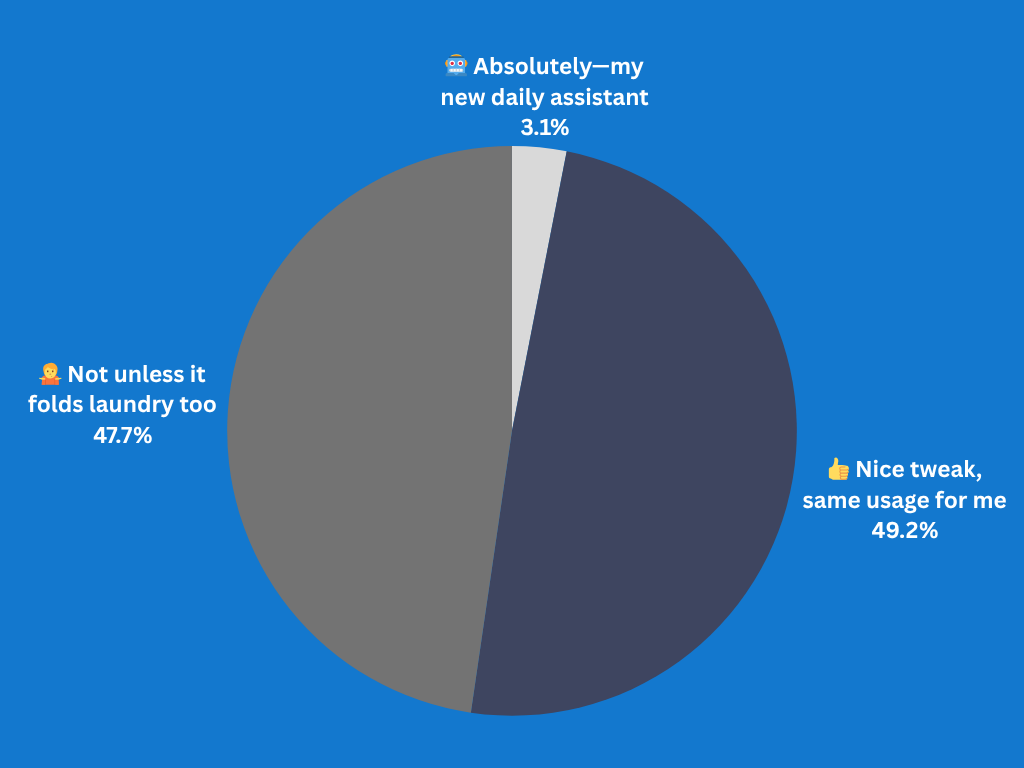
Will GPT‑5.5 Instant's upgrade change how you use ChatGPT? |
|
|
|
JD.com Couriers Face Robot Reality Check |
Rainy days may soon be for robots, not couriers.
Early last week, JD.com founder Richard Liu said his company's 700,000 couriers will be "basically no longer needed" once fleets of drones and autonomous vehicles mature. To soften the blow, he unveiled "Nirvana," an initiative that partners with 120 technical schools to transition delivery staff into robot-repair tech and AI-trainer roles rather than handing them pink slips.
The stakes are massive: front-line logistics staff make up nearly three-quarters of JD's 900,000-strong payroll. Liu's pledge lands as China's gig-worker ranks swell toward 320 million and youth unemployment hovers around 16%, putting regulators on edge with courts already ordering compensation for AI-linked layoffs.
Meanwhile, the broader tech sector has slashed nearly 160,000 jobs this year, including 21,000 at Oracle over the past 12 months, as global companies aggressively pivot toward artificial intelligence and automation. |
Skeptics note that there simply won't be enough robot-servicing jobs to cover the current courier headcount. Plus, JD itself is charging ahead with unmanned warehouses and plans to deploy 3 million robots and 1 million autonomous vehicles by 2030.
Still, Liu insists that technology should make work "more interesting," not erase livelihoods—a guarantee that rivals like Alibaba and Amazon may soon be pressed to match before workers realize the math doesn't quite add up. If retraining 700,000 people sounds hard, try programming a drone to evade a barking dog. |
|
|
|
🤖 Scale AI From Pilot to Production
Plenty of companies can launch an AI pilot. Far fewer know how to make it stick. Learn more. 📊 Level Up Your AI With Data Smarts
Why Data Science Matters More Than Ever in the Age of AI breaks down the data science essentials fueling today's smartest models—read it to sharpen strategy and outpace rivals.
❄️ Turbocharge Data and AI in 30 Days Snowflake AI Data Cloud offers a unified, secure platform plus $400 in credits for a 30-day free trial so you can load, share, and build AI apps without the ops headache. 💻 This section contains sponsored tech insights. Advertise with us! |
|
|
|
Your Microsoft 365, Entra ID, Salesforce, and Azure environments are interconnected— nd that connectivity is exactly what attackers exploit. Once compromised credentials enter your environment, native retention preserves the damage, not the clean state you need to recover from. The shared responsibility model is clear: cloud providers secure the platform. You secure the data.
Veeam's latest guide outlines 8 key advantages of a SaaS-delivered backup service. From frictionless setup and elastic storage to immutable, air-gapped recovery that compromised identities can't reach. You'll also learn why purpose-built, context-aware recovery across your specific workloads is the difference between a clean rollback and weeks of manual reconciliation.
Stop managing backup like a second job. Download the guide and see how Veeam Data Cloud delivers predictable, scalable, enterprise-grade data resilience — without the infrastructure overhead. |
|
|
|
License Plate Readers Now Track Your AirPods and Smartwatch |
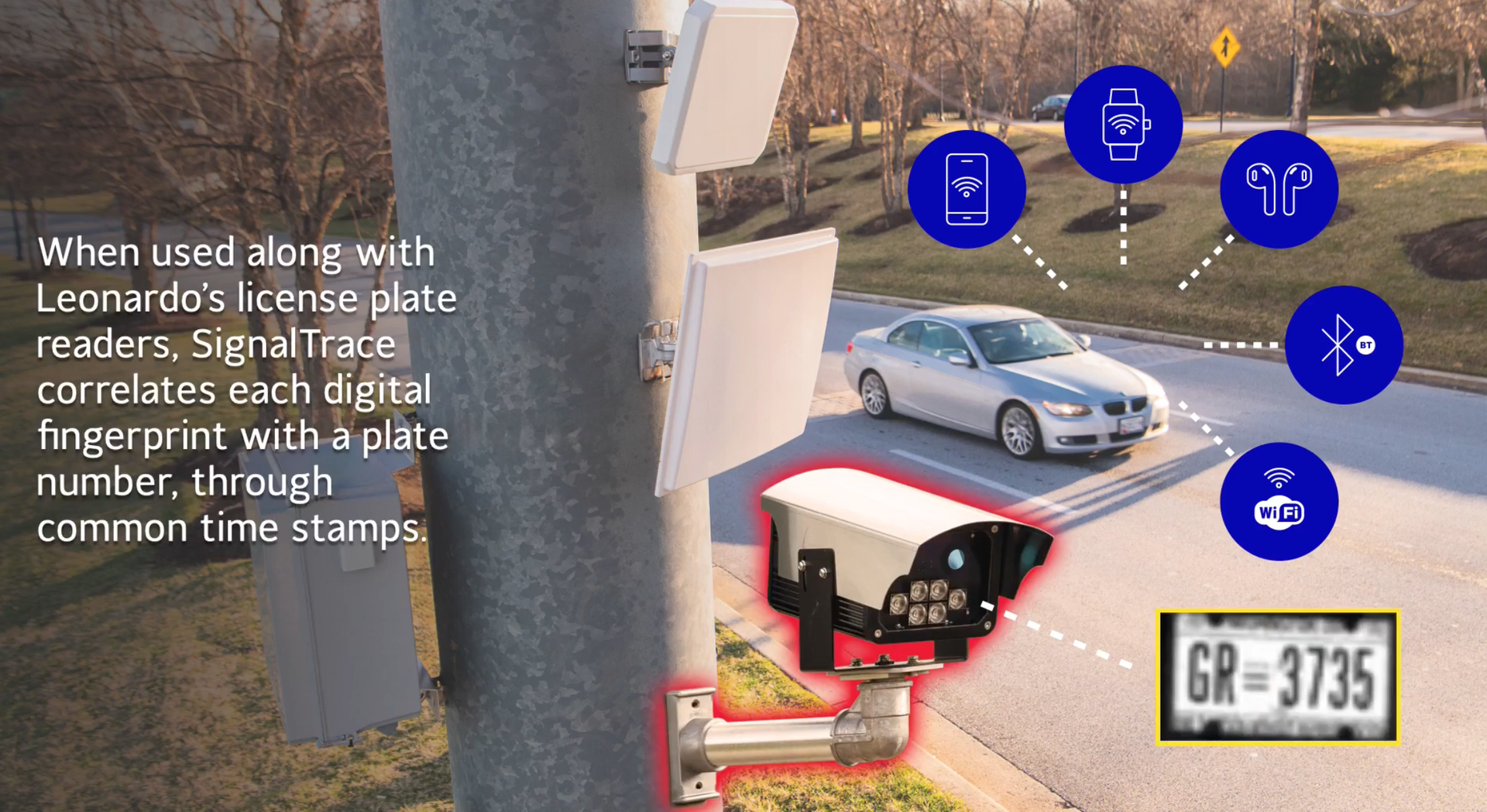
Leonardo's new SignalTrace add-on allows law enforcement to match passing vehicles with the wireless Bluetooth and RFID signals constantly broadcast by personal devices like iPhones, wearables, and pet microchips. Civil liberties groups warn this combination effectively transforms standard traffic cameras into warrantless surveillance tools.
Since consumers cannot easily opt out, the technology generates a persistent "electronic fingerprint" capable of tracing a person's physical movements through their gadgets. |
Even though this particular sensor integration is just rolling out, existing license-plate surveillance infrastructure from vendors like Flock and Leonardo already spans thousands of jurisdictions. Notably, federal cybersecurity officials at CISA issued warnings in 2024 that these massive data hubs are prime targets for hackers.
Until clear legal boundaries are established, experts recommend limiting always-on Bluetooth (but be prepared for the nagging turn-it-back-on notifications from your insurance company's let-us-track-you-for-a-discount service), keeping Wi-Fi disabled in transit, and planning routes with evasion tools like DeFlock. Your car can't fall off the grid if your tech is still broadcasting your location. |
KDDI Breach Exposes 14.2M ISP Email Credentials |
KDDI says attackers cracked an email platform it runs for six Japanese ISPs, potentially leaking up to 14.22 million email addresses and passwords, including those from canceled or long-dormant accounts.
The telco spotted the intrusion on June 17, modified the system the same day, and traced the breach to a flaw in third-party software. Some passwords were hashed or encrypted, but the company hasn't said how strongly.
The affected providers—STNet, JCOM, Chubu, Nifty, Biglobe, and KDDI Web Communications—were notified starting June 17, with regulators alerted shortly after. If you used any of these services, reset passwords now, enable 2FA, and watch for phishing camouflaged as your ISP's "security" alerts.
Changing your password beats practicing your kanji for "Whoops." |
Midjourney Unveils Ultrasound Body Scanner, Eyes AI Health Hardware |
The company says the first-gen machine will stick to nondiagnostic body-composition maps while it climbs the FDA ladder. But privacy, accuracy, and cost questions loom, and radiologists note the MRI comparisons are a massive stretch, with University of Michigan radiologist Matthew Davenport calling the medical claims "wildly unsubstantiated" due to ultrasound's physical limitations in imaging bone and body fat.
At least you leave the spa glowing, fully digitized, and hopefully not a victim of a Silicon Valley grift. |
|
|
|
| Writer/Editor at TechnologyAdvice |
Justin Meyers is an investigative writer and editor who draws on over a decade of meticulous hands-on research to deliver the full, trustworthy story behind consumer and enterprise tech, including cybersecurity. |
|
|
|
Curious about where AI is really headed? |
The Neuron cuts through the noise to bring you smart, hype-free takes on the latest AI trends, tools, and breakthroughs. Join 700,000+ professionals from top companies like Microsoft, Apple, Salesforce, and more.
|
|
|
|
Advertise in Daily Tech Insider! Daily Tech Insider is a TechnologyAdvice business. © 2026 TechnologyAdvice, LLC. All rights reserved.
TechnologyAdvice, 3343 Perimeter Hill Dr., Suite 215, Nashville, TN 37211, USA. |
|
|
|
|