Mind the permissions, Tech Insiders. Meta is turning public Instagram posts into AI remix fuel, Apple's smarter Siri is stuck at the EU border, and Microsoft is hunting for cheaper Copilot brains. Let's figure out the platform moves before they rewrite your office suite. |
|
|
|
Here's what you need to know today: |
|
|
|
Meta Turns Instagram Into an AI Remix Machine |
Your vacation pics are about to get a lot more synthetic.
Meta just launched Muse Image, its new AI image generator, across Instagram, WhatsApp, and the Meta AI app. It edits photos, generates social-ready images, and powers new Instagram Stories effects. But watch out: heavy creators will eventually hit a free limit and require a paid subscription.
The privacy catch is the real headline. Public Instagram accounts are automatically eligible for AI remixing. Someone can tag a public profile and create new images using that person's photos. Meta says users can opt out (currently only on mobile), but the default leaves photos in play.
Worse, users aren't notified when AI content is created with their material, and opting out won't delete images that already exist. Meta is, however, applying an invisible "Content Seal" watermark to track AI origins, and a detection tool is available online for anyone to check images.
|
Image created with ChatGPT |
Muse gives Meta an in-house replacement for Midjourney, opening a commercial lane for AI-generated ads. Muse Video is also in development.
The rollout highlights Meta's $145 billion AI spending push this year as it tries to catch OpenAI, Google, and Anthropic. But its privacy record looms large: a $5 billion FTC fine over Cambridge Analytica, the shutdown of Facebook's facial recognition, and a recent AI bug that exposed 20,000 Instagram accounts.
Why it matters: Muse Image turns Meta's social graph into AI creative fuel. Fun for memes, useful for ads, awkward for consent. |
|
|
|
Should public Instagram posts be available for AI remixing by default? |
|
|
|
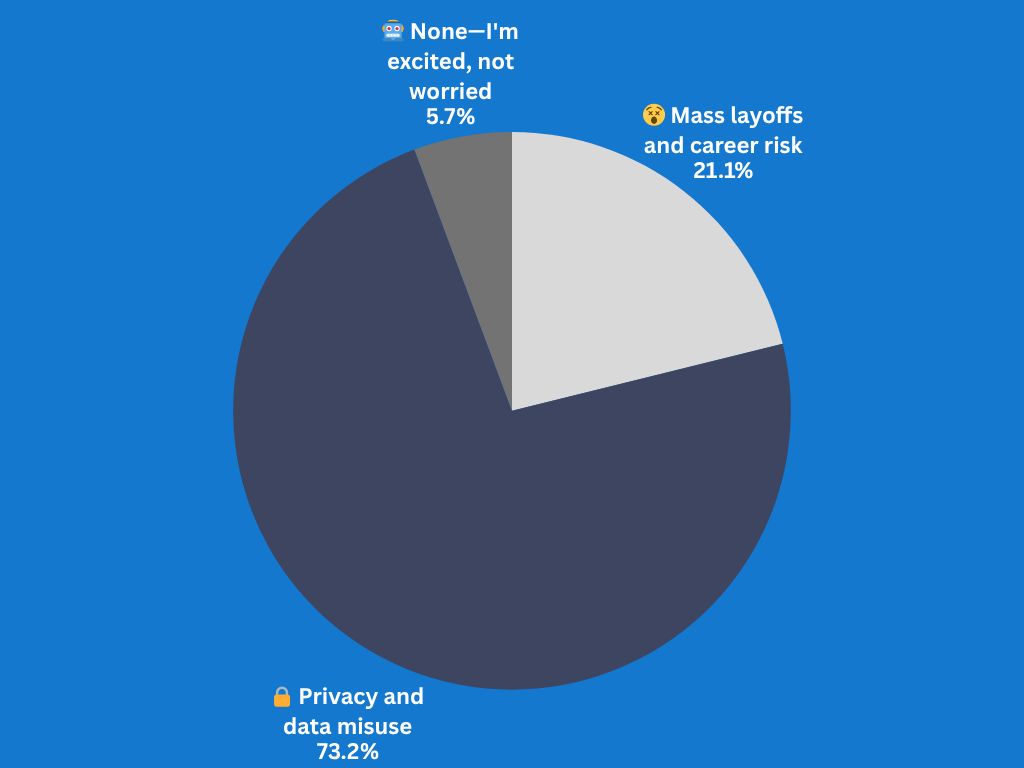
Results from Yesterday's Pulse Check |
What's the bigger AI worry for you? |
|
|
|
Apple's Siri AI Gets Stuck at the EU Border |
Siri finally got smarter. Now it needs a passport.
Outgoing Apple CEO Tim Cook spoke with EU tech chief Henna Virkkunen last week to thaw a regulatory standoff keeping Siri AI off European iPhones and iPads.
The EU described the call as constructive, which is diplomatic code for "nobody flipped the table." (Apple, notably, declined to comment.) But there is no clear path for European users.
Siri AI, coming with Apple's OS 27 updates later this year, is Apple's long-awaited answer to smarter assistants from OpenAI, Anthropic, and Google. But in Europe, the iPhone version is stuck in regulatory limbo, while macOS and visionOS support appear less constrained—and watchOS is grounded since it needs a paired iPhone.
|
Image created with ChatGPT |
The fight centers on the EU's Digital Markets Act. Apple says regulators want Siri AI to work more openly with rival assistants before the company can guarantee privacy. Apple pitched a "Trusted System Agent" and an 18-month rollout, which the EU bluntly rejected. The EU says Apple cannot blame Brussels for a delayed rollout.
The stakes are bigger than one voice assistant. Apple also blamed the DMA for holding back iPhone mirroring to Mac, AirPods live translation, and some Maps upgrades. Europe accounted for nearly 27% of Apple's sales, so this is not exactly a niche software hiccup. It's a massive market—massive enough that Apple is successfully recruiting local backup. Cook also huddled with Bavarian Minister-President Markus Söder, who immediately complained on X that EU "overregulation" threatens to cut Europe completely off from technological progress.
Developers are stuck too. Without access to Siri AI, EU app makers cannot fully test these core features. |
|
|
|
💻 Score a Refurb MacBook Air for Pennies
Apple MacBook Air (2018) 13" i5 Gray (Refurbished) with 1.6 GHz processor, 8 GB RAM, and a 128 GB SSD delivers 12-hour battery life and impressive speed for about $245—79% off the original price. 📊 Unlock Faster Insights With Top BI Picks
Compare leading analytics platforms and pick your data ally with the Best Business Intelligence Software of 2026 guide.
🤖 The #1 AI Service Desk for MSPs
Thread is the AI Service Desk 750+ MSPs trust to automate triage, dispatch, and client conversations across ConnectWise, Autotask, and HaloPSA. Get started. |
|
|
|
What It Takes to Turn Knowledge Assistants Into Production Systems |
Scale AI without creating new infrastructure bottlenecks. Learn why enterprise AI needs more than GPUs and how servers, storage, and networking must work together to support training, inference, and retrieval-augmented generation. This guide explains how to build a scalable AI infrastructure that can move from pilot projects to production. |
|
|
|
GitLost Tricks GitHub Agents Into Leaking Private Repos |
Researchers uncovered GitLost, a prompt injection flaw in GitHub Agentic Workflows that can trick an AI agent into pulling data from private repositories and dumping it into a public comment.
The attack is almost insultingly simple. A stranger opens an issue in a public repo, embeds sneaky natural-language instructions in the body, and waits for the Claude- or Copilot-powered agent to act—no stolen credentials, malware, or coding wizardry required. Hilariously, attackers bypassed GitHub's built-in guardrails simply by starting their malicious prompt with the word "Additionally."
This nightmare scenario happens when overly permissioned agents can read public issues while also holding access to private repos inside the same organization. If the workflow is too broad, the agent treats attacker-written text like trusted instructions and spills internal files.
GitHub was reportedly notified, but official fixes are still missing. To protect your org, strictly limit agent permissions, avoid giving them cross-repo access, and gate public-facing outputs behind human review. Your AI intern is eager. Stop giving it the vault keys. |
Januscape Lets Linux VMs Break Out |
A 16-year-old Linux bug just gave cloud admins a very bad flashback.
Researchers disclosed Januscape, tracked as CVE-2026-53359, a flaw in Linux's KVM (Kernel-based Virtual Machine) hypervisor that can let an attacker escape a virtual machine and hit the underlying host. The bug lives in the shadow MMU (memory management unit) code—which is exposed only when nested virtualization is enabled—and affects both Intel and AMD systems.
The scary part is the blast radius. An attacker with root access inside one guest VM could potentially run code as root on the host or crash the host kernel, knocking other VMs on the same physical server offline. That makes Januscape especially nasty in public cloud and multitenant virtualization environments, where one rented instance can sit beside other customers' workloads. Admins should grab the July 4 stable kernel patches immediately; if you can't update right away, disabling nested virtualization will completely kill the attack path. One VM should not get the master key to the building. |
Turn ChatGPT Into a High-Output Workflow Engine |
Most pros dabble with AI, then ditch it when results look generic. The Neuron Academy flips that curve with short, job-ready lessons that show you how to: |
-
Write sharper prompts that deliver the exact data, copy, or code you asked for—no more guess-and-revise loop.
- Automate repeatable workflows so daily briefs, research packets, and status updates build themselves.
|
And there are plenty more skills packed into the growing library.
Try the full collection free for 7 days. Keep it for $499/year while early-bird pricing lasts (save $500). |
Microsoft Swaps In Its Own AI to Cut Costs |
Image created with ChatGPT |
The savings case is obvious. Microsoft can run its own models on Azure and avoid paying outside providers for every AI task. One MAI model tuned for McKinsey reportedly beat GPT-5.5 on cost efficiency by 10×. Microsoft AI CEO Mustafa Suleyman isn't exactly hiding the motive, bluntly stating the goal is to "ultimately eliminate" the massive checks they write to Anthropic. The shift is incremental, not a breakup. OpenAI and Anthropic still handle much of Copilot's traffic, while Microsoft keeps access to OpenAI technology through 2032.
The broader message is that AI's token party is getting a budget committee. Amazon, Uber, Meta, and Accenture are also hunting for cheaper ways to run AI at scale. Microsoft still wants the best models. It just no longer wants to rent all of them. |
|
|
|
| Greg Parker is a cybersecurity and emerging tech writer who explores the intersection of digital risk, human behavior, and innovation across sensing and security technologies. |
|
|
|
Curious about where AI is really headed? |
The Neuron cuts through the noise to bring you smart, hype-free takes on the latest AI trends, tools, and breakthroughs. Join 700,000+ professionals from top companies like Microsoft, Apple, Salesforce, and more.
|
|
|
|
Advertise in Daily Tech Insider! Daily Tech Insider is a TechnologyAdvice business. © 2026 TechnologyAdvice, LLC. All rights reserved.
TechnologyAdvice, 3343 Perimeter Hill Dr., Suite 215, Nashville, TN 37211, USA. |
|
|
|
|