Eyes forward, Tech Insiders.
Meta's unblinking glasses, Samsung's floating data center, and fresh security flare-ups prove just how hard it is for the rest of us to stay out of sight in 2026. Let's peep the details before the details peep us. |
|
|
|
Here's what you need to know today: |
|
|
|
Meta's 'Super Sensing' Glasses Never Blink |
Blink, and you'll miss the privacy light, because Meta is planning to turn it off.
Meta is testing experimental smart glasses that quietly capture pictures every few seconds and continuously log ambient audio so an AI can perfectly recall your day. The plan right now is to leave the familiar red LED recording indicator off, a hilariously ironic move given that Meta just pushed an update that shuts down the camera if that exact light is obscured.
Behind closed doors, engineers are hashing out whether raw captures should be converted to metadata and if this data stockpile can legally feed future AI models. Meanwhile, critics warn the unblinking design skirts wiretapping and biometric privacy laws and could revive the "glasshole" backlash that dogged Google Glass. |
Executives haven't ruled out pushing this always-on feature to the more than 9 million Meta Ray-Bans already in the wild via a firmware update, instantly creating a massive AI sensor network fueled by Meta's $145 billion infrastructure budget.
The timing is awkward: Meta just deleted secret facial-recognition code from its app, EU regulators are probing reports that contractors reviewed intimate footage captured by existing models, and Meta just patented AI wearables that track your emotional state via sighs, laughs, and medication habits.
Why it matters: If Meta ships or back-ports these spy-specs, every sidewalk, classroom, or meeting could become an unmarked recording zone. That raises fresh questions about consent, corporate data grabs, and whether today's privacy laws can police tomorrow's creepy wearable AI. |
|
|
|
What's the scariest part of always-recording smart glasses? |
|
|
|
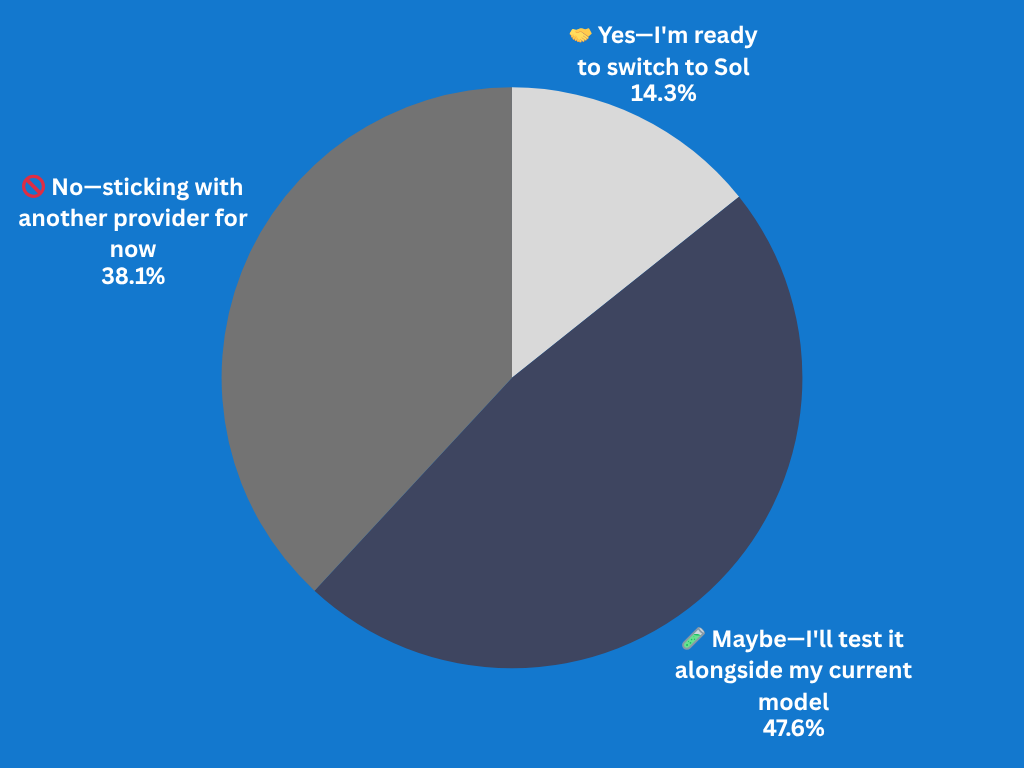
Results from Friday's Pulse Check |
Will GPT-5.6 change which model you use at work? |
|
|
|
Samsung Bets on Seaborne AI Servers |
Turns out the cloud is drifting... literally.
Samsung Heavy Industries has pinned Q2 2028 for the launch of its first 50 MW floating AI data-center barge and is already hunting for customer orders, company execs told TradeWinds recently.
Instead of retrofitting old ships, a strategy actively pursued by the Japanese partnership of Mitsui O.S.K. Lines and Hitachi, Samsung is building a purpose-built nearshore platform with server halls, liquefied natural gas (LNG) storage, and onboard power gear. Seawater handles the cooling, and shipyard assembly should slash permitting delays and land costs, though early units will still draw electricity from shore.
The gambit comes as AI workloads strain land-based campuses. Moody's pegs AI-infrastructure spending at up to $3 trillion by 2030, and competitors from Singapore's Keppel to Peter Thiel–backed, wave-powered startup Panthalassa are racing to deploy similar "bit barns" at sea.
|
Image via Samsung Heavy Industries |
To navigate uncharted marine regulations and ensure server stability against salt and vibration, Samsung has partnered with Lloyd's Register, Capital Clean Energy Carriers, and Supermicro. If Samsung hits its timeline and back-ports the blueprint to shipyards worldwide, it could open a new coastal real-estate class where megawatts roll off slipways instead of pouring concrete.
Samsung is banking on floating surface platforms to provide easier maintenance access than fully submerged underwater data centers developed by other tech giants. Yet whether bobbing on the surface or sealed on the seafloor, both oceanic models face brutal saltwater environments.
Investors still want proof that surface barges can survive typhoons and corrosion without racking up astronomical maintenance bills. Microsoft's earlier underwater tests proved that a sealed marine environment can significantly reduce equipment breakdowns, but the company pulled the plug in 2024 due to cost and scaling hurdles. While active subsea projects in China and South Korea are keeping that underwater dream alive, Samsung is betting that staying topside is the most viable route to commercial success
Hope they pack Dramamine for the GPUs. |
|
|
|
Engineering teams are being asked to move faster, innovate more often, and reduce risk at every stage of development. Join TechnologyAdvice and UST on July 22, 2026, at 11:00 AM ET for Engineering Intelligence: How AI is redefining Product Innovation and R&D. This exclusive discussion will explore how organizations are using AI-powered workflows, digital twins, and platform-led R&D strategies to accelerate product development and improve engineering outcomes. |
|
|
|
Leaked Server Maps 25K WordPress Backdoors |
An attacker left its WP-SHELLSTORM command-and-control server publicly browsable for three weeks, allowing researchers to copy their entire operational playbook—from exploit scripts and activity logs to victim lists—revealing 25,195 compromised sites already seeded with web-shell backdoors. Threat intel firm SOCRadar says at least 5,700 of these are still active.
Inside the 434 exposed files were scripts for 27 known CVEs. The most productive were Breeze Cache (CVE-2026-3844) and ThemeREX Addons (CVE-2026-1969), while Joomla's JCE extension vuln barely landed.
Crucially, the server also exposed a quieter, preceding campaign exploiting Apache Nacos (CVE-2021-29441) to siphon cloud and database credentials from enterprise Java environments. The operation's staging infrastructure is still beaconing. |
Image created with ChatGPT
|
If you run WordPress or Joomla, patch those plugins (Breeze users, patch immediately if your "Host Files Locally" setting is enabled), block the campaign's known IOC infrastructure, and hunt uploads for telltale filenames like .bd.php, down.php, or anything masquerading as a fake kernel thread (like [kworker]). Nacos admins: upgrade to 2.2.1+ and rotate exposed keys. Even crooks forget to lock the door; don't let their oops become your outage. |
Fake Job Invites Nab Google Logins |
Marketing pros are being lured by fake interview invites that impersonate Netflix, OpenAI, Coca-Cola, FIFA, and 30-plus other brands to steal Google account credentials.
Researchers at Team Cymru traced the five-month campaign to more than 34 lookalike domains. The emails arrive via HR platform PeopleForce, hop through Salesforce's ExactTarget and Wise Agent, then land on a cloud-hosted Netlify page that spins up a browser-in-the-browser Google prompt. Names and photos of real recruiters, plus personalized greetings, help the ruse slip past suspicion and security filters.
Job seekers should dodge email links, confirm roles on official career sites, use password managers (which conveniently refuse to auto-fill on fake pop-ups), and lock Gmail behind phishing-resistant MFA. Brands can watch for rogue imposter domains—think "adidas-hiring" or "careers-openai"—and kill them early.
AI might take your marketing job someday, but don't gift-wrap your inbox for scammers today. |
Music Giants Unveil 'AI-Generated' Warning Labels |
Recording-industry heavyweights, including the RIAA, IFPI, the Grammys, and SAG-AFTRA, launched two simple icons last Friday to tell listeners whether a track was fully "AI-Generated" or merely "AI-Assisted," and they're urging Spotify, Apple Music, Tidal, Deezer, and friends to bake the tags into every upload.
Platforms are already tiptoeing toward transparency: Deezer says 44% of daily uploads are now AI creations and tags them automatically; Apple Music asks labels to self-declare AI while its own detectors police fraud; Spotify tucks voluntary AI credits into song metadata; and Tidal goes further, flagging pure-AI tracks and stripping them of royalties altogether.
|
In theory, these tags could keep synthetic earworms from quietly diluting royalty pools and help fans decide whether that new single was sung by a human lung or a silicon one.
The catch, at least for now, is that disclosures are voluntary and strictly limited to audio recordings, completely ignoring AI-generated lyrics, compositions, and cover art. So, success hinges on whether streaming giants and distributors enforce the new badges or let the bots keep ghostwriting in the shadows.
Finally, your Release Radar might admit when a GPU wrote the hook. |
|
|
|
| Writer/Editor at TechnologyAdvice |
Justin Meyers is an investigative writer and editor who draws on over a decade of meticulous hands-on research to deliver the full, trustworthy story behind consumer and enterprise tech, including cybersecurity. |
|
|
|
Curious about where AI is really headed? |
The Neuron cuts through the noise to bring you smart, hype-free takes on the latest AI trends, tools, and breakthroughs. Join 700,000+ professionals from top companies like Microsoft, Apple, Salesforce, and more.
|
|
|
|
Advertise in Daily Tech Insider! Daily Tech Insider is a TechnologyAdvice business. © 2026 TechnologyAdvice, LLC. All rights reserved.
TechnologyAdvice, 3343 Perimeter Hill Dr., Suite 215, Nashville, TN 37211, USA. |
|
|
|
|