







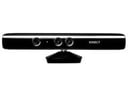
Microsoft’s Kinect for the Xbox 360 console was not only a commercial success for the company, it helped kick-start a 3D sensing, hardware-hacking movement. This year, the motion sensor’s Windows counterpart is being put out to pasture.
The Redmond, Wash.-based company released Kinect for Windows v2, based on the more advanced unit that is available for the newer Xbox One console, and its blog post.
Kinect sold like gangbusters after its November 2010 release. In just four months after the motion-tracking peripheral launched, Microsoft revealed that it has sold 10 million units, enough to be named the world’s fastest-selling consumer electronics device as confirmed by Guinness World Records.
While consumers scooped up Kinect, it was also popular among hardware hackers and tech enthusiasts.
The appearance of an open-source driver enabled PC users to access the Kinect’s sensors and 3D camera at a fraction of the cost of similar technologies. Despite some short-lived legal warnings from Microsoft, what followed was a flood of projects, including 3D scanners and robots that could navigate their surroundings.
This turned into an opportunity to explore the commercial prospects of the motion-sensing and gesture-control technology beyond the Xbox. Intense interest from developers and the tech community at large would later prompt Microsoft to release a version for Windows in 2012.
Soon, Kinect for Windows v2 will be left alone to pick up the slack.
As expected, the newer hardware is an improvement over its predecessor. “The new sensor provides a host of new and improved features, including enhanced body-tracking, greater depth fidelity, full 1080p high-definition video, new active infrared capabilities, and an expanded field of view,” stated the Kinect crew.
Kinect for Windows v2 also offers developers an opportunity to monetize their Kinect-enabled software innovations. “Likewise, SDK 2.0 offers scores of updates and enhancements, not the least of which is the ability to create and publish Kinect-enabled apps in the Windows Store,” they continued.
Of course, an upgrade may be out of the question for organizations that have based their solutions on the original Kinect for Windows.
“We hope everyone will embrace the latest Kinect technology as soon as possible, but we understand that some business customers have commitments to the original sensor and SDK,” wrote the Kinect Team. Microsoft’s advice: stock up now.
“If you’re one of them and need a significant number of original Kinect for Windows sensors, please contact us as soon as possible,” they advised. “We will do our best to fill your orders, but no more original sensors will be manufactured after the current stock sells out.”