Inbox invasion alert, Tech Insiders.
To Google, your private data is "context." To the hackers currently circulating 149 million passwords, it's a buffet. And to recruiters, your ability to manage it all is the new barrier to entry. Grab a hazmat suit—we're diving into the leak, the cleanup, and the new job requirements. |
|
|
Here's what you need to know today: |
|
|
Google's AI Mode Gets Personal |
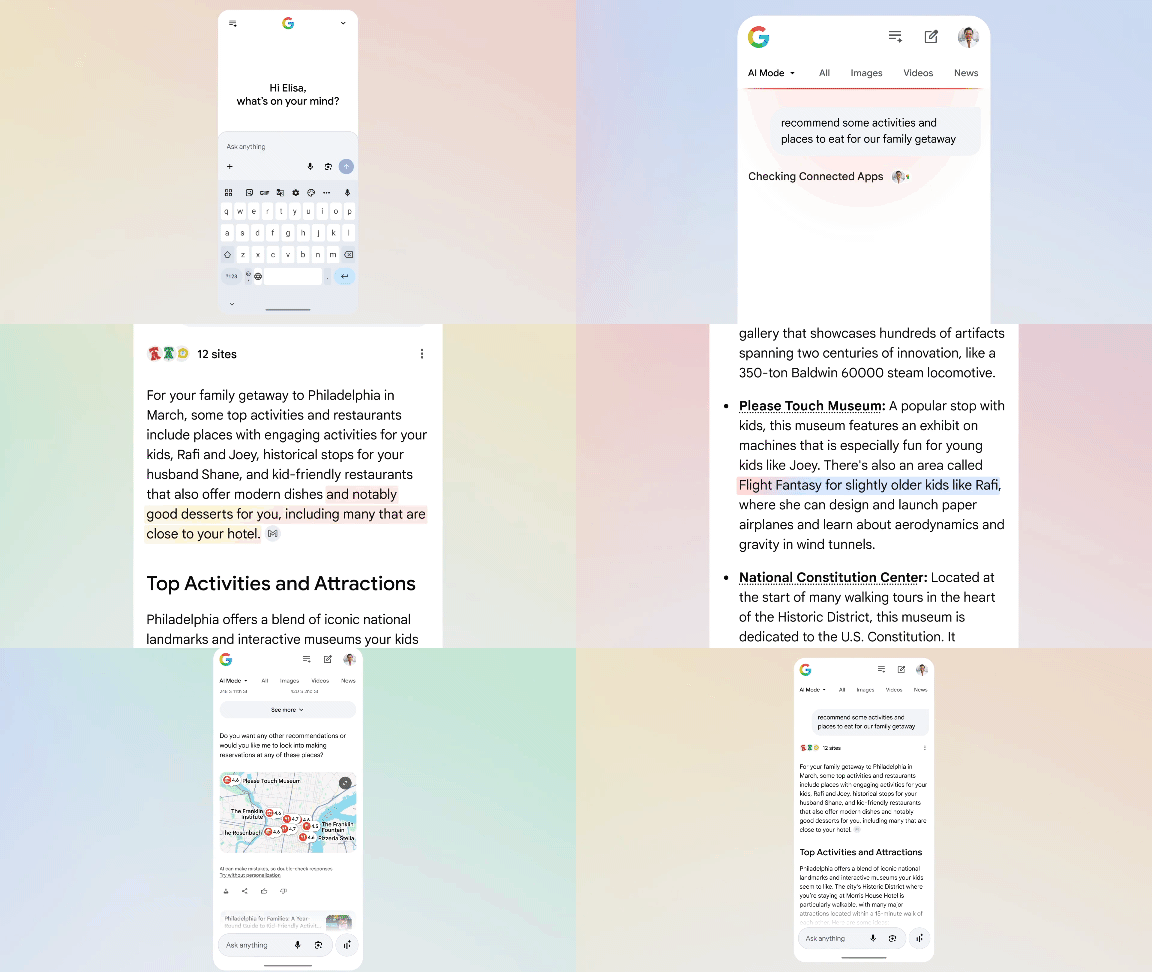
Google is rolling out Personal Intelligence in AI Mode, letting its Gemini-powered chatbot mine Gmail and Google Photos for instant context.
Opt-in US subscribers on the AI Pro and Ultra tiers can now flip a switch in Search settings to connect their inbox and photo library, so AI Mode can surface restaurant picks near the hotel it found in your confirmation email or suggest windproof coats before your March trip to chilly Chicago.
The company says Gemini 3 uses a one-million-token context window to "pack" relevant snippets, encrypts everything in transit, and won't train directly on your full inbox. Inline Gmail and Photos icons flag when personal data drives a recommendation, and a "Try without personalization" option lets you yank the intimacy cord.
|
Early testers rave about spot-on shopping tips, like one exec bought sneakers the bot spotted before he did, but Google admits mistakes happen. Tunnel-visioned AI might assume you're an espresso fiend after a single café snapshot or confuse your kid's soccer trophy pics for your own athletic ambitions. A thumbs-down feedback button (and the ability to disconnect at any time) aims to keep the creep factor in check.
Personal Intelligence is for personal Google accounts only; Workspace and education users will have to wait. A broader free rollout is expected eventually, but no date has been set.
Why it matters: With two billion Gmail users, Google is playing a card OpenAI can't match. If successful, this "context packing" tech turns Search into a true personal concierge, saving you from endless re-explanations. But giving a chatbot front-row seats to your private life raises fresh privacy jitters. Will the convenience outweigh the "ugh, that's my inbox" vibe?
|
|
|
Would you connect your Gmail and Photos to AI Mode? |
|
|
Results from Friday's Pulse Check |
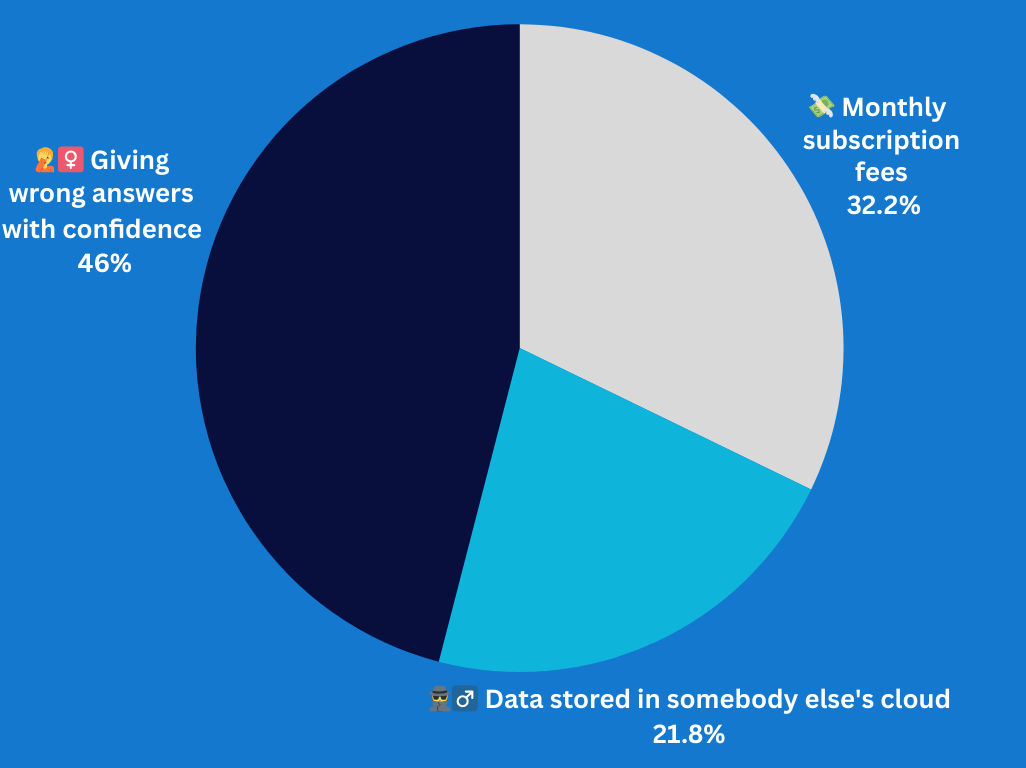
What's the biggest deal-breaker for you in a new AI assistant? |
|
|
AI Know-How Now a Prerequisite in 1 in 25 Jobs |
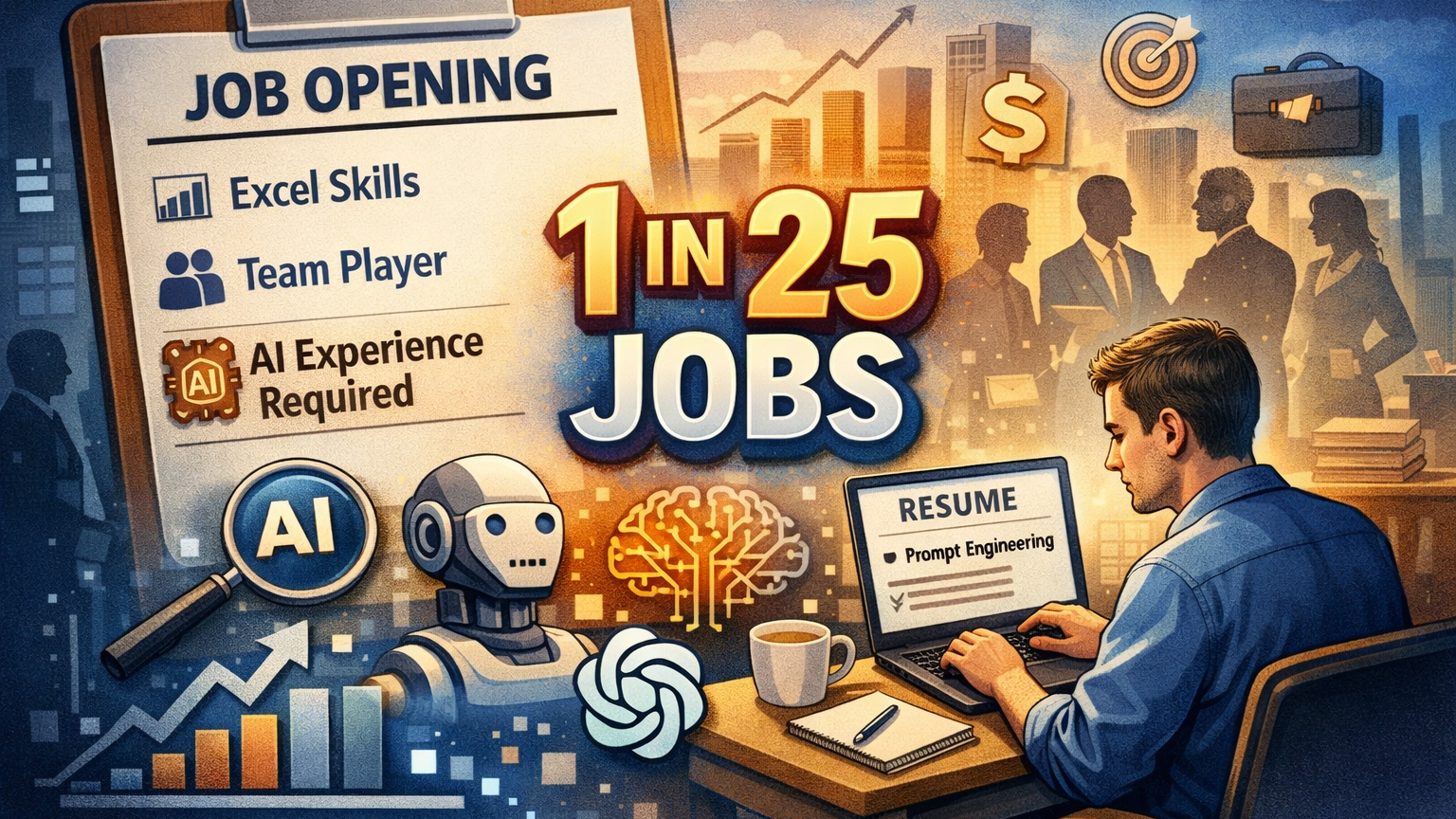
Time to wedge "prompt engineer" between "Excel" and "team player" on your résumé. A fresh January readout from Indeed's Hiring Lab shows artificial-intelligence lingo leaping off the tech pages and into the broader office ecosystem.
Mentions of "AI," "GenAI," and the like have ballooned 134% since 2020, even as total postings stalled, putting AI terms in a record 4.2% of all US listings—about 1 in every 25 ads. White-collar roles lead the charge, but HR, marketing, and finance are piling on fast.
Dig into the wording, however, and previous Indeed data reveals lots of vagueness. For example, "familiarity with AI" outnumbers specific tools like ChatGPT by a mile. In fact, roughly a quarter of these mentions may be purely "performative" corporate posturing.
|
Image created with ChatGPT |
Recruiters are mostly screening for comfort, not code, which tracks with McKinsey's November 2025 finding that 72% of on-the-job skills overlap tasks machines can share. No wonder a Microsoft and LinkedIn survey says 66% of bosses won't even interview candidates who lack AI chops.
Yet execution lags the hype. Slalom's 2025 AI Insights Survey says 93% of companies admit skills gaps are slowing real deployment, and half still run on creaky legacy systems.
Employers appear to be peppering postings with AI buzzwords in hopes that the right talent magically appears.
For job seekers, the signal is clear: highlight any bot-wrangling you've done, no matter your department, or risk the résumé black hole. Just don't scrub the "soft skills" entirely; while everyone is busy learning to prompt, data shows bosses are still desperate for humans who can actually think critically.
At this pace, "must be AI-fluent" could soon replace "able to lift 50 pounds." |
|
|
🚗 Drive AI Vehicle Insights, Win $100 Gift Card The AI-Driven Data, Analytics, and Cloud Modernization Survey asks for your expert take on autonomous-vehicle AI and security; finish the 5-minute poll to steer industry strategy and enter a $100 gift card drawing. 📝 Turn PDFs Into Editable Docs Forever
Snag PDF Converter & Editor: Lifetime License for $29.99 to batch convert, OCR, and tweak PDFs on Windows or macOS without limits.
📧 Compare Top Email Marketing Platforms Now Dive into the Best Email Marketing Software and find the tool that lifts open rates without lifting your budget. 🚀 Build Your Enterprise AI Blueprint
RELTIO delivers an agentic AI strategy road map that fast-tracks autonomous data agents and includes a free demo session to kick-start deployment.
💻 This section contains sponsored tech insights. Advertise with us! |
|
|
A Forced Platform Change Is a Strategic Moment |
|
|
149 Million Passwords Spill From Open Malware Database |
An unprotected 96-gigabyte cloud database packed with 149 million usernames and passwords, which included 48 million Gmail and 17 million Facebook logins, sat wide open online until researcher Jeremiah Fowler convinced the host to yank the plug.
The trove was a live feed from infostealer malware on user devices, logging emails, plaintext passwords, and exact login URLs for Netflix, Instagram, Yahoo, iCloud, TikTok, Outlook, Binance, and even .gov domains.
|
Image created with Nano Banana Pro |
Assume your credentials are out there. Run antivirus scans first to boot any infostealer (otherwise they'll just steal the new keys), then change priority passwords and turn on 2FA. Your dog's birthday is not a strong master password—let a manager randomize it instead. |
New Malware Tricks Windows Into Disabling Defender First |
A new malware blitz targeting Russian orgs, first detailed by Fortinet, starts with benign-looking accounting docs. One click fires a hidden loader that fetches scripts from GitHub, payloads from Dropbox, and commands via Telegram; no exploits needed.
The real trick repurposes research tool Defendnot to register a fake antivirus, prompting Windows Security Center to disable Defender itself. Registry tweaks then silence safeguards, erase shadow copies, and kill recovery options before unleashing Amnesia RAT and Hakuna Matata ransomware.
To survive, block .lnk attachments, enable Tamper Protection (it blocks most tweaks, though admin-level attacks can still slip through), and keep offline backups. Windows can't disable your paranoia, so inspect every "invoice" before you click. |
YouTube Declares War on 'AI Slop' in 2026 |
YouTube's annual road map puts a giant target on the flood of low-quality, auto-generated "AI slop" clogging recommendation feeds.
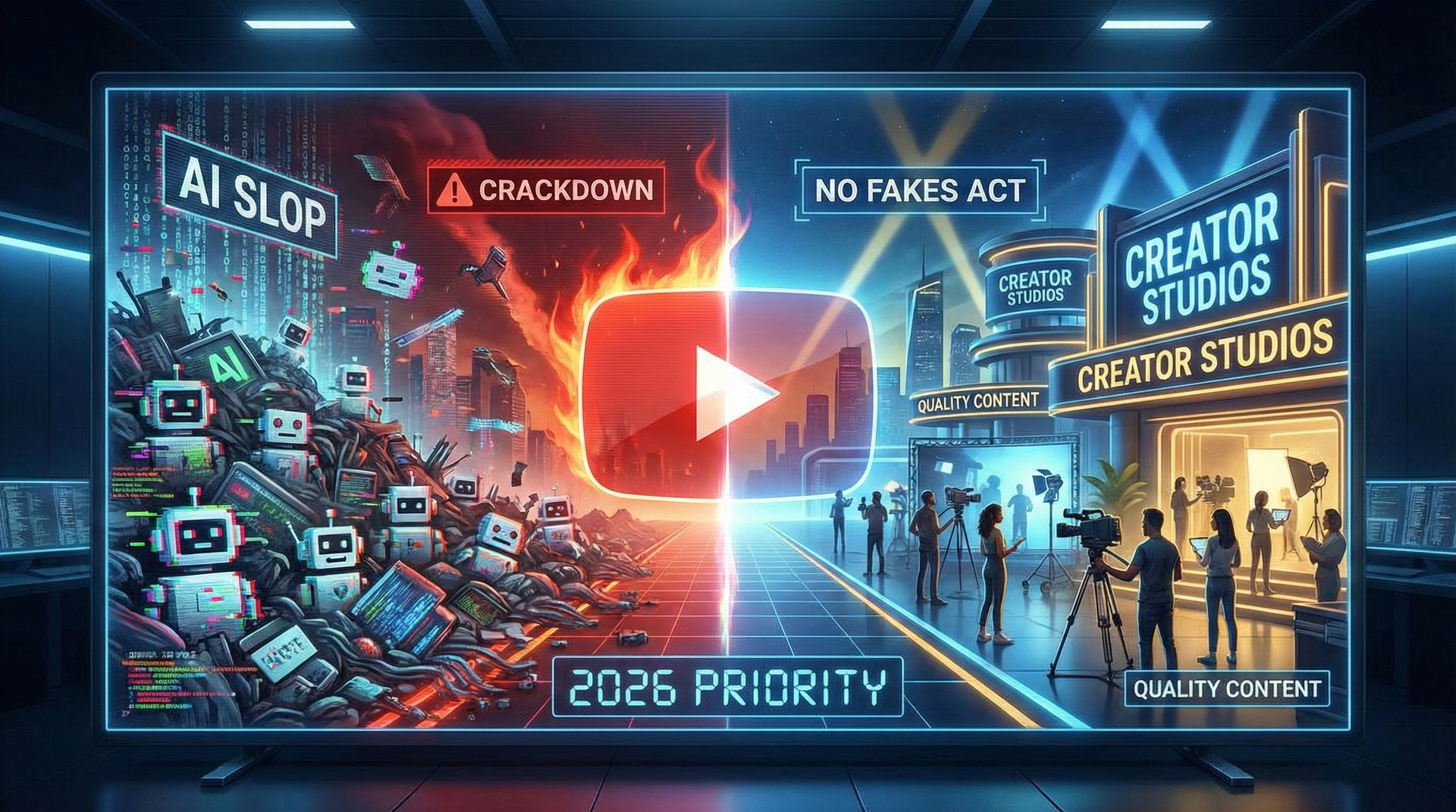
CEO Neal Mohan says fighting AI-generated content is a top 2026 priority after research showed up to a third of fresh-account videos are synthetic junk. Yet, on average, over a million channels used YouTube's own AI tools every day in December.
The plan includes tougher disclosure rules, Content ID-style likeness protection, deeper demotion of repetitive spam, and support for legislation like the NO FAKES Act.
The crackdown arrives as YouTube attempts to bifurcate the platform, eliminating brainrot while elevating top creators to studio status. Mohan explicitly notes creators are now "buying studio-sized lots in Hollywood," signaling the end of the UGC era. |
Image created with Nano Banana Pro |
This pivot explains why YouTube is simultaneously doubling down on generative tech. Creators will soon spin up Shorts starring AI versions of themselves, whip up games or backing tracks from text prompts, and sell merch through friction-free in-app checkout.
Meanwhile, Shorts pulls 200 billion daily views, YouTube TV is adding custom multiview, and new parental timers can zero out kids' doom-scrolls.
How big is the shakeup? It's a cleaning of the house. If YouTube's filters work, millions in slop-channel ad revenue, which Kapwing pegs at $117 million a year, could evaporate, clearing the stage for the new class of creator studios.
Basically, if your business model relies on deepfaked cats narrating Wikipedia articles, consider this your eviction notice. |
|
|
|
Writer at TechnologyAdvice |
Justin Meyers is an investigative writer and editor who draws on over a decade of meticulous hands-on research to deliver the full, trustworthy story behind consumer and enterprise tech, including cybersecurity. |
|
|
Curious about where AI is really headed? |
The Neuron cuts through the noise to bring you smart, hype-free takes on the latest AI trends, tools, and breakthroughs. Join 500,000+ professionals from top companies like Microsoft, Apple, Salesforce and more.
|
|
|
Advertise in Daily Tech Insider! Daily Tech Insider is a TechnologyAdvice business.
© 2026 TechnologyAdvice, LLC. All rights reserved. TechnologyAdvice, 3343 Perimeter Hill Dr., Suite 215, Nashville, TN 37211, USA. |
|
|
|