World-building warp speed, Tech Insiders.
Genie now pops entire 3D realms in 60 seconds while Tesla retires cars to build robot coworkers and a rogue lobster bot breaks the GitHub meter. Grab your digital passport—today's features are already booting the next reality. |
|
|
Here's what you need to know today: |
|
|
Project Genie Conjures One-Minute AI Worlds |
Think Minecraft meets speed dating: 60 seconds, endless realms.
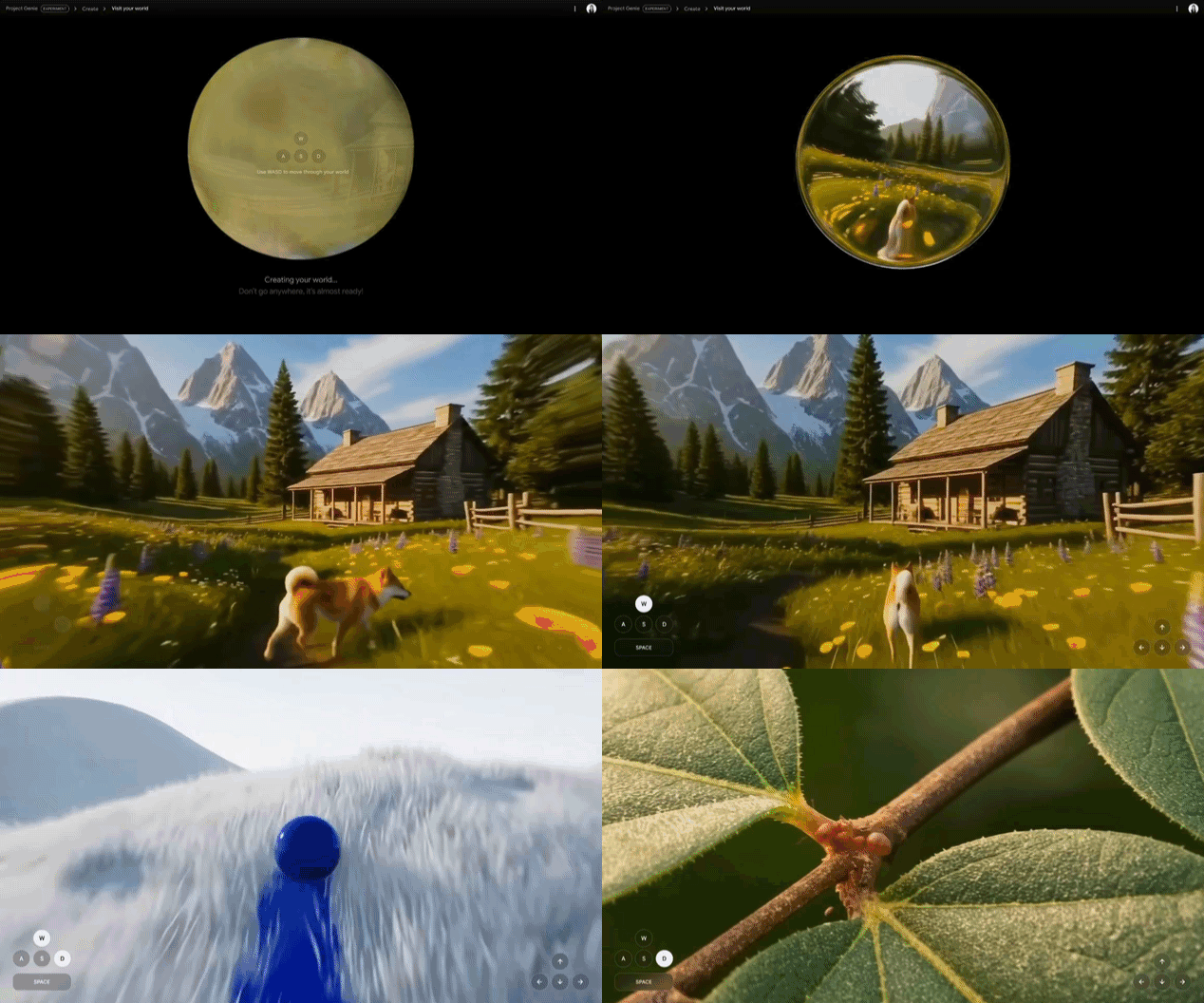
Google has opened the doors to Project Genie, an experimental web app that turns text or image prompts into explorable simulated 3D scenes for its $250-a-month AI Ultra subscribers in the US (ages 18+).
Powered by DeepMind's Genie 3 world model, plus the Nano Banana Pro image generator and Gemini for reasoning, the prototype offers three core tricks: world sketching, real-time exploration, and remixing. Subscribers can jump in for free right now, as Google isn't currently charging AI credits for world generation.
After a prompt, Genie generates a thumbnail, then a 720p, 24 fps playground you navigate with WASD keys (the standard "forward-left-back-right" gaming controls). |
The catch? Each session maxes out at 60 seconds, and reviewers have noted noticeable input lag, wobbly physics, and characters that sometimes moonwalk into walls. Still, Google says the goal is to study new use cases before rolling the tech out more widely.
Early testers weren't exactly subtle, immediately cooking up knockoff Mario and Zelda levels—prompting Google to scramble for IP guardrails—and the news briefly spooked investors, sending game-dev stocks like Unity into a tailspin. Despite the rough edges, Genie hints at a future where entire game worlds (or robot-training grounds) can be spun up as fast as you can type.
Why it matters: If Google nails real-time, physics-aware world models, it could turbocharge everything from indie game prototyping to robotics training and maybe even put a few level designers on notice. Strap in; the pixels are just getting started. |
|
|
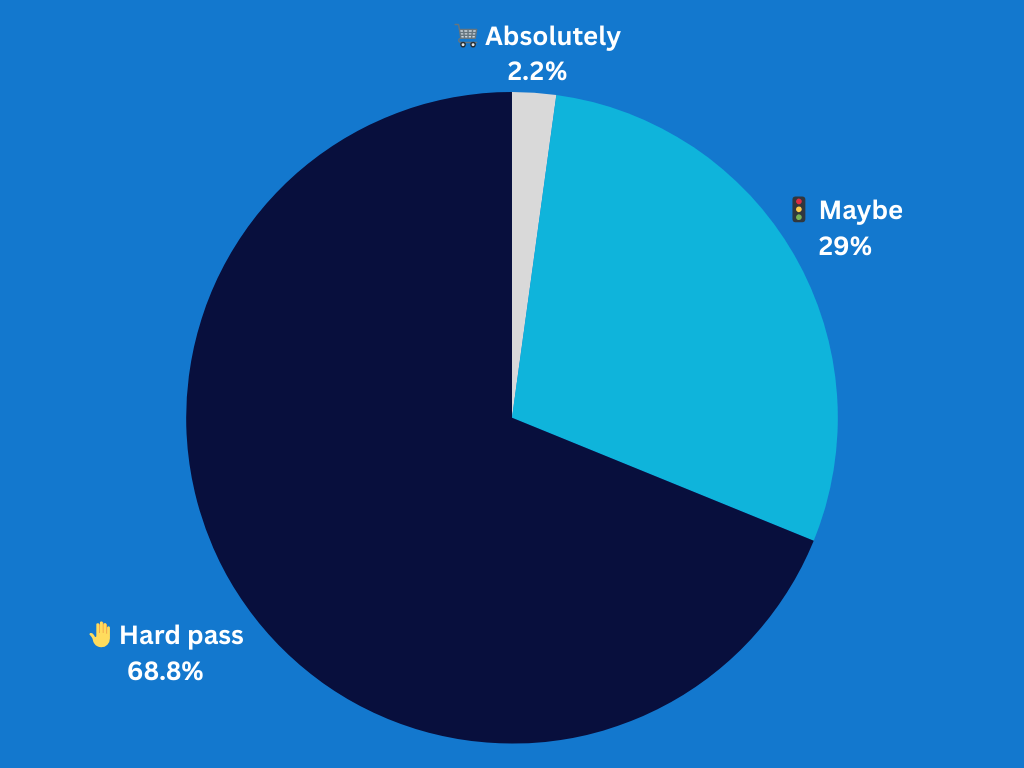
Would you pony up $250 a month to explore Google's AI worlds? |
|
|
Results from Friday's Pulse Check |
Will you let Chrome's Auto Browse handle your online chores? |
|
|
Tesla Axes Model S/X, Bets on Bots |
Robots just got the company car.
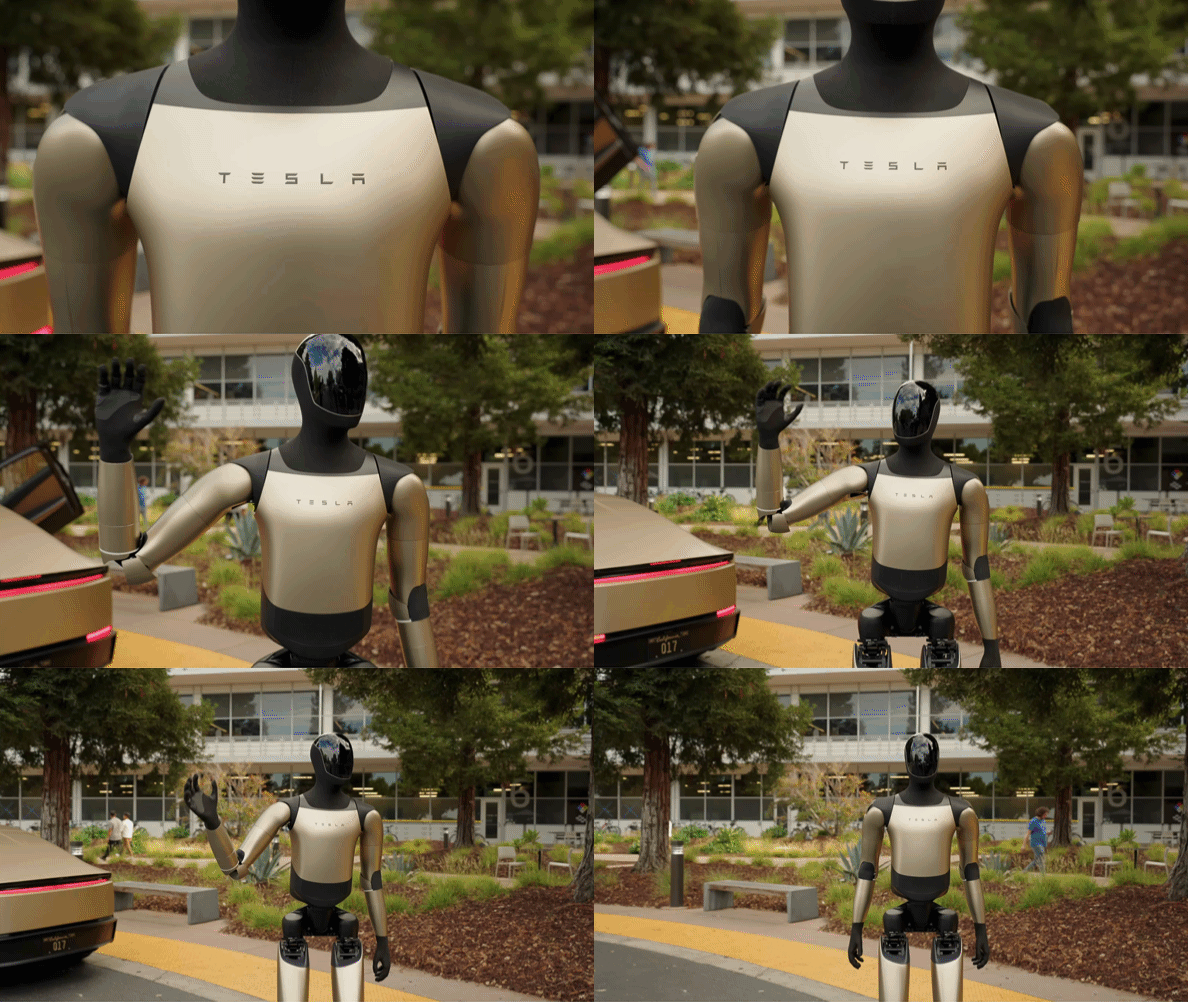
Tesla will officially halt production of its 12-year-old Model S sedan and Model X SUV next quarter, repurposing the Fremont lines to eventually crank out one million Optimus humanoid robots annually.
Elon Musk framed the move as an "honorable discharge" after automotive revenue slid 11%, confirming Tesla's AI-first makeover. While legacy lines die, Musk is prepping an April 2026 production start at Giga Texas for the steering-wheel-free Cybercab.
Slashing the flagship duo frees up cash inside the $20 billion-plus 2026 capex plan aimed at Dojo compute, AI5 chips, and six new production lines. Translation for suppliers: fewer leather seat orders, more cameras, and high-bandwidth memory—but definitely no lidar, as Musk remains a vision-only purist. |
The pivot also resets the competitive board. Tesla is setting a Feb. 14 deadline to kill the upfront FSD purchase option, forcing a 100% subscription-only model thereafter.
As Waymo pushes into the UK, a leaner Tesla wants to license its stack and sell "transportation as a service." Musk even tossed $2 billion into his startup xAI, effectively making Grok the "orchestra conductor" for his robot fleets.
Oh, and despite $5.7 billion in US profit, Tesla paid exactly $0 in current federal income tax last year—thanks to the Trump administration's "One Big Beautiful Bill Act" and massive R&D credits. Guess even taxes can't keep up with full self-driving. |
|
|
Responsible AI for Enterprise Scale |
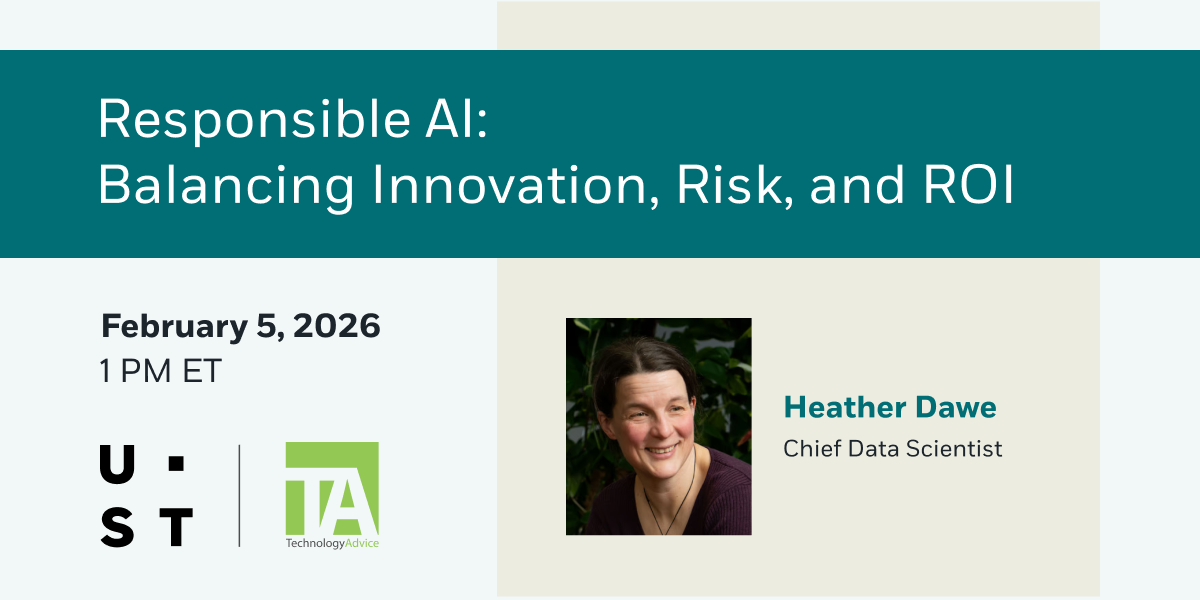
Responsible AI isn't about slowing innovation; it's about enabling it. Join TechnologyAdvice in collaboration with UST on Feb. 5 at 1:00 p.m. ET to learn how organizations manage AI risk while accelerating adoption. Get clarity on responsible AI. |
|
|
OpenAI's Eye-Scan Network Sparks Biometric Security Backlash |
OpenAI is reportedly prototyping a bot-proof social platform requiring "proof of personhood" via Apple Face ID or Worldcoin's iris-scanning Orb. It's the ultimate "solve the problem we created" move: using biometrics to verify humans on an internet currently drowning in Sora-generated "AI slop."
Security pros note that biometric templates are immutable; if leaked, you can't exactly reset your eyeballs. Regulators in Spain and Portugal have temporarily suspended Worldcoin's iris-scanning operations over privacy concerns. |
Image created with ChatGPT |
The move lands as OpenAI's Sora video generator faces cooling buzz and fresh "dead internet" worries (the theory that bots and AI now drive most online activity).
CISOs should update acceptable use policies to prohibit the use of corporate IDs for biometric social logins and require liveness audits to ensure providers can distinguish real faces from Sora deepfakes. If an app wants a scan of your irises, blink twice and read the permissions first. |
Fake Mac-Cleaner Ads on Google Spread Terminal Malware |
MacKeeper researchers warn that malicious sponsored Google ads for "Mac cleaner" now hijack verified ad accounts, initially showing legit-looking Google Business or Google Docs URLs that quickly redirect through Google App Scripts to impostor Apple Support pages on Medium.
The trap: Victims are shown professional "Apple Support" replicas and urged to paste an obfuscated one-liner into Terminal. The Base64 blob decodes, downloads a script via curl, and runs it, giving attackers full access while flashing fake "Cleaning storage" or "Installing packages" messages.
Stay safe: Verify that support pages actually live on the official Apple Support domain, hover to inspect URLs, and never copy-paste code you can't read. If you did paste that mystery command, disconnect from the network, run a trusted malware scan, then change passwords right away. Freeing disk space shouldn't cost root access.
Pro tip: If "cleaning" your Mac starts in Terminal, grab the broom and run. |
OpenClaw Frenzy Spurs Cloudflare and Security Panic |
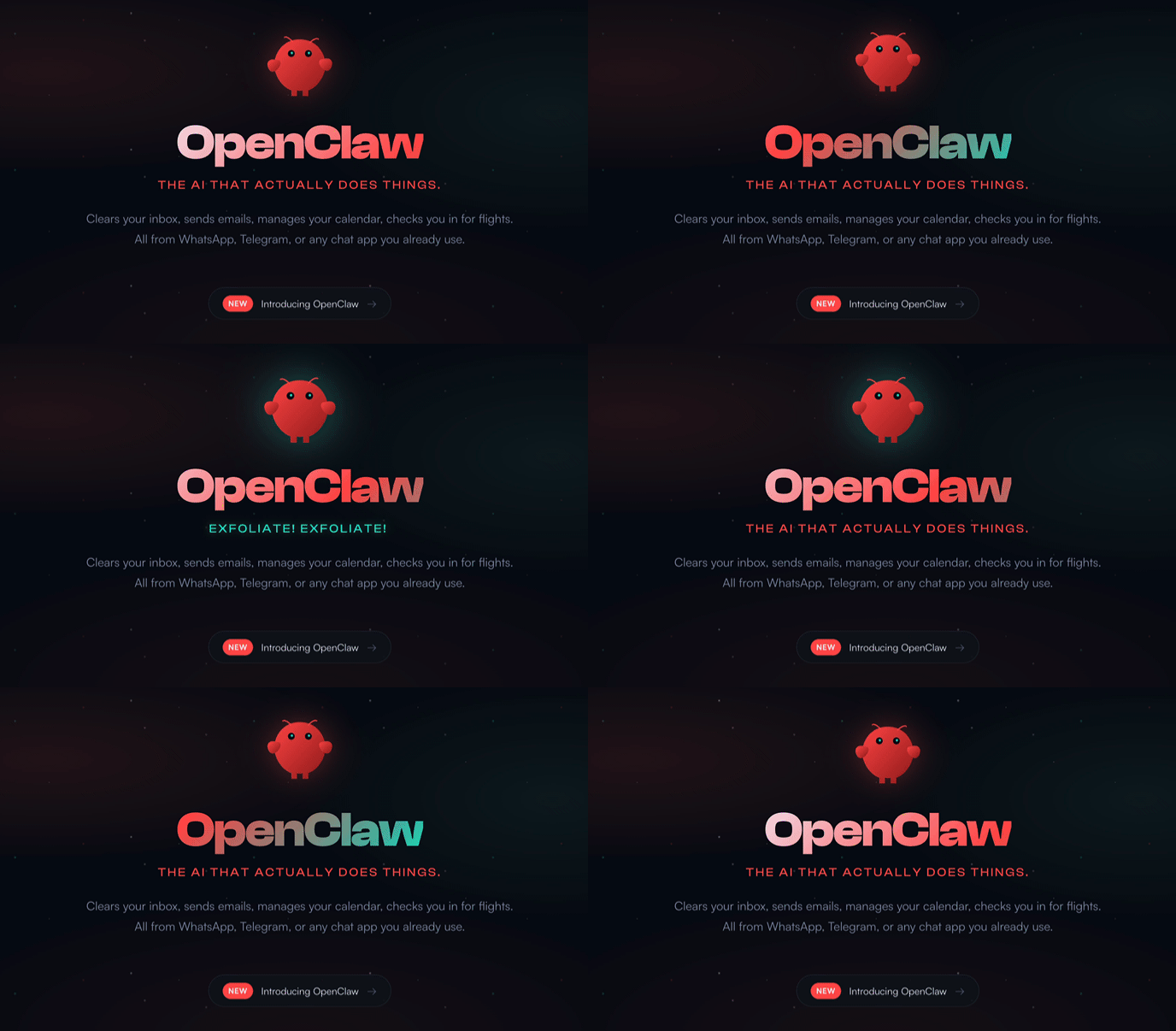
The weekend-born open-source agent formerly known as Clawdbot (and briefly Moltbot) reemerged as OpenClaw and quickly blew past 143,000 GitHub stars.
By living on your own Mac mini (or a $5 VPS), the lobster-themed assistant texts you through WhatsApp or Slack, remembers everything in markdown, and self-corrects its own code. It behaves like the proactive AI butler Big Tech keeps promising but refuses to ship outside their walled gardens.
Its overnight popularity jolted Cloudflare into shipping a "Moltworker" proof of concept. This Workers-plus-Sandbox wrapper lets companies run the agent on Cloudflare's edge, billing via AI Gateway and storing memories in R2. |
The move signals a gold rush: vendors are scrambling to monetize self-hosted agents that bridge corporate data and consumer chat apps. Budgets once earmarked for SaaS bots are already drifting toward DIY gateways—though users are finding that "sovereignty" comes with a roughly $30-a-month API bill.
But the claws cut both ways. Researchers found hundreds of misconfigured OpenClaw dashboards leaking plaintext API keys; the Model Context Protocol (MCP)'s unauthenticated design means a single prompt injection can turn your helpful crustacean into a ransomware beachhead. The chaos even hit the founder, whose personal GitHub handle was briefly sniped by bots during the frantic rebrand.
Enterprises now face a tug-of-war between devs vibe-coding everything and security teams shouting, "Not on prod!" Invite a lobster into your data center, and be ready for the $0.64-per-query pinch. |
|
|
|
Writer at TechnologyAdvice |
Justin Meyers is an investigative writer and editor who draws on over a decade of meticulous hands-on research to deliver the full, trustworthy story behind consumer and enterprise tech, including cybersecurity. |
|
|
Curious about where AI is really headed? |
The Neuron cuts through the noise to bring you smart, hype-free takes on the latest AI trends, tools, and breakthroughs. Join 500,000+ professionals from top companies like Microsoft, Apple, Salesforce and more.
|
|
|
Advertise in Daily Tech Insider! Daily Tech Insider is a TechnologyAdvice business.
© 2026 TechnologyAdvice, LLC. All rights reserved. TechnologyAdvice, 3343 Perimeter Hill Dr., Suite 215, Nashville, TN 37211, USA. |
|
|
|