Controlled chaos today, Tech Insiders!
Anthropic is opening its most powerful Claude model to the public with safety guardrails attached, while Nvidia and LG push AI deeper into factories, robots, and cars. Keep your badge visible; we're entering the era of supervised supermodels and machines that want a shift on the factory floor. | |
|
|
Here's what you need to know today: |
|
|
|
Anthropic Puts Fable 5 on a Leash |
Turns out even frontier AI needs a chaperone when it starts poking around codebases, viruses, and cybersecurity systems.
Anthropic is giving the public access to Claude Fable 5, its most capable widely released model yet, but not the fully unlocked Mythos version.
The launch lands just after Anthropic urged major AI labs to create a coordinated brake pedal for frontier AI development, warning that systems may soon move toward recursive self-improvement.
Fable 5 shares the same capabilities as Mythos 5, Anthropic's restricted model for Project Glasswing partners and select biologists, but adds safety classifiers. Requests related to cybersecurity, biology, chemistry, or model distillation can route to Claude Opus 4.8. Anthropic says over 95% of Fable sessions avoid fallback.
Despite 1,000+ hours of bug-bounty probing, red-teamers found no universal jailbreak, though testers still gripe that strict filters sometimes block basic IT defenses. |
Anthropic pitches Fable 5 as power with supervision—touting leads in coding, knowledge work, vision, scientific research, and long-context tasks—and says Stripe even used it to migrate 50 million lines of Ruby in a single day (a task that would normally take two months).
Fable 5 is already ubiquitous, now available across AWS, GitHub Copilot, Microsoft Foundry, Snowflake, and Databricks platforms.
The tradeoff is cost and control. Fable 5 and Mythos 5 cost $10 per million input tokens and $50 per million output tokens, about twice as much as Opus 4.8. Fable is included on paid and Enterprise plans through June 22, then moves to usage credits. Anthropic is also requiring 30-day data retention for Mythos-class traffic. Why it matters: Anthropic is turning frontier AI into a managed substance. Users get more capability, but the fine print now includes trigger-happy filters, fallback routing, premium pricing, and retention rules because apparently even the chatbot needs a hall monitor. |
|
|
|
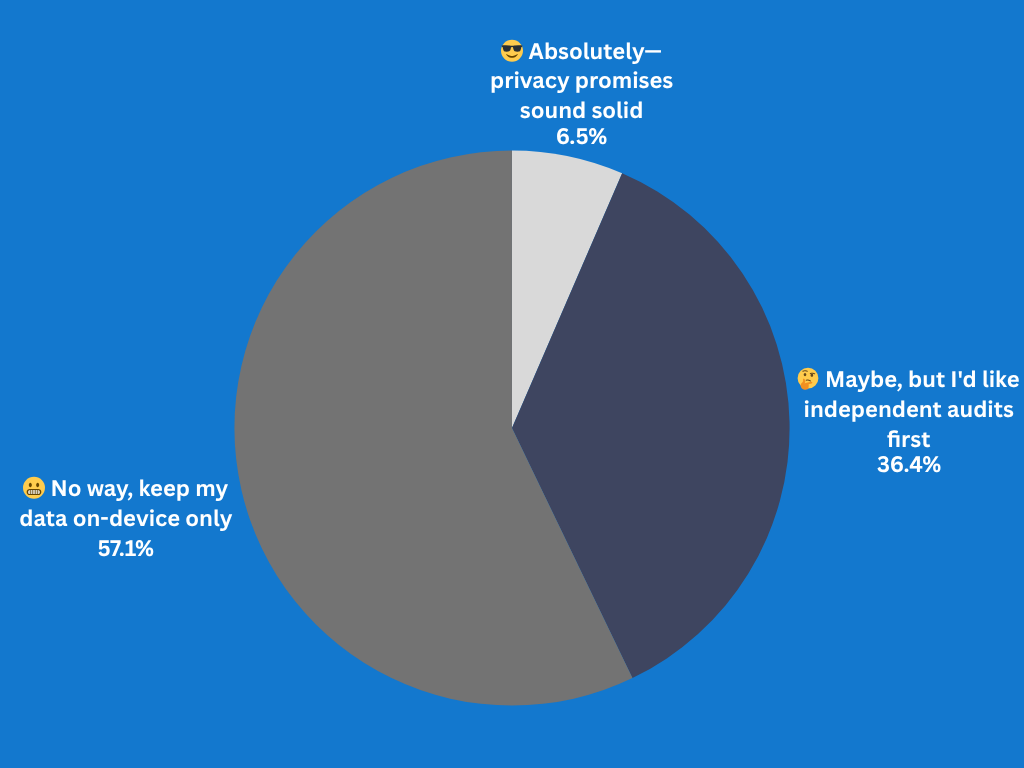
Is Anthropic moving fast or being careful with Fable 5? |
|
|
|
Results from Yesterday's Pulse Check |
Would you trust Apple's Google-powered cloud nodes with your private prompts? |
|
|
|
LG Taps Nvidia to Bring AI Into Factories and Cars |
Because the next chatbot might wear a hard hat.
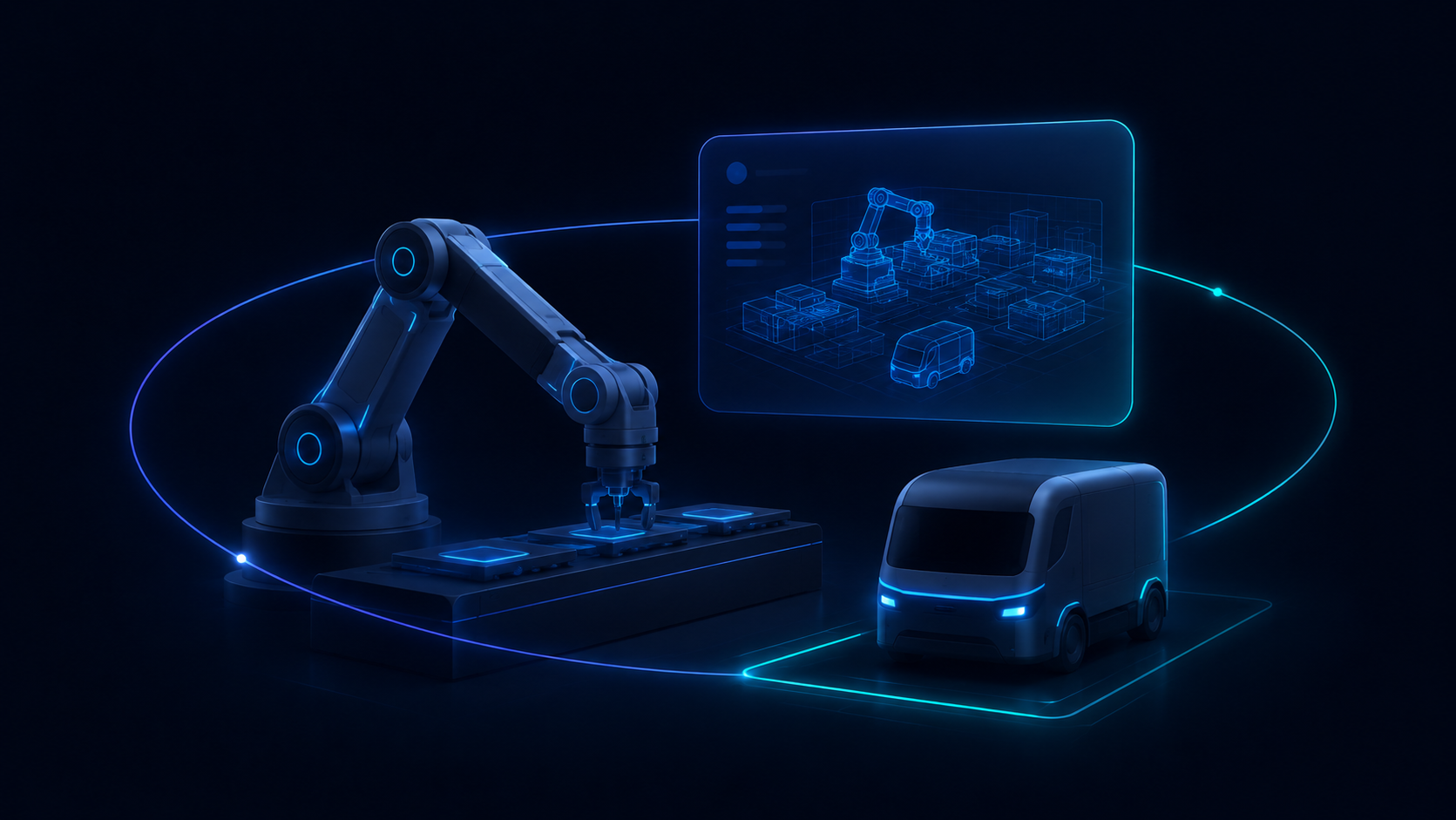
Nvidia and LG are teaming up to move AI from software demos into machines, factories, and self-driving systems. The partnership centers on an "AI factory" that will support model development, robot simulation, digital twins, and industrial AI workflows across LG's manufacturing and product operations.
The deal gives LG access to Nvidia's computing systems, simulation tools, robotics platforms, and autonomous-vehicle stack. In return, Nvidia gets another major customer building physical AI on top of its infrastructure, rather than just buying chips and calling it a day. |
Image created with ChatGPT |
LG wants the system to support autonomous manufacturing across its product lines, with AI touching everything from procurement to customer delivery. Nvidia's Isaac Sim, Isaac Lab, and Isaac GR00T platforms will help LG train and test robots in virtual environments before deploying them in the real world. For mobility, Nvidia will provide DRIVE Hyperion and DRIVE AGX to support LG's driver-assistance and in-vehicle AI systems.
The partnership also extends to LG AI Research, where Nvidia will help advance EXAONE, LG's in-house AI model family. That gives the deal a broader shape: Nvidia supplies the AI operating layer, while LG turns it into consumer products, factory systems, and mobility tools.
The financial terms were not disclosed, but the strategic direction is clear. Nvidia is positioning itself as the backbone for companies trying to bring AI into the physical world, while LG gets a faster path into robotics and autonomous manufacturing. Let's see whether the AI factory builds the future or just a very expensive digital twin of it. |
|
|
|
🤝 Compare Top CRM Picks for 2026
The Best CRM Software of 2026 roundup benchmarks leading platforms, helping your team choose a customer-winning tool that fuels sales growth.
🛡️ L'intelligence artificielle souveraine expliquée : ce que les entreprises doivent savoir Lisez l'article sur The Neuron. 💻 Score a Refurb MacBook Air for Pennies
Apple MacBook Air (2018) 13" i5 Gray (Refurbished) with 1.6 GHz processor, 8 GB RAM, and a 128 GB SSD delivers 12-hour battery life and impressive speed for about $260—78% off the original price. 💻 This section contains sponsored tech insights. Advertise with us! |
|
|
|
IAM Stops at Sign-In. Your Credentials Don't. |
Most identity strategies stop at authentication—but credentials continue to spread across browsers, apps, devices, scripts, and shared workflows. That creates security blind spots IT teams can't afford to ignore. Learn why modern credential security requires visibility and control beyond traditional IAM, and what organizations can do to reduce credential sprawl without slowing teams down. |
|
|
|
Ghost-Sender Lets Hackers Fake Any Exchange Email |
A newly discovered misconfiguration dubbed Ghost-Sender lets attackers send spoofed messages straight into Microsoft 365 inboxes.
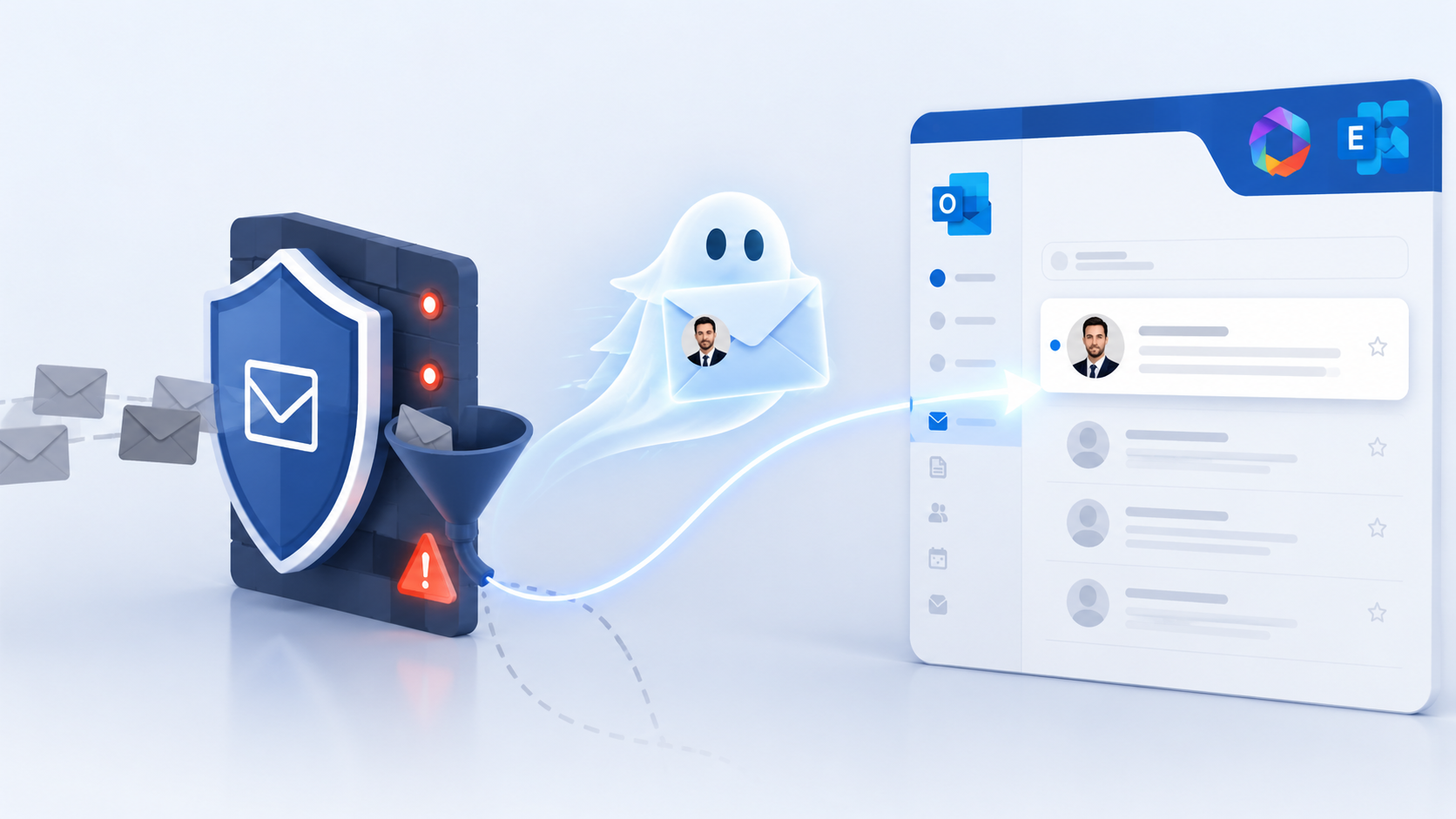
The flaw hits organizations using Exchange Online or hybrid Exchange setups with an external MX record—such as a third-party spam filter or mail gateway—because Exchange still accepts mail sent directly to its Exchange Online Protection (EOP) endpoint, bypassing SPF, DKIM, and DMARC checks. |
Image created with ChatGPT |
Researchers spoofed noreply@microsoft.com and saw Outlook render profile photos; Microsoft support says the exploit is active, and InfoGuard’s scanner shows over 20% of tested domains remain vulnerable. Fewer than half of exposed Exchange Online environments using external MX records appear to have mitigations in place.
Admins should restrict direct inbound delivery with a partner connector validated by IP address or certificate, or add a priority mail-flow rule that quarantines any message arriving outside approved gateway paths. Then, disable Direct Send for good measure. Trust the mail route, not the sender photo. |
China, North Korea, and AI Crime Gangs Target IT Firms |
CrowdStrike's 2026 Technology Threat Landscape Report warns that technology companies are getting squeezed from three sides: China-linked IP theft, North Korean fake-worker schemes, and AI-accelerated cybercrime.
Between April 2025 and March 2026, China-backed hackers targeted the tech sector more than any other industry, likely to support Beijing's push for technological self-sufficiency. Campaigns included Murky Panda's password-spraying attacks on Microsoft Azure customers, targeting more than 340 mostly US organizations.
North Korea brought volume. CrowdStrike said Famous Chollima accounted for 47% of all state-linked hands-on-keyboard intrusions against tech firms, using fake remote IT worker roles to access companies, deploy malware, and steal cryptocurrency from blockchain developers.
AI is speeding things up, with attackers using automation to write credential-stealing scripts and erase forensic evidence faster. Verify remote workers, lock down developer environments, and audit cloud credentials now.
The next breach may start with the "new contractor" in Slack. |
IC3 Researchers Warn Crypto Won't Fix AI Agents |
A new research paper from the Initiative for CryptoCurrencies and Contracts (IC3, not to be confused with the FBI's Internet Crime Complaint Center) argues that crypto's role in solving AI's biggest problems is much narrower than boosters suggest, even as companies race to put autonomous agents on-chain.
The report, written by researchers from universities including Cornell, Carnegie Mellon, Princeton, Yale, and ETH Zurich, challenges claims that blockchain can reliably identify AI-generated content, remove algorithmic bias, or create fully autonomous agents. A wallet, the researchers note, does not make an AI system smarter or harder to manipulate.
What it does enable is automation. |
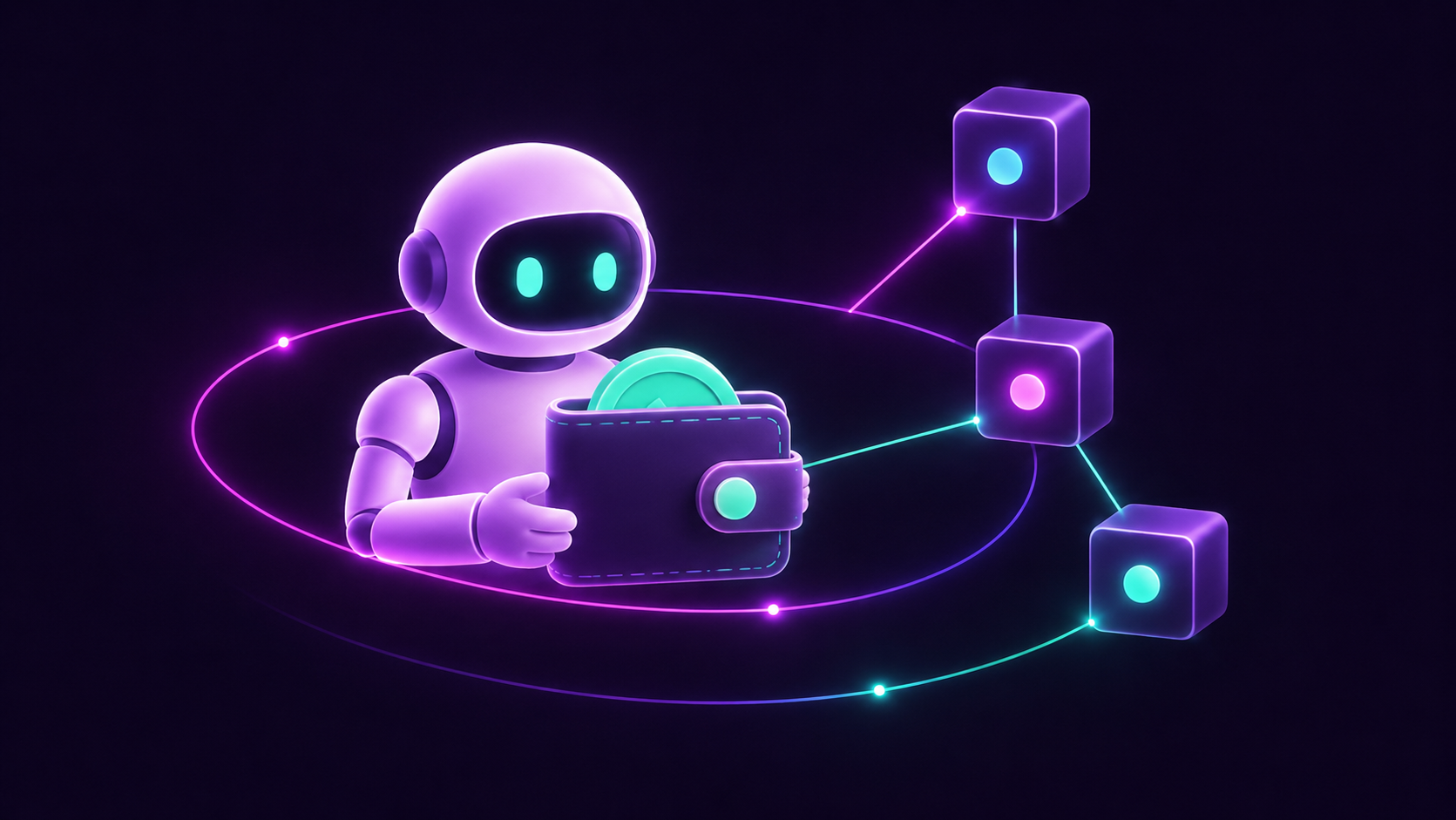
Image created with ChatGPT |
AI agents can use crypto wallets to make payments, trade, and call on-chain infrastructure without step-by-step human approval. That's why MetaMask just launched a noncustodial agent wallet, while Robinhood plans to let users trade crypto through agents.
The survey warns that some models can already spin up fresh local copies of themselves, a step toward agents that could dodge shutdown once they also control wallets, APIs, and social accounts. Add crypto markets, and the worry shifts from annoying bots to self-funded agents chasing resources, liquidity, and influence without a clean off switch.
Crypto may help AI agents pay their bills. But it won't teach them judgment, ethics, or when to log off. |
|
|
|
| Greg Parker is a cybersecurity and emerging tech writer who explores the intersection of digital risk, human behavior, and innovation across sensing and security technologies. |
|
|
|
Curious about where AI is really headed? |
The Neuron cuts through the noise to bring you smart, hype-free takes on the latest AI trends, tools, and breakthroughs. Join 700,000+ professionals from top companies like Microsoft, Apple, Salesforce, and more.
|
|
|
|
Advertise in Daily Tech Insider! Daily Tech Insider is a TechnologyAdvice business. © 2026 TechnologyAdvice, LLC. All rights reserved.
TechnologyAdvice, 3343 Perimeter Hill Dr., Suite 215, Nashville, TN 37211, USA. |
|
|
|
|