All hands on deck, Tech Insiders.
Robots are gaining real fingers, earbuds are sprouting eyes, and browsers are battling bugs and boarders while AI trims payrolls. Hoist the sails before the machines commandeer the ship. |
|
|
|
Here's what you need to know today: |
|
|
| Genesis AI's 'Robot Brain' Delivers Human Touch |
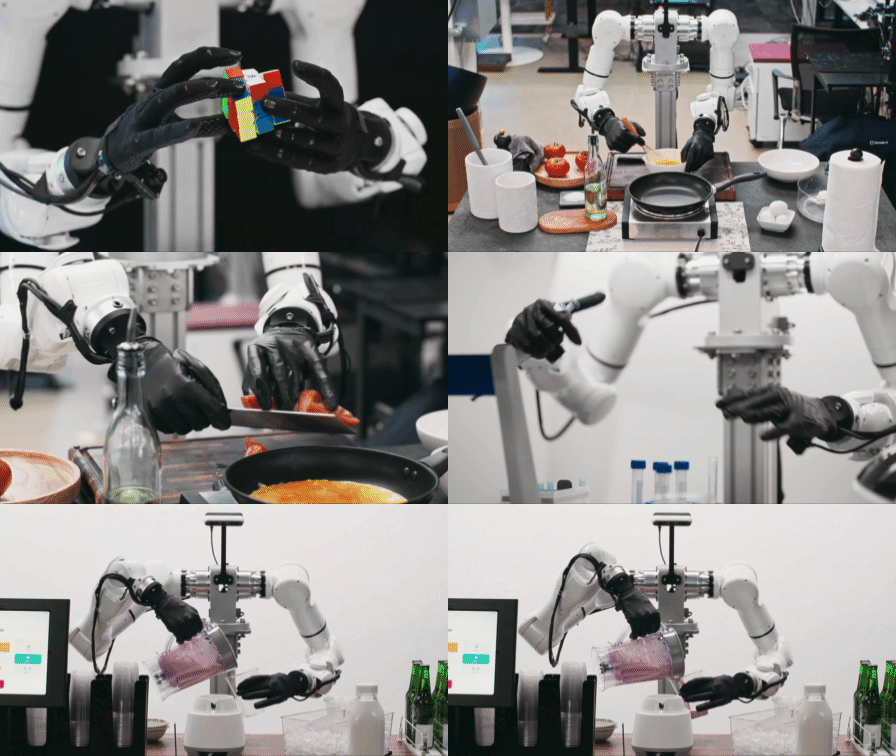
Last week, Genesis AI unveiled GENE-26.5, a multimodal foundation model paired with a set of human-sized robotic hands (built with Chinese partner Wuji Tech). Each hand boasts 20 degrees of freedom (DOF) to mimic our own digits.
Attached to robotic arms, the complete 54-DOF bimanual system chopped tomatoes, cracked an egg, assembled wire harnesses, pipetted lab samples, solved a Rubik's Cube, and jammed on a piano in demo videos—all at real-time speed. (Though to be fair, CEO Zhou Xian admits the egg-cracking success rate hovered around a messy 50%–60%.)
|
Unlike earlier grippers, GENE-26.5 learns from human motion data captured with an inexpensive sensor glove, along with heaps of egocentric and internet video. A high-fidelity simulator stress-tests the model before a single real bolt moves.
Backed by $105 million in seed funding and investors like Khosla Ventures and Eric Schmidt, the Franco-Californian startup is eyeing European factories and labs where delicate tasks still stump traditional robots. Its full-body general-purpose bot is promised "soon," but these hands signal a leap toward plug-and-play robotics.
Why it matters: If a humanoid can juggle eggs, wires, and beakers with bimanual, five-fingered hands, it can work inside economies designed for people. That could accelerate automation from warehouses to home kitchens, while forcing us to decide how human-like we want our mechanical teammates to be. |
|
|
|
Would you trust a robot with human-level hand skills in your workspace? |
|
|
|
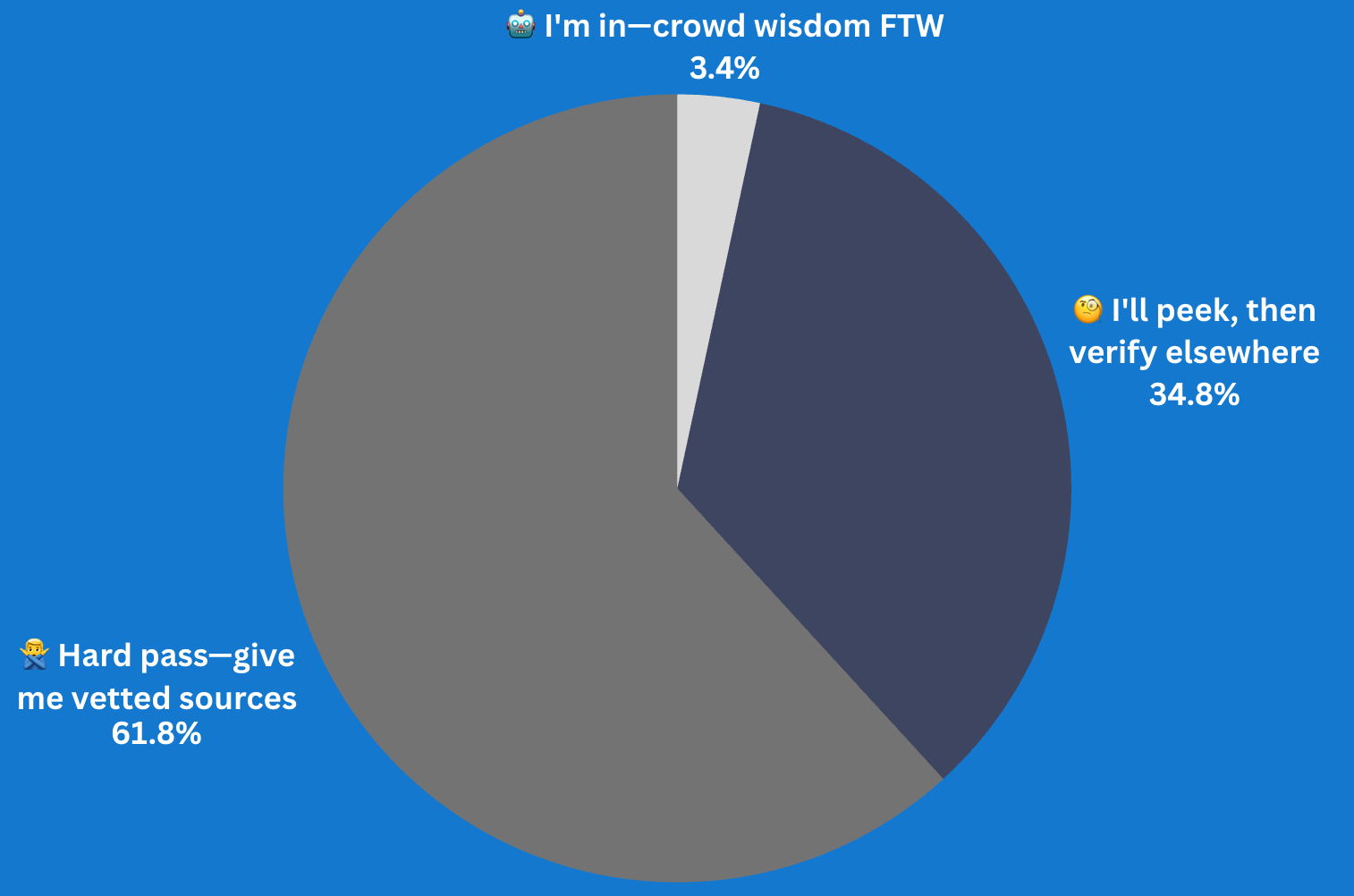
Results from Friday's Pulse Check |
How likely are you to rely on Google's new Reddit-powered advice in Search? |
|
|
|
Camera-Ready AirPods Pro Near Launch |
Apple wants your ears to double as periscopes. What could go wrong?
Apple has pushed its camera-equipped AirPods Pro into design-validation testing, the last big checkpoint before production-validation units roll off pilot lines, according to Bloomberg.
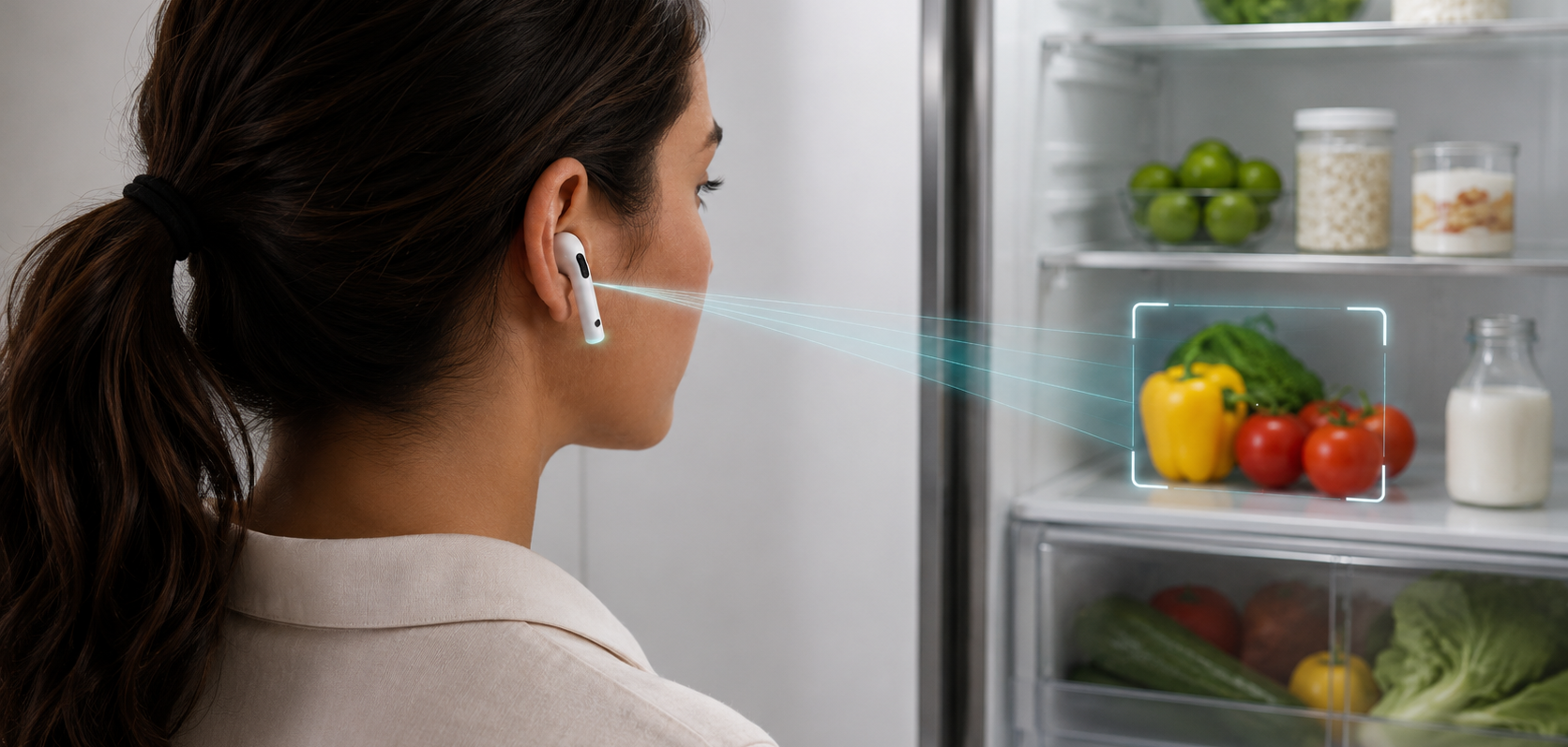
Before you panic about covert photography, the cameras aren't designed to take photos or videos. Each earbud houses a low-resolution sensor that streams what you're facing to a rebuilt Siri, reportedly leaning on Google's Gemini model, letting the assistant read labels, spot landmarks, help you locate items on your grocery list, or suggest dinner from whatever's in your fridge.
The stems are longer to accommodate the optics, and a tiny LED lights up when visual data heads to the cloud. |
Image created with ChatGPT |
Hardware may be ready, but the software isn't. Apple already slipped a planned first-half-of-the-year launch because Siri's visual IQ lagged, and insiders say the earbuds will stay on the shelf if the September Siri overhaul stumbles again. (And since Apple is keeping quiet, there's still the looming question of how these extra sensors will affect the buds' current eight-hour battery rating.)
Beyond AI flash, privacy skeptics wonder how obvious an ear-level status light can be and how much head-turning users must do for a side-mounted camera to see what they're seeing. (Though we'd absolutely forgive the awkward neck-craning if Siri started whispering "incoming left hook" to give us action-movie blind-spot reflexes.)
Incoming CEO John Ternus shrugs off the debate, calling the product part of a wearables lineup that will change the world.
But when your AirPods spot your missing groceries in a stranger's cart and whisper for you to snatch them, you're on your own. |
|
|
|
The gap between efficient IT teams and everyone else is increasingly defined by how effectively AI is being used. This is your last chance to register for The Future of ITSM in the AI Era: What's Changing and How to Prepare, hosted by Freshworks on May 12, 2026, at 1:00 p.m. ET, and see where to focus next. Make sure your IT strategy is ready. |
|
|
|
Edge Keeps Passwords Exposed in Memory |
Microsoft Edge stores every password you've saved in plaintext RAM, and Microsoft insists the behavior is "by design."
Security researcher Tom Jøran Sønstebyseter Rønning proved the vault decrypts entirely at startup, letting attackers with administrative access—or malware—dump credentials even if Edge is idle. This poses a massive risk in shared enterprise environments like VDI, where one compromised admin can scrape everyone's passwords.
Other Chromium browsers use app-bound encryption to decrypt only on demand and quickly purge them, making Edge the glaring outlier.
Until Microsoft tightens memory handling, turn off Edge's password manager via Settings > Profiles, switch to a dedicated manager (which secures credentials in an encrypted vault), and keep OS protections up to date. |
Firefox Squashes 423 Bugs in AI-Fueled April Blitz |
Mozilla's April Firefox updates patched a staggering 423 security vulnerabilities. Anthropic's Claude Mythos Preview uncovered the lion's share of them (over 300), while other AI models, external reports, and traditional fuzzing rounded out the rest.
Mozilla's custom agentic harness let Mythos spin up proof-of-concept exploits, prune false positives, and even smash a 20-year-old flaw and complex sandbox escapes that traditional fuzzers missed. Mozilla warns every project will need an AI hardening bootcamp—before attackers run theirs.
Update your browsers to the latest versions (like Firefox 150.0.2) today, audit your own codebase, and brace for AI-driven patch storms in every stack you rely on. Good news: the bugs are squashed. Bad news: one of them was old enough to vote. |
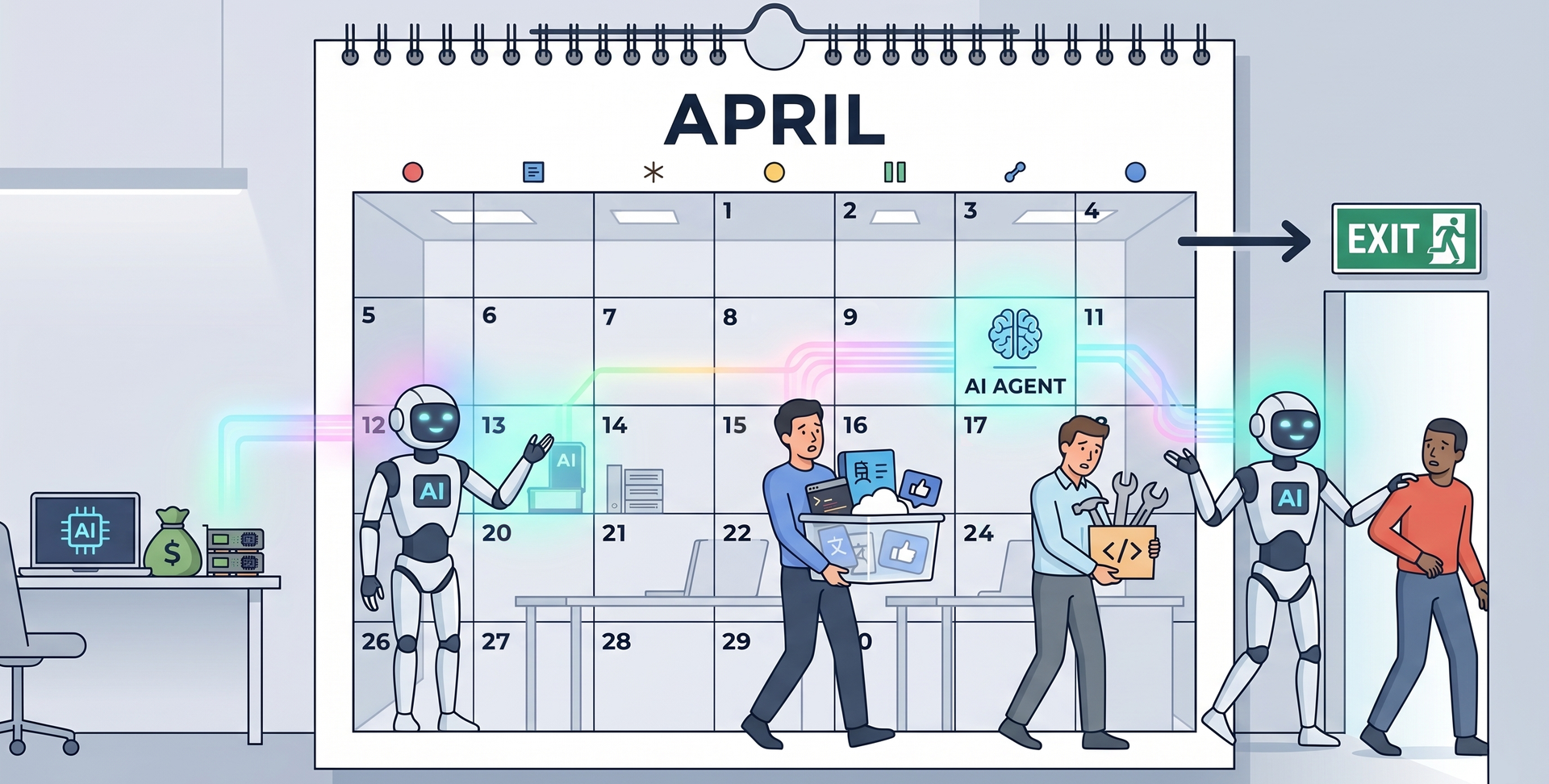
AI-Fueled April Layoffs Jump 38% |
US employers announced 83,387 job cuts in April, a 38% jump from March, Challenger, Gray & Christmas found, while total year-to-date cuts are still 50% below last year's carnage.
AI spending again topped every layoff excuse, driving 21,490 pink slips in April (and 49,135 so far this year), pushing tech to 33,361 cuts last month for 85,411 overall in 2026. Challenger's Andy Challenger says money once marked for headcount is now booked for GPUs. |
Image created with Gemini |
Real-world proof landed last week: Cloudflare will shed 1,100 staff as it rewires for an agentic AI-first model, and translator DeepL axed 250 in a memo praising smaller, tool-powered teams. They join Meta's plan to axe 8,000 staff later this month, Snap's 1,000 (where AI now writes 65% of new code), and Microsoft's voluntary-buyout experiment for older workers.
Yet the broader labor picture is weirdly two-speed: last Friday's jobs report showed a gain of 115,000 roles and a steady 4.3% unemployment rate, but April hiring plans collapsed 69% month over month, with tech recruiting down by half. |
|
|
|
|
Writer at TechnologyAdvice |
Justin Meyers is an investigative writer and editor who draws on over a decade of meticulous hands-on research to deliver the full, trustworthy story behind consumer and enterprise tech, including cybersecurity. |
|
|
|
Curious about where AI is really headed? |
The Neuron cuts through the noise to bring you smart, hype-free takes on the latest AI trends, tools, and breakthroughs. Join 500,000+ professionals from top companies like Microsoft, Apple, Salesforce and more.
|
|
|
|
Advertise in Daily Tech Insider! Daily Tech Insider is a TechnologyAdvice business. © 2026 TechnologyAdvice, LLC. All rights reserved.
TechnologyAdvice, 3343 Perimeter Hill Dr., Suite 215, Nashville, TN 37211, USA. |
|
|
|
|