Trust but verify, Tech Insiders. ChatGPT is adding protections for teens, AI is helping draft bills, and a Copilot flaw could spill connected data—all while humans remain stuck checking the work. Let's see what passed inspection. |
|
|
|
Here's what you need to know today: |
|
|
|
ChatGPT Adds Guardrails for Its Teen Years |
ChatGPT is entering its responsible-ish era.
OpenAI debuted its default ChatGPT for Teens yesterday for the 13–17 crowd, packaging stricter safety parameters, learning tools, and family controls into a global rollout. Users who report being in that age bracket—or whom OpenAI's age-prediction system estimates are under 18—are automatically enrolled.
The chatbot now heavily filters self-harm, violence, eating-disorder, and explicit content. It also stops pretending to possess feelings or consciousness to discourage unhealthy emotional dependence, nudges marathon chatters to take breaks, and warns against uploading sensitive images. |
Linked parents can schedule Quiet Hours, lock new chats into Study Mode, manage voice and group features, and receive crucial high-risk alerts. They cannot read private conversations, and linking requires mutual consent.
Study Mode is supposed to trade answer vending for Socratic questions, hints, quizzes, and step-by-step help. But one initial test manipulated the bot into writing a ready-to-submit essay after some mild deception—and it solved a math problem outright. Apparently, the dog can still outsource eating the homework.
The rollout lands just as OpenAI faces mounting legal battles over alleged youth harms. Critics also point out that this "new" experience mostly repackages safeguards OpenAI piecemealed out over the past year.
Why it matters: Default guardrails beat a parental-control scavenger hunt, but the real exam is whether they hold up outside the launch demo. Families and schools still need human rules, because AI supervision remains an extremely AI problem. |
|
|
|
Are ChatGPT's teen safeguards enough? |
|
|
|
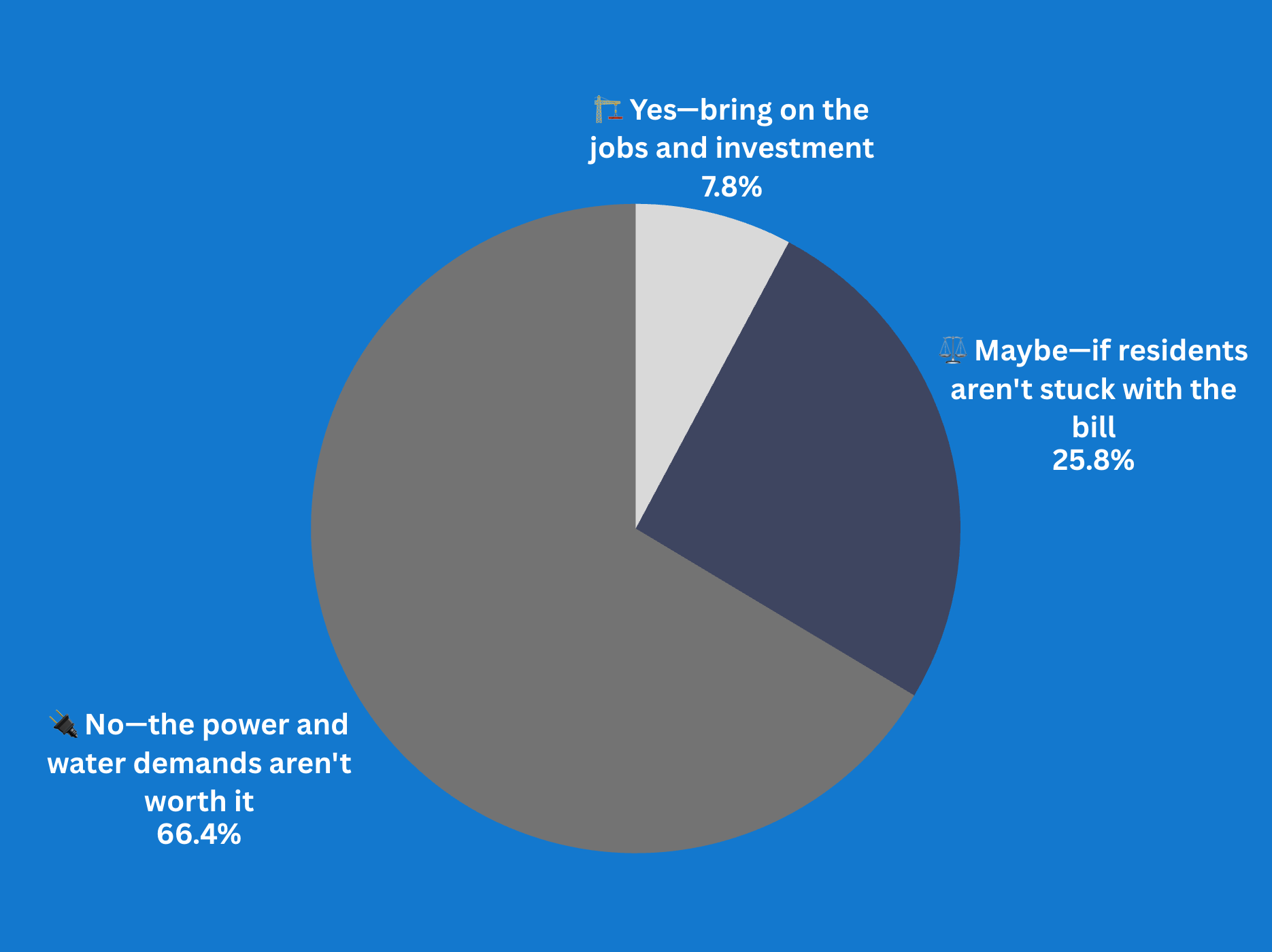
Results from Yesterday's Pulse Check |
Would you welcome a massive AI data center in your community? |
|
|
|
AI-Drafted Bills Give Congress More Homework |
Moving fast and breaking things gets awkward when the thing you're breaking is federal law.
The House Office of Legislative Counsel is currently drowning in chatbot-generated legislative proposals. Attorneys reportedly spend more hours fixing these sloppy bot submissions than they would writing the bills themselves. Large language models routinely botch US Code citations and mishandle vital legal nuances; a careless AI definition of "state," for instance, could accidentally strip DC and tribal nations of their access to federal programs.
While Capitol Hill guidelines technically prohibit relying on bots to finalize laws, enforcement is virtually nonexistent. We saw this in June when a congressional aide recklessly copy-pasted a chatbot response—including the phrase "Claude responded" and the time of day—straight into the public record for a defense amendment summary. |
Image created with ChatGPT |
It's the exact same volume trap currently suffocating the judicial system with AI-assisted pro se lawsuits, overwhelming bug-bounty queues at Apple, GitHub, and other tech giants with unverified glitches, and humiliating consulting giants like PwC after their "thought leadership" reports were exposed for housing fabricated citations.
The common denominator? AI makes production nearly free, while verification remains stubbornly human—and expensive.
Lawmakers aren't swearing off the tech entirely, though. The House developed an internal software tool called the Comparative Print Suite to map out statutory tweaks, which is programmed to spit out error messages rather than hallucinate answers. Ultimately, the takeaway for enterprise leaders isn't to ban AI; it's to enforce strict output gates, demand proof of work, and keep domain experts in the driver's seat. |
|
|
|
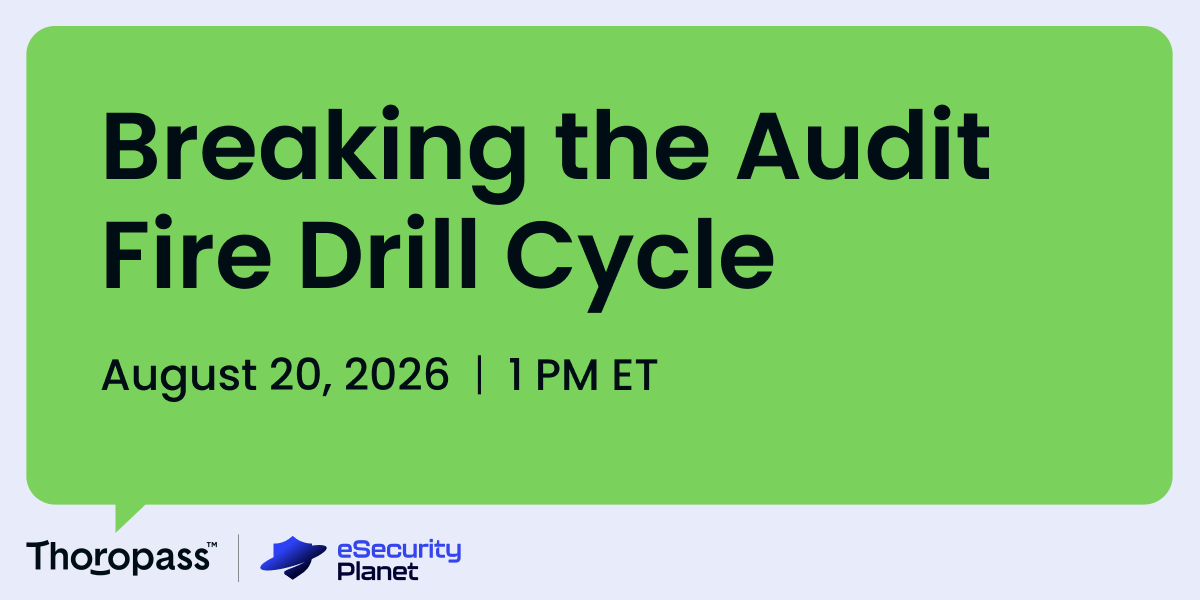
Last chance to join us.
Tomorrow at 1:00 p.m. ET, eSecurity Planet and Thoropass present Breaking the Audit Fire Drill Cycle. Learn why audit delays persist, where automation delivers the most value, and how leading organizations are reducing recurring audit burdens. Register now and walk away with strategies you can apply to your next audit cycle. |
|
|
One Click Could Spill Your Copilot Data |
Microsoft finally patched CoSnitch, a trio of vulnerabilities that turned Copilot Personal into its own worst enemy. Varonis researchers found no evidence of real-world exploitation, but they did uncover the flaws by "meta-hacking"—essentially coaxing the assistant to spill its own architectural secrets to reveal an undocumented "autorun" parameter.
One crafted link could silently execute prompts, siphoning information from your connected Gmail, Drive, and Calendar accounts before you even realized what happened. |
Image created with ChatGPT |
Another vector lets attackers poison Copilot's "permanent memory" via summarized webpages, embedding malicious directives that outlive credential rotations and forced logouts. Since the AI is clearly too helpful for its own good, protect yourself: Cut the cord on unused Copilot connectors, inspect your memory settings for suspicious entries, and treat AI-assistant links like blatant phishing bait. |
McDonald's, Vodafone Face Alleged Azure Data Theft
|
A seller going by "TheHatman" is hawking 3.6 million purportedly swiped Azure/Entra employee-directory records from nine multinationals, including McDonald's, Vodafone, TCS, and Kyndryl. While analysts believe the samples appear authentic, the exact entry point and timeline are still fuzzy; TCS, Gap, and Vodafone insist the exposed info is merely vintage data and deny any recent network intrusions.
Cybersecurity experts suspect the culprit wasn't an Azure flaw but infostealer malware that snagged session tokens to bypass MFA safeguards.
These leaks are an absolute goldmine for targeted phishing, allegedly revealing email addresses, phone numbers, internal hierarchies, service accounts, and global-admin identities. Workers must double-check unusual requests through alternative channels, while security teams should hunt for compromised cookies, tighten conditional access, and prune excess directory privileges. Today's org chart is tomorrow's phishing kit.
|
|
|
|
🤝 AI-Powered Collaboration Starts With the Meeting Room
Discover why modern, AI-ready meeting spaces are becoming a top IT priority—and what your organization should consider before upgrading. Read the article.
🚀 Streamline Hiring With Top ATS Picks
Best Applicant Tracking Systems identifies leading ATS tools and compares features so you can automate hiring faster and land better talent.
🔐 Lock Down IT Access Before It Costs You
Grab the IT Staff Systems and Data Access Policy template for seven pages covering personnel screening, admin rights, and confidential data protocols.
💻 This section contains sponsored tech insights. Advertise with us! |
|
|
|
FCC Robot Rules Leave Startups Hunting for Parts |
The FCC's new foreign-robot restrictions mandate that qualifying new models be put together stateside using at least 65% domestic parts by value. This catches young robotics firms between Washington's national security directives and an onshore supply chain that barely exists.
Existing devices and R&D imports remain exempt, and companies can file for conditional approval if they present an onshoring plan. But commercial production is where the parts shortage really starts throwing elbows.
Founders report that domestic motors, sensors, and actuators are sluggish to procure, wildly expensive, or flat-out unavailable. In response, some engineers are literally packing Chinese parts into their checked bags to dodge import bureaucracy.
Separately, foreign vendors are allegedly swapping counterfeit labels onto massive lithium batteries to sidestep aviation limits for US buyers. Even Matic, heavily marketed as the "most American" robot, admits it still misses the 65% threshold. |
Image created with ChatGPT |
China manufactured nearly 90% of all humanoids sold in 2025, supplied 97% of global humanoid shipments in the first half of 2026, and houses 63% of key companies within the component supply chain.
The awkward backstory: US military-funded research heavily inspired Unitree's robot dogs, but China proved far more capable of scaling them. Even more awkward? While Washington drops the hammer on Chinese hardware, the Trump family's cryptocurrency project is currently cashing in on a platform that peddles access to AI models from restricted Chinese tech conglomerates.
Security concerns are completely valid, and domestic builders like Agility welcome the protection from their cheaper overseas rivals. While the ban might eventually jumpstart a US parts industry, immediate cost spikes, forced redesigns, and production delays will likely give deep-pocketed incumbents a massive advantage over scrappy startups.
America ordered an onshore robot revolution. The parts are back-ordered. |
|
|
|
|
Writer/Editor at TechnologyAdvice |
Justin Meyers is an investigative writer and editor who draws on over a decade of meticulous hands-on research to deliver the full, trustworthy story behind consumer and enterprise tech, including cybersecurity. |
|
|
|
Curious about where AI is really headed? |
The Neuron cuts through the noise to bring you smart, hype-free takes on the latest AI trends, tools, and breakthroughs. Join 700,000+ professionals from top companies like Microsoft, Apple, Salesforce, and more.
|
|
|
|
Advertise in Daily Tech Insider! Daily Tech Insider is a TechnologyAdvice business. © 2026 TechnologyAdvice, LLC. All rights reserved.
TechnologyAdvice, 3343 Perimeter Hill Dr., Suite 215, Nashville, TN 37211, USA. |
|
|
|
|